
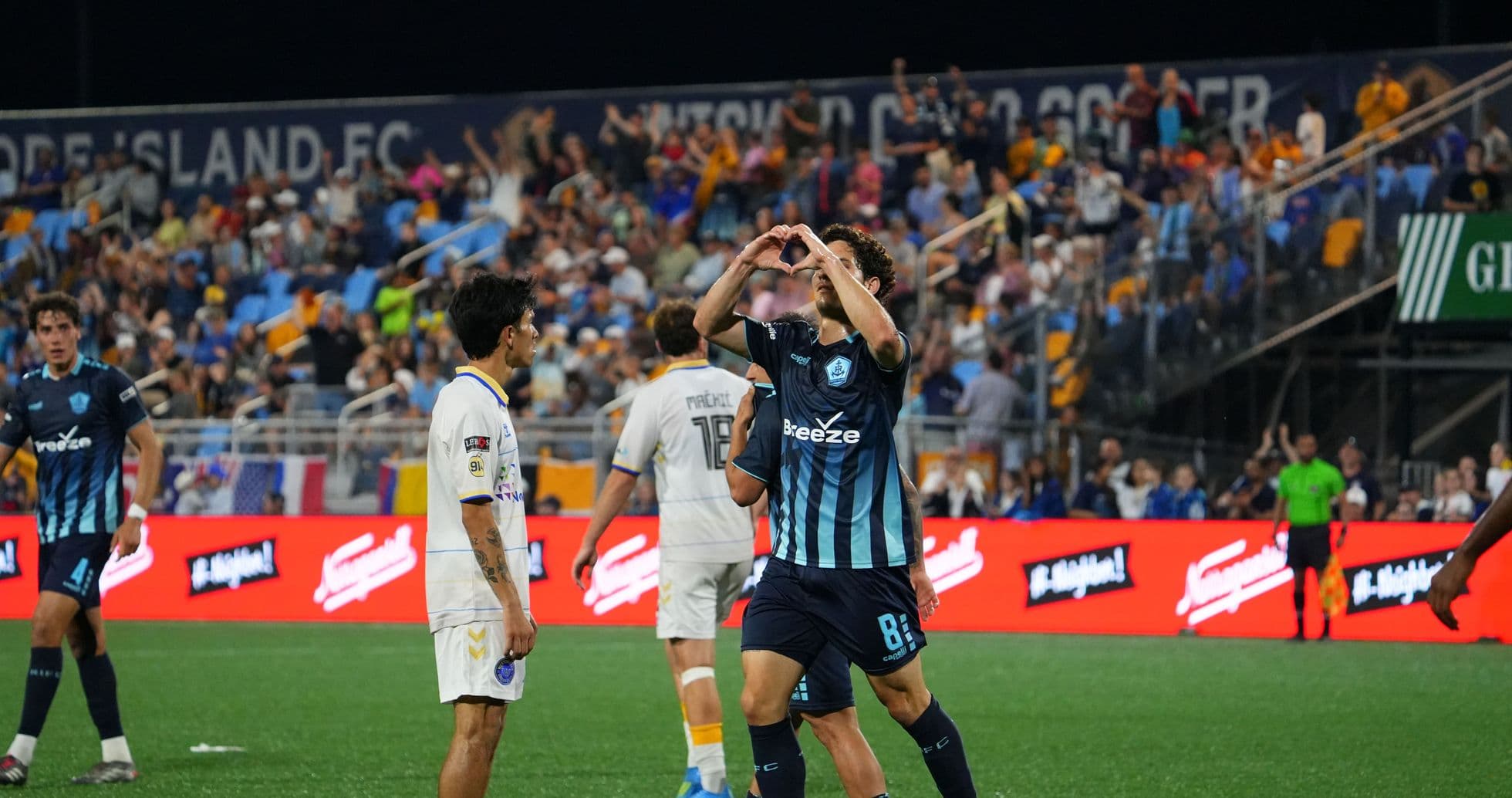
Rhode Island Dominates Westchester SC in USL League One Cup
Under the lights at Centreville Bank Stadium, Rhode Island’s 3–0 dismantling of Westchester SC felt less like a routine group-stage win and more like a statement of intent in the USL League One Cup. Following this result, the numbers confirm what the eye suggested: a side already trending upward at home sharpened its identity, while an erratic visitor saw its structural flaws exposed.
Heading into this game, Rhode Island sat 3rd in Group 5 with 5 points and a goal difference of 3, built on an overall record of 1 win, 1 draw and 1 defeat from 3 matches. The statistical DNA was clear: compact, efficient, and ruthless at home. In total this campaign they had scored 5 and conceded just 2; at home specifically they averaged 3.0 goals for and 0.0 against, off a single but emphatic 3–0 win. On their travels they were more pragmatic, averaging 1.0 goal scored and 1.0 conceded, yet still carrying enough edge to claim an away victory.
Westchester SC arrived as a study in volatility. They were 6th in the group with 2 points and a goal difference of -3, having scored 9 and conceded 12 overall across 3 matches. At home they could trade punches, averaging 2.5 goals scored and 2.5 conceded, but away from home the picture was stark: 0.0 goals for and 3.0 against from their only previous road outing. The Cup campaign painted them as open, brave, but defensively porous.
That context framed the tactical story we saw unfold.
Khano Smith’s Rhode Island XI, though listed without a formal formation, read like a modern, front-foot side built on ball-playing defenders and multipurpose midfielders. Koke Vegas in goal provided a calm base. In front of him, a back line anchored by K. Yao, F. Nodarse, A. Sanchez and H. Bacharach Capdevila looked designed for both aggression and control. The presence of H. Bacharach Capdevila and F. Nodarse hinted at a pair comfortable stepping into midfield, enabling Rhode Island to compress the pitch and pin Westchester deep.
Ahead of them, A. Shapiro-Thompson and C. Holstad formed the connective tissue, the “engine room” tasked with linking phases and dictating tempo. With N. Fuson and N. Scardina offering width and running power, and A. Rodriguez floating between the lines behind J. Williams, Rhode Island’s attacking structure resembled a rotating front four. The absence of explicit positional labels in the data only underscores how fluid this group can be.
On the bench, Smith had the luxury of changing gears rather than simply swapping parts. D. Rovira and G. Stoneman provided defensive reinforcement, while Leo Afonso, K. Vang, Z. Herivaux and J. Peters offered fresh legs and different profiles higher up the pitch. In a competition where fixture congestion can bite, the ability to re-energise the press or protect a lead from the bench is a competitive edge.
George Gjokaj’s Westchester SC, by contrast, arrived with a side that leaned heavily into individual dynamism but lacked the statistical backing of a solid defensive platform. L. Marinelli in goal was shielded by a back line featuring M. Jennings, T. Timchenko, C. Dickerson and J. Jimenez. In theory, that quartet should have been compact and physical; in practice this Cup run has seen them concede 8 goals in total, with a worrying 3.0 goals against on their travels.
The midfield blend of S. Powder, A. Armas and B. Vasquez was more about energy and verticality than control. Add in the attacking presence of M. Diaz, K. Evans and E. Mackic, and you get a side that wants to break quickly rather than build slowly. The bench options – from the direct running of M. Molina and D. Burko to the central presence of D. Bouman and the forward threat of K. Blommestijn – gave Gjokaj tools to chase a game, but fewer obvious pieces to lock one down.
Disciplinary trends framed another layer of the contest. Rhode Island’s yellow-card profile was skewed toward the second half and stoppage time: 50.00% of their cautions arriving between 46–60 minutes and 50.00% between 91–105. That suggests a team willing to make tactical fouls to protect game states late on. Westchester, by contrast, split their cautions evenly between 31–45 minutes and 76–90 minutes, each window accounting for 50.00% of their yellows. The pattern hints at emotional rather than purely tactical bookings: frustration before the interval, desperation as matches slip away.
The “Hunter vs Shield” dynamic in this fixture was subtle but decisive. Rhode Island’s overall attack, averaging 1.7 goals per match in total, met a Westchester defence conceding 2.7 per game overall and 3.0 away. The home side’s biggest home win – 3–0 – and Westchester’s heaviest away defeat – 3–0 – were not abstract numbers; they were mirror images that played out again on the night. Rhode Island’s front unit, spearheaded by J. Williams and orchestrated by A. Rodriguez, repeatedly found seams between Timchenko and Dickerson, while the midfield line cut off Westchester’s counters at source.
In the “Engine Room” duel, A. Shapiro-Thompson and C. Holstad held a clear structural advantage over A. Armas and B. Vasquez. Rhode Island’s double pivot could sit or step in unison, compressing space and allowing the back line to hold a higher starting position. That, in turn, shrank the distances between lines, suffocating Westchester’s attempts to play into M. Diaz or E. Mackic’s feet.
From a statistical prognosis standpoint, the result aligns almost perfectly with the underlying trends. A home side that had yet to concede on its own pitch extended that record, while an away team averaging 0.0 goals on their travels again failed to score. Rhode Island’s clean-sheet record – 2 in total heading into this game, split evenly between home and away – was not an anomaly but a core trait. Westchester’s inability to keep a clean sheet anywhere, combined with a tendency to concede in clusters, made a multi-goal home win the most logical outcome.
In xG terms, even without explicit numbers, the shot and chance profile you’d expect from these sides would tilt heavily toward Rhode Island: sustained pressure, repeated entries into the box, and a steady accumulation of medium-quality chances against a defence that struggles to limit volume. Westchester’s own attacking xG away from home would likely be modest, built on sporadic transitions rather than structured possession.
Following this result, the narrative is sharpened. Rhode Island look like a side whose squad construction and tactical framework are built for knockout-intensity football: compact, ruthless at home, and deep enough to adapt in-game. Westchester, meanwhile, remain a dangerous but unbalanced outfit, capable of scoring in bursts at home but too fragile and blunt on their travels to consistently trouble well-organised opponents.
Related News

Indy Eleven Edges Lexington in USL League One Cup Showdown
Louisville City Edges Detroit City in Penalty Shootout
Lexington vs Indy Eleven: Key USL League One Cup Clash
Lexington vs Indy Eleven: USL League One Cup Group Stage Preview
Detroit City vs Louisville City Match Preview

Lexington vs Indy Eleven Predicted Lineups: Team News and Match Insights