
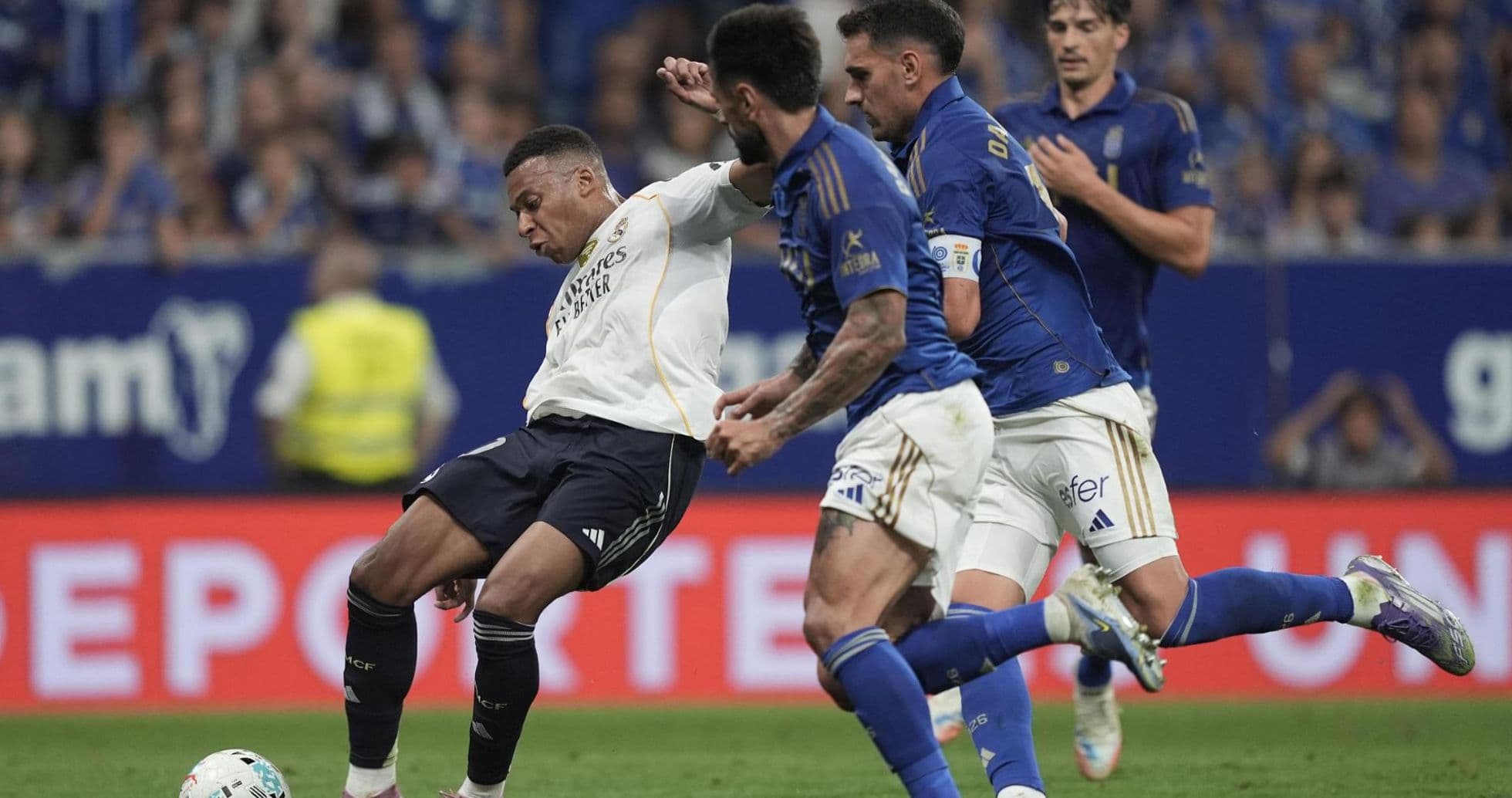
Real Madrid vs Oviedo: Tactical Analysis of a 2–0 Victory
Under the lights of the Estadio Santiago Bernabéu, this was a meeting of opposites that played out exactly to type. Real Madrid, second in La Liga heading into this game with 80 points and a formidable overall goal difference of 39 (72 scored, 33 conceded), hosted bottom‑placed Oviedo, marooned on 29 points with a goal difference of -30. It finished 2–0 to the hosts, a scoreline that mirrored the structural gap between a side built for titles and one fighting, and largely failing, to stay afloat.
Madrid’s season-long identity framed the evening: at home they had averaged 2.3 goals for and only 0.8 against, winning 15 of 18 league matches before this fixture. Oviedo arrived with one of La Liga’s most fragile away records: on their travels they had scored 0.9 goals on average but conceded 2.2, losing 12 of 18. The Bernabéu, in other words, was an unforgiving stage for a team whose margin for error has been non‑existent all campaign.
Yet the tactical story was not one of Madrid simply rolling out their strongest XI. The squad list for this fixture was scarred by absences. Eder Militao, F. Mendy and A. Güler were all missing through muscle injuries, Rodrygo was sidelined with a knee problem, F. Valverde with a head injury, D. Huijsen lacking match fitness, A. Lunin out with illness, and D. Ceballos omitted by coach’s decision. For Oviedo, the spine was also compromised: L. Dendoncker and O. Ejaria were unavailable through injury, B. Domingues with a knee issue, while J. Lopez and K. Sibo were suspended after red cards.
Those voids shaped both line‑ups. Alvaro Arbeloa doubled down on the 4‑4‑2 that has been Real Madrid’s most used system this season (17 league games with that shape), trusting its familiarity over experimentation. T. Courtois anchored the side behind a back four of T. Alexander‑Arnold, R. Asencio, D. Alaba and A. Carreras. In midfield, a box of energy and craft—F. Mastantuono, E. Camavinga, A. Tchouameni and B. Diaz—supported a front pair of G. Garcia and Vinicius Junior.
Arbeloa’s choices revealed his response to the absences. Without Valverde’s vertical running or Güler’s line‑breaking passes, he leaned on Camavinga and Tchouameni as a double engine, tasked with both protecting an improvised central defence and feeding the wide creativity of Diaz and Mastantuono. Alexander‑Arnold’s selection at right‑back signalled an intent to overload that flank, compensating for the missing playmaking from deeper midfield zones.
Guillermo Almada answered with a 4‑3‑3, a departure from Oviedo’s most common 4‑2‑3‑1 this season (24 uses), but a logical one given the personnel losses. A. Escandell started in goal, behind a back four of N. Vidal, E. Bailly, D. Costas and R. Alhassane. The midfield trio—N. Fonseca, S. Colombatto and A. Reina—was built to compress central spaces and deny Madrid easy progression. Up front, I. Chaira and T. Fernandez flanked F. Vinas, Oviedo’s leading scorer and, tellingly, La Liga’s top red‑card recipient this season.
This is where the disciplinary narrative bled directly into tactics. Vinas arrives at the Bernabéu with 5 yellow cards, 1 yellow‑red and 2 straight reds in league play. His aggression is a double‑edged sword: 9 goals and 1 assist from 32 appearances, but a constant risk of numerical inferiority. For a side already fragile away from home, that edge had to be carefully managed. Almada’s 4‑3‑3 therefore asked Vinas to lead the press selectively rather than relentlessly, preserving his presence for transitional moments.
The “Hunter vs Shield” duel was almost cruelly tilted. Madrid’s attack, powered across the season by Kylian Mbappé (24 league goals, 5 assists) and Vinicius Junior (15 goals, 5 assists), has averaged 2.0 goals per game overall. Even with Mbappé starting on the bench here, his shadow loomed over Oviedo’s defensive line: every run by Garcia and Vinicius stretched a back four that knew the Frenchman could be introduced at any moment. Oviedo’s defence, by contrast, had conceded 56 league goals heading into this game, with 39 of those away. The raw arithmetic—Madrid’s home average of 2.3 scored against Oviedo’s away 2.2 conceded—suggested a contest where the visitors would be permanently on the brink.
In the “Engine Room”, Arbeloa’s double pivot of Camavinga and Tchouameni faced Fonseca and Colombatto. Madrid’s pair were not just destroyers; their remit was to suffocate Oviedo’s build‑up before it reached Vinas and to recycle possession quickly into the half‑spaces for Diaz and Mastantuono. For Oviedo, Colombatto’s role was that of an enforcer‑regista hybrid, trying to slow the tempo, draw fouls, and drag Madrid into a more fragmented game.
Card trends across the season added another layer of risk management. Madrid’s yellow cards peak between 61–75 minutes at 22.06%, with another 17.65% between 76–90. Oviedo’s own yellow‑card surge also comes after the hour mark: 23.38% between 61–75 and 16.88% between 76–90. That shared late‑game spike meant the final half‑hour was always likely to be fractious, especially once fatigue set in against Madrid’s superior squad depth. Red cards tell a similar story: Oviedo’s dismissals cluster heavily in the 76–90 window (40.00%), underlining how dangerous a chasing scenario can be for them in the closing stages.
From an Expected Goals perspective, the structural data pointed towards a Madrid win with a comfortable xG margin. A side that fails to score in 19 of 36 league matches overall, as Oviedo have, is unlikely to generate sustained high‑quality chances away to a team that has kept 6 clean sheets at home and 13 overall. Madrid’s perfect penalty record this season—12 taken, 12 scored, with no misses—added another layer of threat: any reckless challenge in the box, particularly from a defender like Bailly under pressure from Vinicius, risked turning a narrow deficit into a decisive one.
Following this result, the narrative feels almost inevitable. Madrid’s 2–0 win is the on‑field expression of deeper patterns: a side with multiple attacking reference points, a robust 4‑4‑2 structure and elite individual quality, against a team whose tactical courage is constantly undermined by defensive fragility and disciplinary volatility. The Bernabéu did not just host a match; it hosted a summary of an entire season’s logic.
Related News

LaLiga 2026-27 Season Schedule Released: Kickoff on August 15, Clásico on October 25
Atletico Madrid vs Real Madrid: Head-to-head Stats and Past Meetings
Real Madrid Dominates Rayo Vallecano in La Liga Clash
Atletico Madrid Dominates Real Sociedad 3-0 at Reale Arena
Barcelona Dominates Levante in High-Scoring Clash
Sevilla vs Barcelona Stats: Head-to-Head Record and Past Meetings