
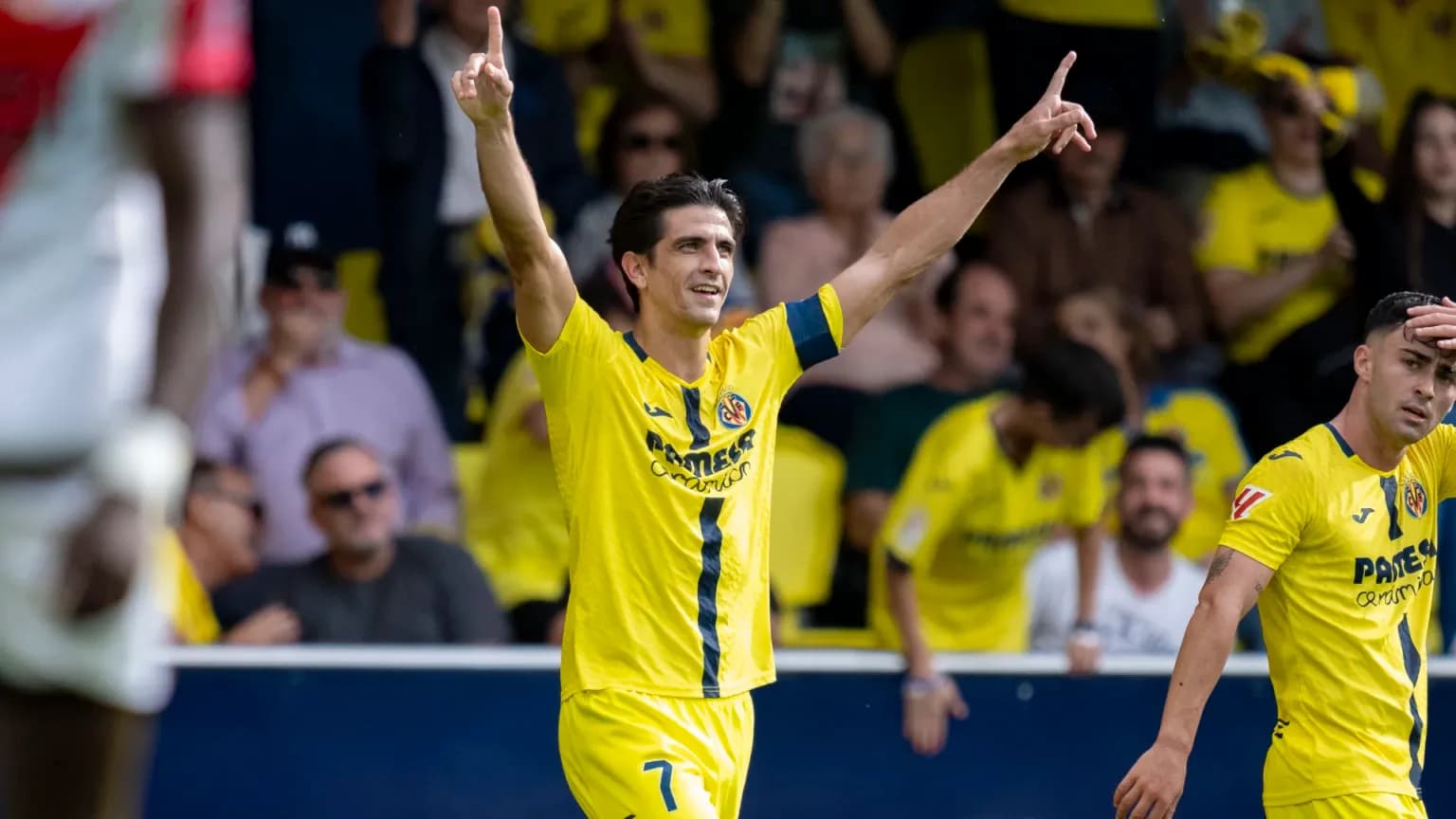
Rayo Vallecano's Tactical Masterclass in 2-0 Victory Over Villarreal
Rayo Vallecano’s 2-0 win over Villarreal at Campo de Futbol de Vallecas was a controlled, structurally coherent performance built on a clear game plan and superior execution in both boxes. In a high-stakes La Liga Round 37 context, Inigo Perez’s 4-2-3-1 outmanoeuvred Marcelino’s 4-4-2, translating marginal advantages in possession and passing into a decisive territorial and chance-quality edge. With the score 1-0 at half-time and finishing 2-0, Rayo combined disciplined mid-block work with sharp transitions through the attacking midfield line, while Villarreal’s shape never truly solved the hosts’ occupation of the half-spaces or their fullbacks’ timing in advance.
The scoring opened on 28 minutes: S. Camello (Rayo Vallecano) — assisted by A. Ratiu — finishing a move that encapsulated Rayo’s vertical intentions from the right side. Immediately after the break, at 47 minutes, Alemao (Rayo Vallecano) — assisted by O. Trejo — doubled the lead, punishing Villarreal before their second-half adjustments could settle. Those two actions matched Rayo’s 2-0 full-time scoreline and came at key psychological moments: one to reward first-half control, the other to kill any nascent away-side momentum.
Disciplinary Incidents
Disciplinary incidents were limited but tactically relevant. The card log, in strict chronological order, was:
- 61' Florian Lejeune (Rayo Vallecano) — Foul
- 82' Unai López (Rayo Vallecano) — Time wasting
- 90+6' Santiago Mouriño (Villarreal) — Foul
Rayo finished with 2 yellow cards, Villarreal with 1, for a total of 3 cautions. The timing of Unai López’s booking underlined Rayo’s game-state management at 2-0, while Mouriño’s late caution reflected Villarreal’s increasing frustration as they chased a lost cause deep into added time.
Tactical Overview
Tactically, Rayo’s 4-2-3-1 was the game’s dominant structure. A. Batalla in goal sat behind a back four of A. Ratiu, P. Ciss, F. Lejeune and P. Chavarria. In front, the double pivot of U. Lopez and O. Valentin provided the platform, with J. de Frutos, O. Trejo and S. Camello operating behind the lone striker Alemao. This configuration allowed Rayo to control central zones while still committing numbers to wide overloads.
In possession, Rayo’s 53% share of the ball was not about sterile circulation but about purposeful progression. Their 472 passes, with 404 accurate (86%), point to a team comfortable playing through Villarreal’s first line. U. Lopez, before being substituted at 82 minutes, was the metronome, dropping between centre-backs to help evade the initial 4-4-2 press and then stepping up to connect with Trejo between the lines. The first goal, finished by S. Camello, came from this pattern: Rayo drawing Villarreal’s midfield out, then exploiting the space behind with Ratiu’s forward run and delivery.
Out of possession, Rayo largely adopted a compact mid-block, with Camello and Trejo screening Villarreal’s double pivot of S. Comesana and P. Gueye. The wingers, particularly J. de Frutos, were diligent in tracking the opposition fullbacks, limiting clean wide service. Villarreal’s 11 total shots, with only 2 on goal, highlight how often they were pushed into low-probability efforts from outside or crowded positions inside the box, where Rayo’s centre-backs could step in front and block (3 blocked shots recorded for the hosts).
The second goal, Alemao’s strike on 47 minutes from an O. Trejo assist, illustrated Rayo’s transitional punch. Villarreal, having just introduced A. Gonzalez for T. Buchanan at 46 minutes (A. Gonzalez (IN) came on for T. Buchanan (OUT)), were reorganizing their wide structure when Rayo pounced. Trejo found space between Villarreal’s lines, and Alemao’s movement off the shoulder of the centre-backs punished a momentary disconnection in the away back four.
Substitutions
Substitutions from Inigo Perez were clearly game-state oriented. At 66 minutes, P. Diaz (IN) came on for O. Trejo (OUT), injecting fresh legs into the No. 10 role and adding more defensive workrate. At 73 minutes, F. Perez (IN) came on for S. Camello (OUT), and at 74 minutes C. Martin (IN) came on for Alemao (OUT), signalling a shift toward protecting the lead, with forwards asked to press and run channels rather than create. At 81 minutes, Pacha (IN) came on for P. Chavarria (OUT), refreshing the left-back slot, and at 82 minutes A. Mumin (IN) came on for U. Lopez (OUT), turning the double pivot into a more defensive screen. The yellow card for Unai López at 82 minutes for Time wasting just before his withdrawal reinforced that Rayo were fully committed to managing tempo and territory rather than expanding the scoreline.
Marcelino’s Villarreal, in their 4-4-2, struggled to translate possession phases into clear chances despite a reasonable statistical base: 403 passes, 338 accurate (84%), and 47% of the ball. The front pairing of A. Perez and T. Oluwaseyi (until Oluwaseyi was replaced by G. Moreno (IN) at 63 minutes (T. Oluwaseyi (OUT))) found little space between Rayo’s centre-backs and double pivot. Wide players T. Buchanan and A. Moleiro tried to stretch Rayo laterally, but with Rayo’s fullbacks well-timed in their pressing, Villarreal were often forced backwards or into hopeful crosses.
The substitution pattern showed Marcelino searching for solutions rather than executing a clear second-phase plan. At 63 minutes, G. Moreno (IN) came on for T. Oluwaseyi (OUT) to add more technical quality between lines. One minute later, at 64 minutes, T. Partey (IN) came on for S. Comesana (OUT), aiming to improve progression and control in midfield. At 72 minutes, D. Parejo (IN) came on for P. Gueye (OUT), further increasing passing quality but at the cost of defensive legs. Finally, at 77 minutes, L. Costa (IN) came on for W. Kambwala (OUT), adding attacking thrust from right-back. Yet despite these changes, Villarreal’s best statistical weapon remained set plays: 9 corner kicks to Rayo’s 1, but Rayo’s defensive organisation in the box held firm.
Goalkeeping Performance
In goal, A. Batalla’s 2 saves aligned with Villarreal’s 2 shots on target, reflecting a relatively quiet but assured afternoon. Rayo’s goals prevented figure of -0.25 suggests he conceded slightly fewer xG than expected, but the defensive unit in front of him did most of the heavy lifting by limiting shot quality. For Villarreal, A. Tenas made 5 saves against 7 shots on target, with a goals prevented value of -0.25, indicating that Rayo’s finishing marginally outperformed the modelled xG he faced.
Statistical Overview
Statistically, the match’s xG profile supports the 2-0 outcome without suggesting an extreme overperformance. Rayo’s xG of 1.53 against Villarreal’s 1 shows the hosts created slightly better chances and, crucially, converted at key moments. Their 15 total shots to Villarreal’s 11, combined with a 7-2 edge in shots on goal, underline the sharper edge in the final third. Villarreal’s higher number of blocked shots (5) versus Rayo’s 3 indicates that Rayo’s defenders were more proactive in closing down, while Villarreal’s back line allowed cleaner looks.
From a season-statistics perspective, Rayo’s passing volume (472 passes) and accuracy (86%) sit in the range of a side comfortable in structured possession but not obsessed with domination; Villarreal’s 403 passes at 84% mirror that, but the difference lay in verticality and occupation of dangerous zones. Rayo’s 12 fouls to Villarreal’s 10, combined with the 2-1 yellow card split, show a home side willing to disrupt rhythm when needed, especially once two goals up.
Overall, this was a tactically mature home performance: Rayo Vallecano used their 4-2-3-1 to control central corridors, leveraged fullback and No. 10 movements to break Villarreal’s lines, and then managed the game intelligently through substitutions and tempo control. Villarreal’s 4-4-2 never truly adjusted to those structural problems, and despite decent possession and passing figures, their attacking pattern remained too predictable to threaten a well-drilled Rayo block.
Related News

LaLiga 2026-27 Season Schedule Released: Kickoff on August 15, Clásico on October 25
Atletico Madrid vs Real Madrid: Head-to-head Stats and Past Meetings
Real Madrid Dominates Rayo Vallecano in La Liga Clash
Atletico Madrid Dominates Real Sociedad 3-0 at Reale Arena
Barcelona Dominates Levante in High-Scoring Clash
Sevilla vs Barcelona Stats: Head-to-Head Record and Past Meetings