
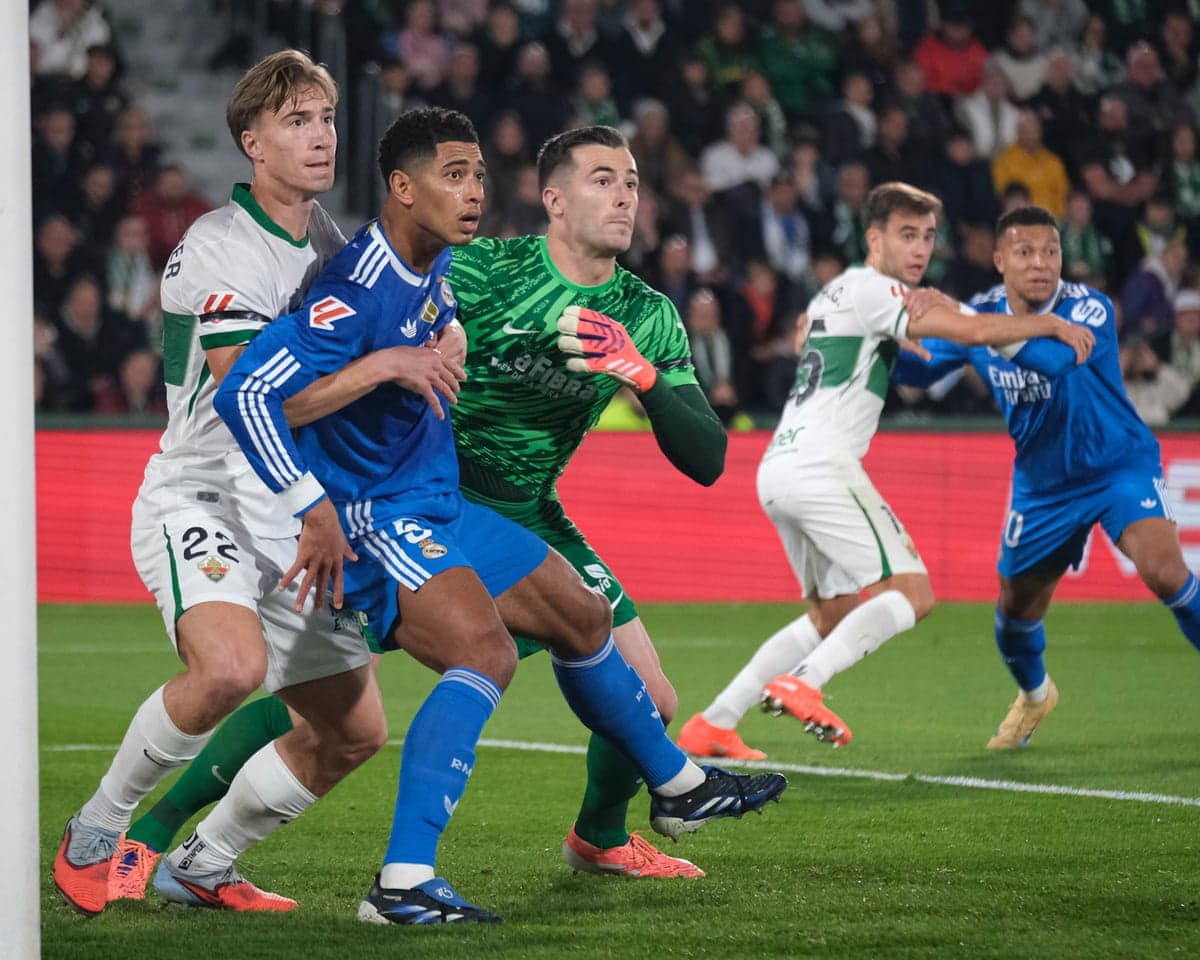
Elche vs Getafe: A Tactical Breakdown of La Liga Showdown
The late-afternoon sun over Estadio Manuel Martínez Valero framed a contest that was never just about three points. Following this result, a 1–0 home win in Round 37 of La Liga, Elche tightened their grip on survival from 17th place, while Getafe, sitting 7th, saw their push for European football lose vital momentum.
I. The Big Picture – contrasting identities, familiar patterns
Over the season, Elche have been a side of two faces. Overall they have taken 42 points with a goal difference of -8, built almost entirely on fortress form at home. At home they have played 19 matches, winning 9, drawing 8 and losing only 2, scoring 30 and conceding 19. On their travels they have been fragile, but in Elche the numbers tell of a compact, disciplined side: they average 1.6 goals for and 1.0 goals against at home.
Getafe arrive as a curious paradox. Overall they have 48 points and a goal difference of -7, with a season defined by narrow margins and defensive grind. They have scored only 31 and conceded 38 across 37 matches. Away, though, they have been surprisingly assertive: 7 wins, 3 draws and 9 defeats, with 14 goals for and 22 against. An away average of 0.7 goals scored and 1.2 conceded underpins a low-scoring, attritional identity.
Tactically, this fixture set up as a clash of systems that mirror each other in structure but not in intention. Elche’s 3‑5‑2 under Eder Sarabia has been their most-used shape this season (13 times), and he trusted it again: M. Dituro behind a back three of V. Chust, D. Affengruber and P. Bigas, with a broad five-man midfield featuring Tete Morente and G. Valera as wide operators, and a front two of A. Rodriguez and Andre Silva. Across from them, Jose Bordalas Jimenez stayed loyal to Getafe’s season-long template: a 5‑3‑2, their primary formation (21 uses), with D. Soria in goal, a back five marshalled by Djene and D. Duarte, and a central trio built around Luis Milla.
The 1–0 scoreline at full time – having been 1–0 at half-time – felt like the purest expression of these identities: Elche efficient and stubborn at home, Getafe limited in attacking punch but hard to break down.
II. Tactical voids – absences and discipline
Heading into this game, Elche’s squad was stretched in subtle but important ways. A. Boayar (muscle injury), Y. Santiago (knee injury) and the suspended L. Petrot (red card) were all missing, but the most tactically significant absence was Aleix Febas, ruled out by yellow-card accumulation. Febas has been one of La Liga’s standout midfield engines this season: 35 appearances, 35 starts, 3082 minutes, and a 7.16 rating, with 1934 passes at 89% accuracy and 90 dribble attempts with 53 successes. His 10 yellow cards underline his combative edge, but his absence stripped Elche of their most reliable ball-progressor and press-resistant outlet.
In response, Sarabia leaned heavily on G. Villar and M. Aguado to share those responsibilities, with G. Diangana offering verticality between the lines. The back three also had to be cleaner in their distribution, with Affengruber in particular stepping into that role – consistent with a season in which he has completed 2038 passes at 87% accuracy and blocked 25 shots.
Getafe’s missing pieces were more about depth and rotation. Juanmi and Kiko Femenia were unavailable through injury, limiting Bordalas’ options to change the game from the bench in wide areas and the forward line.
Disciplinarily, both sides carried reputations into this fixture. Elche’s yellow-card distribution shows a clear spike between 61–75 minutes (24.68%) and another late swell between 76–90 (20.78%), hinting at a team that often defends deeper and fouls more as matches tighten. Getafe, meanwhile, are serial card collectors: their yellow cards peak at 76–90 minutes with 22.22%, and they have a notable red-card presence across several intervals, especially 46–60 and 76–90 (each 25.00%). It is no coincidence that key Getafe defenders like Djene and A. Abqar, as well as A. Nyom, appear among the league’s leading red-card recipients.
III. Key matchups – Hunter vs Shield, Engine Room battles
With no top-scorer data provided, the “Hunter vs Shield” duel here is framed more collectively: Elche’s home attack against Getafe’s away defence. At home, Elche’s 30 goals in 19 games at 1.6 per match met a Getafe back line that, away, concedes 1.2 per game. Over the full season, Getafe’s defensive record (38 conceded in 37) suggests structural solidity, and that showed in the way their back five narrowed the box and forced Elche wide.
The decisive confrontation, though, lay in the “Engine Room”. Without Febas, Elche’s midfield triangle of Aguado, Villar and Diangana had to outthink and outwork a Getafe trio led by Luis Milla. Milla has quietly been one of the league’s most influential playmakers: 36 appearances, all starts, 3188 minutes, 1352 passes with 79 key passes, and 10 assists. His 56 tackles, 7 blocked shots and 42 interceptions make him as much an enforcer as a creator. For long spells, Getafe’s progression hinged on his ability to turn second balls into structured attacks.
On the other side, Affengruber’s duel with Getafe’s forwards – M. Martin and M. Satriano – was crucial. Affengruber’s profile (72 tackles, 25 blocked shots, 50 interceptions, 280 duels with 178 won) underpinned Elche’s ability to defend high and still recover when the line was breached. His reading of Milla’s vertical passes and his timing in stepping out of the line throttled many of Getafe’s attempted counters.
Discipline in these matchups was always a knife-edge factor. Djene, with 10 yellows and 2 reds this season, and Duarte, with 12 yellows, embody Getafe’s aggressive defensive culture. They walked a familiar tightrope as Elche’s front two tried to drag them into wide and isolated duels.
IV. Statistical prognosis – a narrow margin, a logical outcome
Following this result, the numbers still sketch the same underlying story. Elche, overall, score 1.3 and concede 1.5 per game, but that masks a home side that is far more assured than their league position suggests. Their 8 home clean sheets and only 2 home defeats across 19 matches validate a game plan built on structure first, risk second.
Getafe’s season-long offensive struggles – just 0.8 goals per game overall, with 17 clean sheets against them (they failed to score 17 times) – make a 1–0 defeat feel statistically coherent. Even with no explicit xG data, the profiles point to a low-event, low-margin match where one well-worked Elche move, supported by the width of Tete Morente and G. Valera and the penalty-box presence of Andre Silva and A. Rodriguez, was always likely to be enough.
In narrative terms, this was a match that confirmed what the season had already whispered: Elche at home are built to survive, to edge games like this by a single goal; Getafe, for all their defensive grit and the orchestration of Luis Milla, remain a side whose European aspirations are limited by an attack that cannot consistently turn structure into threat.
Related News

LaLiga 2026-27 Season Schedule Released: Kickoff on August 15, Clásico on October 25

Atletico Madrid vs Real Madrid: Head-to-head Stats and Past Meetings
Real Madrid Dominates Rayo Vallecano in La Liga Clash
Atletico Madrid Dominates Real Sociedad 3-0 at Reale Arena

Barcelona Dominates Levante in High-Scoring Clash

Sevilla vs Barcelona Stats: Head-to-Head Record and Past Meetings