
Osasuna vs Espanyol: Tactical Analysis of La Liga Defeat
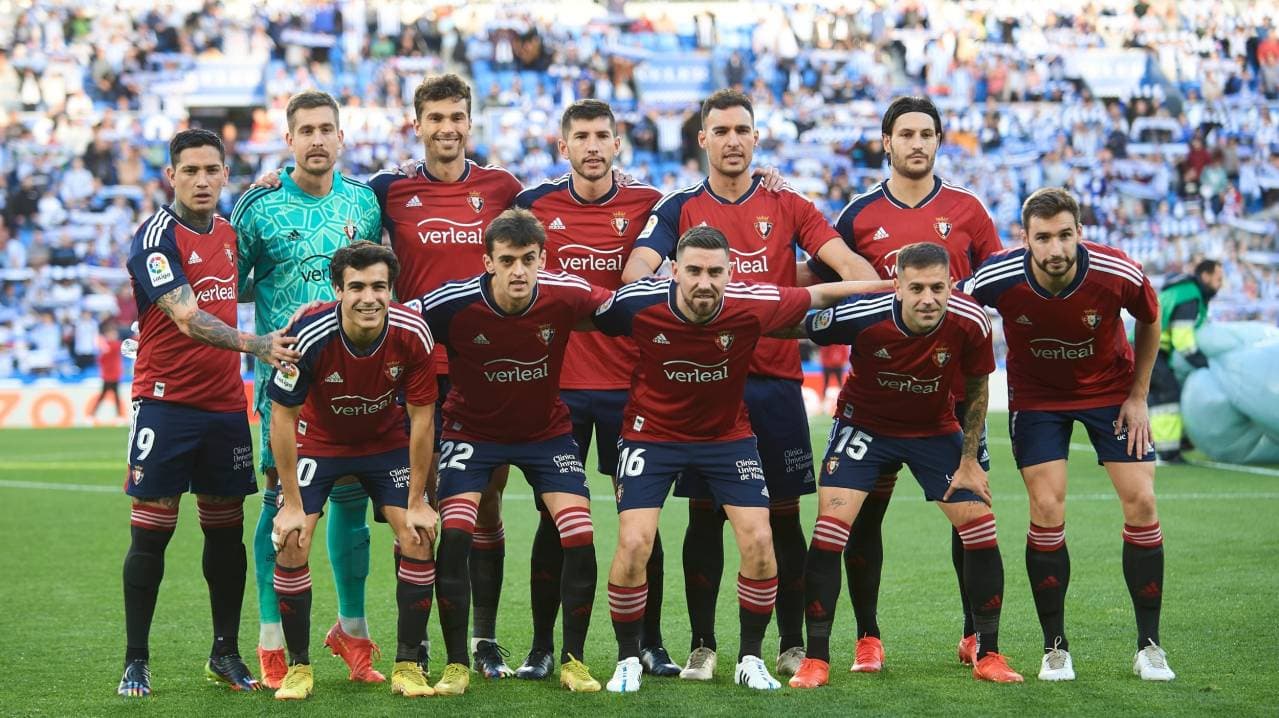
Osasuna’s 1-2 defeat to Espanyol at Estadio El Sadar was defined by a sharp contrast between territorial dominance and penalty-box efficiency. In a La Liga fixture where Osasuna controlled 68% of the ball and launched 24 shots, Espanyol’s compact 4-4-2 and ruthless use of transitions proved decisive, allowing them to convert two of their seven attempts and protect a narrow lead under sustained pressure.
The scoring opened on 27 minutes when left-back C. Romero struck for Espanyol, capitalizing on one of the visitors’ rare forays forward. Osasuna’s structural superiority finally translated into a goal just after the restart: in the 49th minute V. Munoz equalized, finishing a move assisted by centre-back F. Boyomo, who had stepped aggressively into advanced space. Any momentum from that response was quickly punctured. On 53 minutes, K. Garcia restored Espanyol’s advantage, finishing a move created by right midfielder T. Dolan, again exposing Osasuna during a defensive reorganization.
Disciplinary control remained relatively clean but tactically relevant. The first yellow card arrived early: at 11', Pol Lozano (Espanyol) — Foul, signalling Espanyol’s willingness to disrupt Osasuna’s rhythm centrally. Osasuna’s only booking came late as their chase intensified: at 83', Iker Muñoz (Osasuna) — Foul, reflecting increased risk in midfield duels as they pushed bodies forward. Espanyol’s final card, more about game management than structural play, came at 90', Antoniu Roca (Espanyol) — additionalInfo null, a late caution that did not alter the tactical pattern but underlined Espanyol’s defensive desperation in the closing stages. In total: Osasuna 1 yellow, Espanyol 2 yellows, 3 cards overall.
Osasuna's Tactical Setup
From the outset, Alessio Lisci’s 4-2-3-1 was designed to dominate territory. With L. Torro and J. Moncayola as the double pivot and A. Oroz, R. Garcia, and V. Munoz operating behind A. Budimir, Osasuna created a clear 2-3-5 structure in possession. Full-backs V. Rosier and A. Bretones (before his substitution) pushed high, allowing Munoz and Oroz to drift into half-spaces while R. Garcia attacked the right inside channel. The result was a heavy volume of shots inside the box (18) and a strong xG of 1.61, but Espanyol’s deep block forced many of those efforts into crowded central zones, as shown by 10 blocked shots.
Osasuna’s passing profile underlines their territorial control: 515 passes, 442 accurate (86%). The centre-back pair A. Catena and F. Boyomo were key in sustaining pressure, repeatedly recycling possession and stepping into midfield when Espanyol’s front two dropped off. Boyomo’s assist for Munoz was emblematic of Osasuna’s approach: centre-backs encouraged to break lines when Espanyol’s midfield four compressed centrally, creating overloads in the half-spaces. However, this aggression came with a trade-off — large spaces behind the full-backs and around Torro, particularly when Osasuna lost their rest-defense shape on turnovers.
Espanyol's Defensive Strategy
Espanyol, under Manolo Gonzalez, executed a classic low-to-mid block 4-4-2. Exposito and K. Garcia led the press selectively, more concerned with screening passes into Torro and Moncayola than pressing S. Herrera or the centre-backs. The wide midfielders, T. Dolan and P. Milla, tucked in narrow to deny central progression, conceding space to Osasuna’s full-backs but defending the box with discipline. With only 252 passes, 174 accurate (69%), Espanyol were not interested in sustained possession; instead, they targeted quick vertical releases into the front two and wide channels once they regained the ball.
Their attacking efficiency is reflected in the numbers: 7 total shots, 3 on goal, an xG of 0.79 — yet they scored twice. Both goals followed similar patterns: regains in midfield, fast progression into wide areas, and exploiting Osasuna’s disorganized rest-defense. Romero’s opener from left-back highlighted how Espanyol’s full-backs were encouraged to surge forward on selected counters, while Garcia’s winner showcased the timing and directness of runs behind Osasuna’s back line once Dolan found space to deliver.
Goalkeeping Performance
In goal, S. Herrera for Osasuna faced just 3 shots on target and made 1 save, with a goals prevented figure of -0.23, indicating he slightly underperformed relative to the quality of chances faced. Yet the more significant story was Espanyol’s defensive resilience. M. Dmitrovic, with 6 saves and his own goals prevented at -0.23, was constantly engaged, but many of Osasuna’s 9 shots on target came from suboptimal angles or under heavy pressure, a testament to the compactness of the Espanyol block rather than pure goalkeeping heroics.
Substitution Impact
The substitution pattern from both coaches reinforced the tactical battle. At 55', C. Pickel (IN) came on for P. Lozano (OUT), adding fresh legs and physicality to Espanyol’s midfield screen. Osasuna responded with a triple change at 58': R. Garcia (IN) came on for A. Oroz (OUT), I. Munoz (IN) came on for L. Torro (OUT), and M. Gomez (IN) came on for J. Moncayola (OUT), collectively increasing attacking thrust but slightly weakening their central defensive shield. Later changes — J. Galan (IN) for A. Bretones (OUT) at 67' and K. Barja (IN) for V. Rosier (OUT) at 78' — tilted Osasuna even more towards an aggressive, wing-driven assault.
Espanyol’s later substitutions were almost entirely defensive and transitional in intent: F. Calero (IN) for Exposito (OUT) and R. Fernandez Jaen (IN) for K. Garcia (OUT) at 64' signalled a shift towards protecting the lead and adding fresh running up front. At 76', A. Roca (IN) for T. Dolan (OUT) and R. Sanchez (IN) for P. Milla (OUT) refreshed the flanks, preserving the integrity of the 4-4-2 block as Osasuna’s pressure mounted.
Match Summary
Statistically, Osasuna’s overall form in this match — high possession, high shot volume, strong passing accuracy — aligned with a proactive home side chasing points late in the season. Their defensive index, however, was undermined by poor transition control and a failure to convert dominance into clear, high-quality chances. Espanyol, by contrast, posted modest attacking metrics but maximized them through clinical finishing and disciplined defensive organization. The 1-2 scoreline, with Osasuna’s xG (1.61) exceeding Espanyol’s (0.79), underscores a tactical story where structure and efficiency outmatched volume and territory, and where Espanyol’s 13 Fouls and two early-midfield yellow cards were a calculated price to pay for disrupting Osasuna’s rhythm and protecting a precious away win.
Related News

LaLiga 2026-27 Season Schedule Released: Kickoff on August 15, Clásico on October 25
Atletico Madrid vs Real Madrid: Head-to-head Stats and Past Meetings
Real Madrid Dominates Rayo Vallecano in La Liga Clash
Atletico Madrid Dominates Real Sociedad 3-0 at Reale Arena
Barcelona Dominates Levante in High-Scoring Clash

Sevilla vs Barcelona Stats: Head-to-Head Record and Past Meetings