

Kairat Almaty vs Levski Sofia: Tactical Analysis of UEFA Champions League Clash
Kairat Almaty’s 0-1 home defeat to Levski Sofia at Turkestan Arena in the UEFA Champions League 3rd Qualifying Round was defined by contrasting efficiencies rather than balance of play. The hosts controlled possession (56%), generated far more volume (20 total shots, 13 inside the box) and forced nine corners, yet were undone by a single, well-executed attacking pattern from Levski and their own lack of incision in the final third. Levski, with only nine shots and two on target, leaned on compactness, aggressive duels and a disciplined 4-2-3-1 block to protect an early lead and ride out long spells without the ball.
The game’s only goal, in the 13th minute, encapsulated Levski’s attacking idea: break quickly through the line of three behind the striker and exploit the spaces outside Kairat’s double pivot. Everton Bala drifted into a pocket to link play and then released Reinaldo, whose finish gave Levski a 1-0 platform to defend. From that point, the visitors’ tactical priority was clear—protect central spaces, manage transitions and force Kairat into low-percentage crossing and shots from imperfect positions rather than open central lanes.
First Half
Both sides started in a 4-2-3-1, but the structures behaved very differently. Kairat’s back four of L. Mata, Lucas Africo, A. Shirobokov and D. Kasabulat often pushed high, compressing the pitch and allowing the full-backs to provide width while the wingers tucked inside. The double pivot of O. Baybek and J. Oksanen tried to dictate tempo, with A. Mrynskiy and O. Jukkola stepping into half-spaces behind Levski’s midfield line to combine with centre-forward Marc Gual. This produced territorial dominance and a steady stream of entries into the final third, but the spacing in rest defence was fragile, especially in the channels either side of the centre-backs, where Levski’s transitions repeatedly threatened.
Levski’s Tactical Approach
Levski’s 4-2-3-1 under Julio Velazquez was more conservative and vertically compact. The back four of A. Centelles, N. Serafimov, K. Dimitrov and A. Neves stayed narrow, with the double pivot of G. Trdin and M. Moubarik screening in front. The three of A. Oko-Flex, Serginho and Everton Bala worked laterally to close passing lanes into Kairat’s No.10 zone, conceding the flanks but protecting the corridor in front of the centre-backs. Reinaldo acted as the first line of pressure, curving his runs to steer Kairat’s build-up wide and away from central progression.
This defensive scheme is reflected in the shot profile: Kairat managed 20 attempts, but only six on goal, with seven blocked—evidence of Levski’s willingness to defend their box with numbers and engage shots aggressively. Levski, by contrast, produced nine shots and only two on target, but one of those was decisive, and they were content to trade volume for control of key zones.
Goalkeeping Performances
In goal, T. Anarbekov (Kairat Almaty) faced just two shots on target and made one save, illustrating how little Levski actually tested him once ahead; the danger came more from the timing of their breaks than from sustained pressure. At the other end, S. Vutsov (Levski Sofia) was far busier, making six saves. That figure, combined with Kairat’s 13 shots inside the box, underlines how often the home side were able to penetrate to finishing positions, only to find Vutsov or the massed defensive line in the way. His interventions, particularly on efforts from central areas, were critical to preserving the clean sheet.
Substitutions and Tactical Changes
The substitutions further clarified the tactical direction. At 46', Kairat removed the booked O. Baybek for Ismail Bekbolat (Ismail Bekbolat (IN) came on for Olzhas Baibek (OUT)), adding fresh legs and more vertical energy from midfield to chase the game. On 64', D. Kasabulat, who had been cautioned at 60', was replaced by Edmilson (Edmilson (IN) came on for Damir Kasabulat (OUT)), a more attacking profile, signalling a shift towards greater risk on the flanks and a higher attacking line. Later, at 84', centre-forward Marc Gual made way for Mansur Birkurmanov (Mansur Birkurmanov (IN) came on for Marc Gual (OUT)), giving Kairat a different reference point up front in the closing stages, likely to attack more directly and attack crosses against a tiring Levski back line.
Levski’s changes were almost entirely about game management and defensive reinforcement. At 79', Armstrong Oko-Flex, Aldair and Everton Bala were all withdrawn in a triple change, with Hevertton Santos, Mazire Soula and Maicon introduced (Hevertton Santos (IN) came on for Armstrong Oko-Flex (OUT); Mazire Soula (IN) came on for Aldair (OUT); Maicon (IN) came on for Everton Bala (OUT)). This recalibrated the defensive line and the wide positions, adding fresh legs to sustain pressing on the flanks and maintain compactness in front of the back four. Reinaldo, the goalscorer, departed at 83' for Juan Perea (Juan Perea (IN) came on for Reinaldo (OUT)), a like-for-like swap that preserved the counter-attacking threat while giving new energy to the first line of pressure. Finally, at 90', Asen Ivanov Mitkov replaced Serginho (Asen Ivanov Mitkov (IN) came on for Serginho (OUT)), another fresh midfielder to help close out the final minutes and contest second balls.
Discipline and Tactical Discipline
Discipline also played a tactical role. Kairat collected three yellow cards—Olzhas Baibek (45+6', Foul), Damir Kasabulat (60', Foul) and Gustavo Mendonca (90+4', Foul)—all linked to attempts to disrupt Levski’s transitions or recover possession after structural risks were taken. Levski’s four yellows—Everton Bala (7', Foul), Aldair (73', Foul), Nikola Serafimov (88', Foul) and Juan Perea (89', Argument)—reflect a combative approach in duels and a willingness to break up Kairat’s rhythm, particularly as the hosts pushed harder late on.
Statistical Overview
Statistically, Kairat’s 56% possession, 496 total passes with 421 accurate (85%) and nine corners paint the picture of a side in control of territory and tempo. Levski, with 44% possession, 416 passes and 343 accurate (82%), were not simply sitting deep; they had enough passing quality to relieve pressure and string phases together when needed, but their primary success lay in their defensive structure and penalty-box defending. The absence of recorded xG values prevents a precise efficiency comparison, but the raw shot and save numbers already show the story: Kairat created volume without cutting edge; Levski created less but finished clinically and defended their area with discipline and resilience.
Related News

Lamine Yamal Shares What Barcelona Must Do to Triumph in the Champions League
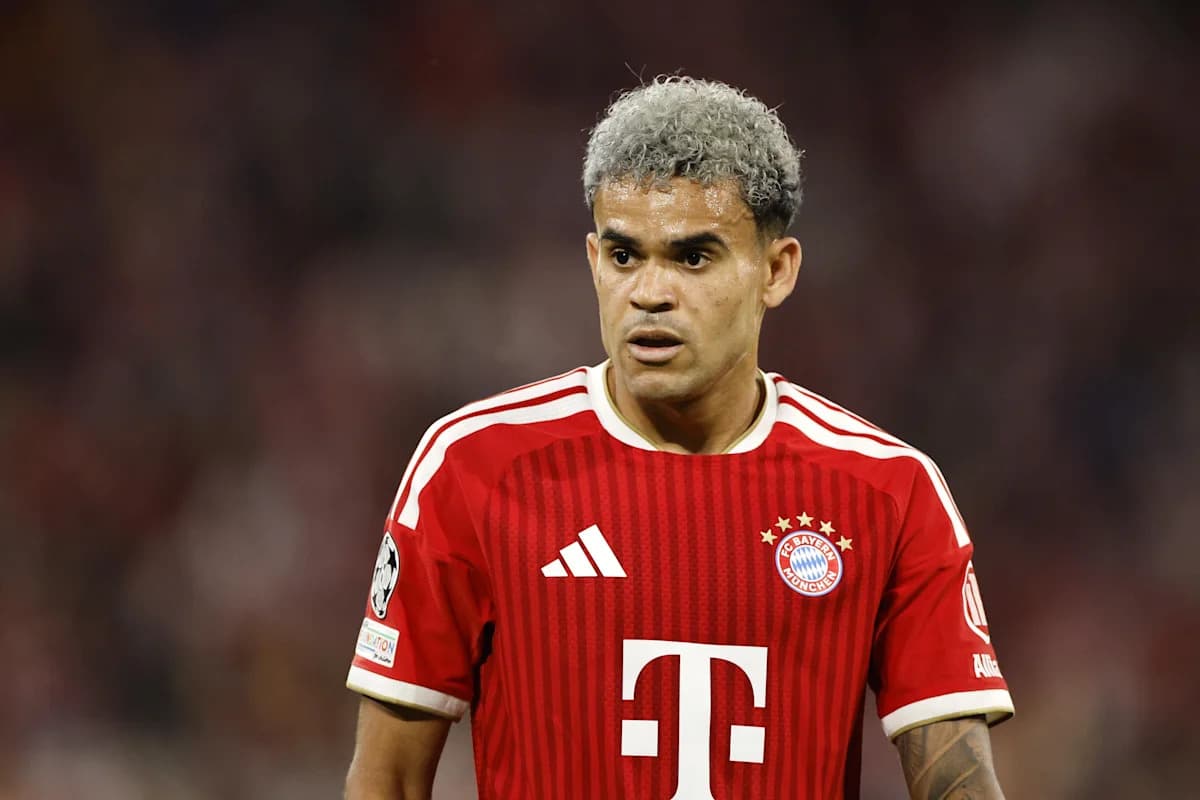
Luis Díaz Confident Bayern Munich Can Win Champions League
Insights from AFC Champions League Matchday One: K League Clubs’ Strategies
Vincent Kompany's Bayern Munich Future Not Tied Solely to Champions League Outcome
Barcelona's Camp Nou Chosen for 2029 Champions League Final, Munich Set for 2028
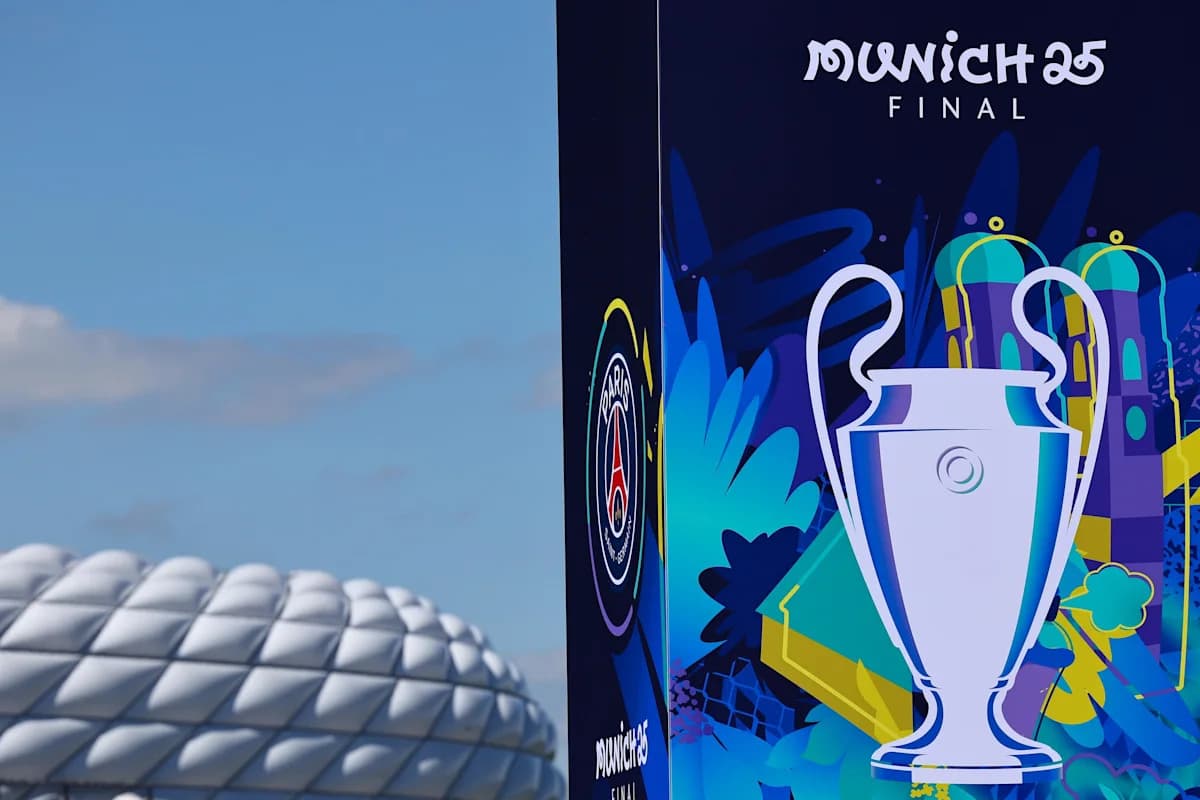
Allianz Arena to Host 2028 UEFA Champions League Final