
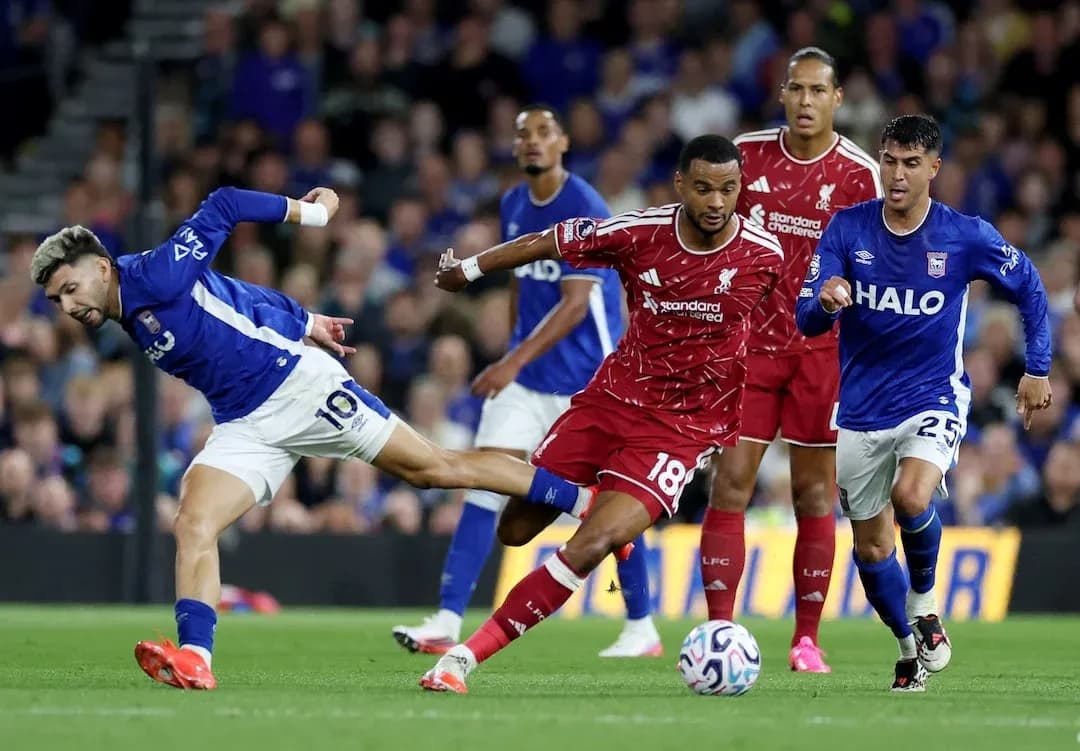
Ipswich vs Liverpool: Premier League Clash Highlights
Portman Road under the Friday night lights staged a lesson in Premier League ruthlessness. Ipswich, back on home turf in “Regular Season - 3”, arrived with early-season volatility baked into their numbers: 14th in the table, three points from three matches, and a goal difference of -4, the product of 4 goals scored and 8 conceded overall. Liverpool, by contrast, travelled as an unbeaten, evolving force under Andoni Iraola – 6th in the league, 5 points, and a goal difference of +2 (6 scored, 4 conceded overall) – and left with a 2–0 away win that felt entirely in keeping with both teams’ seasonal DNA.
G. O’Neil kept faith with Ipswich’s established 4-2-3-1, the shape they have used in all three league matches. K. Scherpen anchored a back four of L. Davis, J. Greaves, I. Diop and D. O’Shea, with S. Lukić and E. Palacios as the double pivot. Ahead of them, A. Fatawu and D. Maeda flanked J. Enciso, trying to stitch transitions into service for lone forward Emersonn. It was an XI built for verticality and counter-attacks, but also one stretched thin by absences: A. Matusiwa, J. Philogene and J. Taylor all missed out through injury, stripping O’Neil of ball-winning, direct running and rotation options in key zones.
Those injuries mattered because Ipswich’s season profile already hinted at fragility. Heading into this game, they had scored 2 goals at home from 2 matches, an average of 1.0 per game at Portman Road, but conceded 3 at home at 1.5 per match. On their travels they had been wild: 2 goals scored but 5 conceded in a single away outing, an away average of 5.0 goals against per match. No clean sheets in total and one match in which they failed to score underlined a side still adjusting to the division’s tempo.
Liverpool mirrored the 4-2-3-1 on paper but imposed a very different reality. Alisson Becker sat behind a back four of M. Kerkez, V. van Dijk, J. Jacquet and R. Araújo. In front, D. Szoboszlai and A. Mac Allister formed a technically gifted double pivot, releasing an aggressive band of three – Víctor Muñoz, F. Wirtz and C. Gakpo – behind Premier League top scorer A. Isak.
This was the “Hunter vs Shield” duel that defined the night. Isak arrived as the league’s leading marksman with 3 goals from 3 appearances, built on 7 shots and 5 on target, and a 7.77 average rating. Ipswich, meanwhile, had conceded 8 goals in total at an average of 2.7 per match overall. The defensive warning signs were clear: at home they allowed 1.5 goals per game, away a staggering 5.0. Against a striker this efficient, the margin for error was microscopic.
O’Neil’s back four tried to compress space between the lines, but the symmetry of the formations worked against Ipswich. With Szoboszlai and Mac Allister able to receive under minimal pressure, Liverpool’s progression lanes into Wirtz and Gakpo were too clean. Gakpo, who came in as both a top-assist leader and a dual threat – 1 goal and 3 assists in total, with 88 passes and 8 key passes at an 84% completion rate – repeatedly found pockets between Lukić and the Ipswich centre-backs. His ability to both turn and slide Isak in behind, or switch play to Víctor Muñoz, forced Ipswich’s block to constantly twist and over-shift.
The “Engine Room” battle was where Ipswich never quite gained a foothold. Lukić and Palacios were tasked with screening central zones and springing transitions into Enciso and Fatawu. But Liverpool’s midfield trio, led by the metronomic Mac Allister and the dynamic Szoboszlai, controlled tempo and second balls. Enciso, one of Ipswich’s early-season bright sparks with 2 assists, 83 passes at 87% accuracy and 4 key passes overall, had to drop deeper and wider just to touch the ball, blunting his ability to run at Van Dijk and Jacquet.
Out wide, the flanks were a study in contrasting full-back profiles and discipline. Kerkez, already among the league’s most carded defenders with 2 yellows in total, is a high-aggression outlet. He had made 6 tackles, 3 successful blocks and 2 interceptions across the season, but his 5 fouls committed overall and presence in both yellow and red card leaderboards signalled risk. Yet Ipswich could not isolate him often enough. Fatawu, who had attempted 15 dribbles in total with 7 successful and contributed 1 assist, found himself double-teamed by Víctor Muñoz tracking back and Araújo stepping out, the Uruguayan defender bringing his own blend of physicality and control – 19 duels in total with 13 won, plus 2 blocked shots.
Discipline patterns also tilted the tactical balance. Heading into this game, Liverpool’s yellow-card distribution showed a spike between 46–60 minutes, with 40% of their cautions arriving just after half-time, and additional clusters in the opening 30 minutes and the final quarter-hour. Ipswich’s few yellows had been concentrated in the 31–45 minute window, 75% of their cards coming before the interval. That profile hinted at a home side prone to late-first-half stress, and a Liverpool side whose intensity can spill over just after the restart. Yet with Liverpool in control of territory and rhythm, Ipswich were rarely able to turn that edge into sustained pressure or draw Liverpool into dangerous fouls around the box.
Squad depth further widened the gap. O’Neil’s bench – K. McAteer, M. Núñez, Florentino, A. Ouattara, C. Kipré, D. Furlong, C. Walton, J. Clarke and Z. Flemming – offered energy and some defensive reinforcement but little proven Premier League end-product. Iraola, by contrast, could call upon L. Koumas, G. Mamardashvili, K. Tsimikas, J. Frimpong, W. Endo, R. Gravenberch, T. Nyoni, B. Barcola and R. Ngumoha. Gravenberch in particular, with 1 assist, 70 passes at 92% accuracy and 2 interceptions overall, is a luxury rotation piece who can come in to consolidate control rather than simply plug gaps.
From a statistical prognosis standpoint, Liverpool’s underlying profile pointed toward exactly this kind of away performance. On their travels they had scored 4 goals from 2 away matches, an average of 2.0 per game, while conceding just 2 away at 1.0 per match. They had yet to lose home or away, and had already converted one penalty in total with a perfect record from the spot. Ipswich, by contrast, had no penalties awarded in total, no clean sheets, and a defensive record that made any deficit feel close to terminal.
The 2–0 full-time scoreline at Portman Road therefore reads less as an upset and more as a crystallisation of where these squads are in their trajectories. Liverpool’s 4-2-3-1 is a mature, flexible platform that allows elite weapons like Isak and Gakpo to thrive while a deep supporting cast manages risk and rhythm. Ipswich’s identical shape is still an idea in progress, reliant on Enciso’s creativity and Fatawu’s directness but undermined by injuries and a back line still acclimatising to Premier League speed.
Following this result, the narrative is clear. Ipswich must tighten the central corridor in front of Scherpen and find ways to translate Enciso’s and Fatawu’s individual quality into higher-value chances for Emersonn, especially at home where they average 1.0 goal scored and 1.5 conceded per match. Liverpool, meanwhile, leave Suffolk looking every inch a top-six contender: unbeaten, structurally coherent, and with their “Hunter vs Shield” axis of Isak and a disciplined back line continuing to tilt tight games in their favour.
Related News
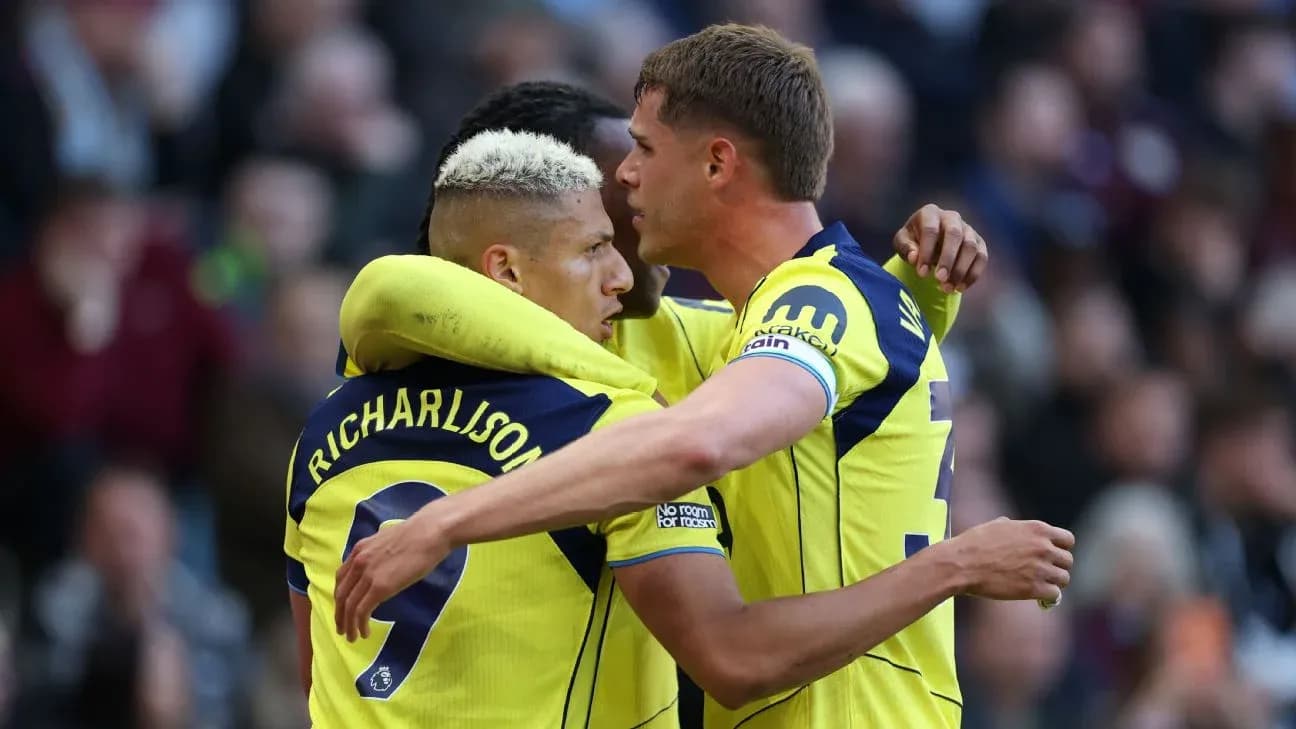
Tottenham vs Aston Villa Predicted Lineups: Team News for Premier League Clash
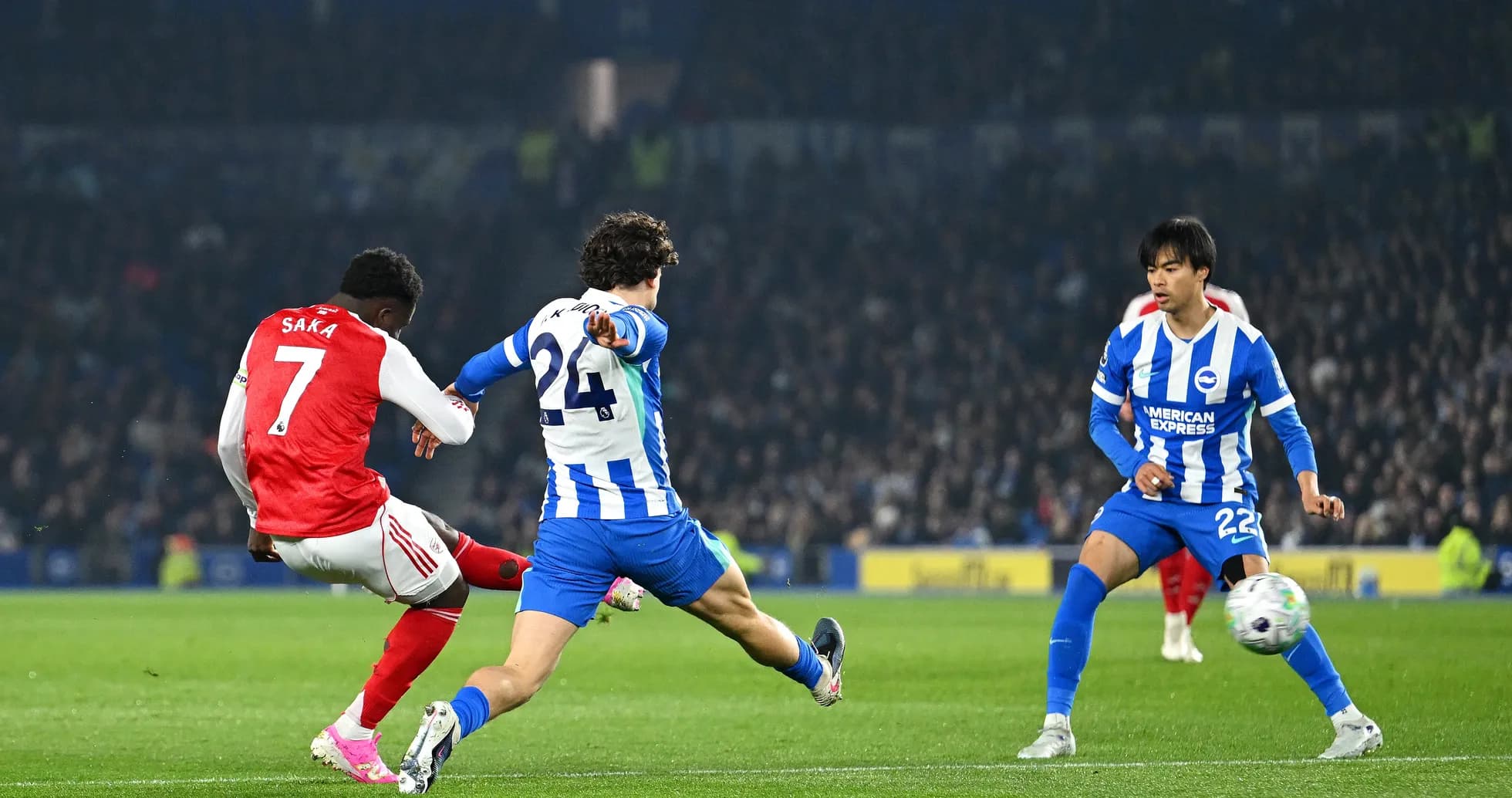
Brighton vs Arsenal: Premier League Clash Preview
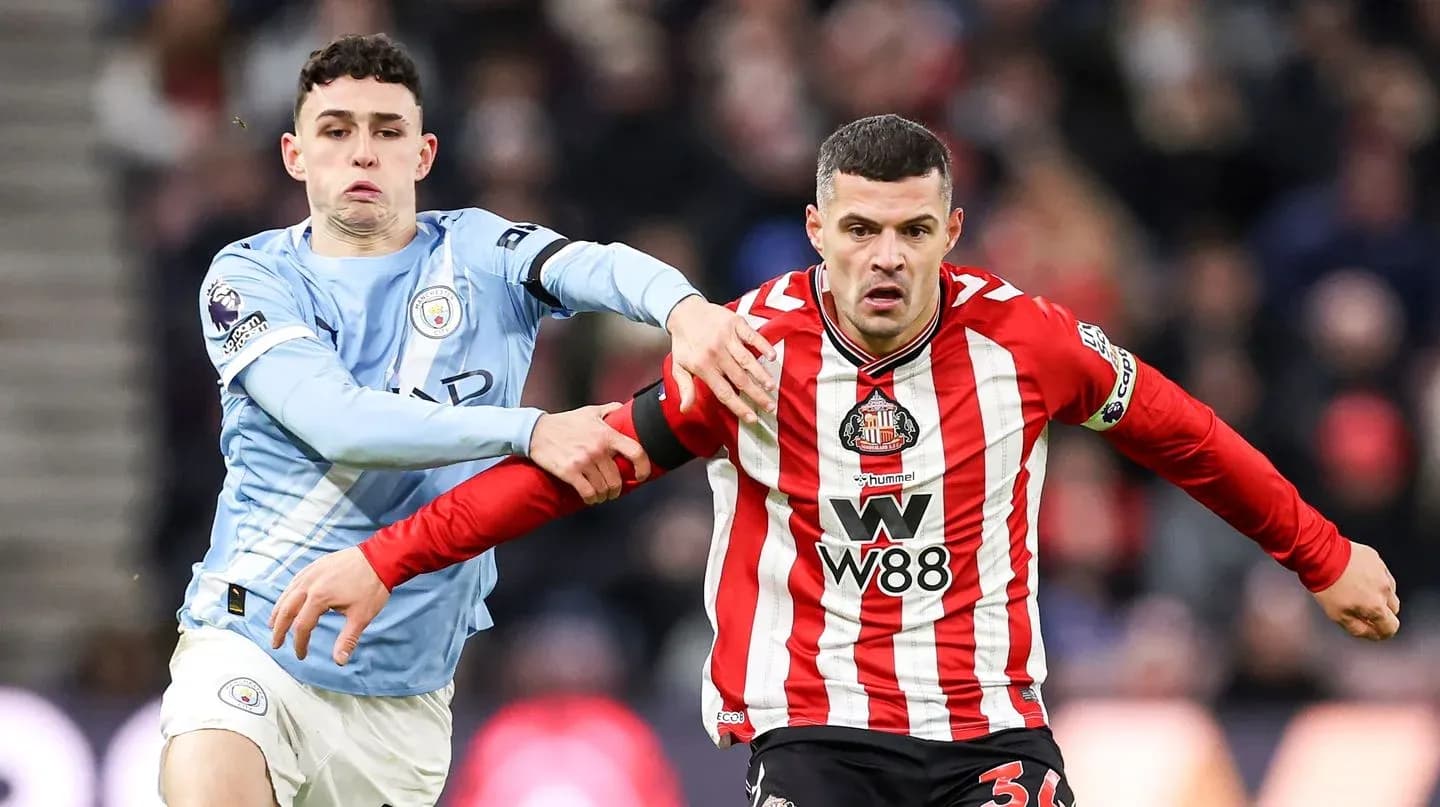
Manchester City vs Sunderland: Premier League Clash Preview
Tottenham vs Aston Villa: Early Relegation Battle

Brentford vs Chelsea Predicted Lineups: Team News and Match Insights
Brighton vs Arsenal Prediction: Key Stats and Betting Tips