
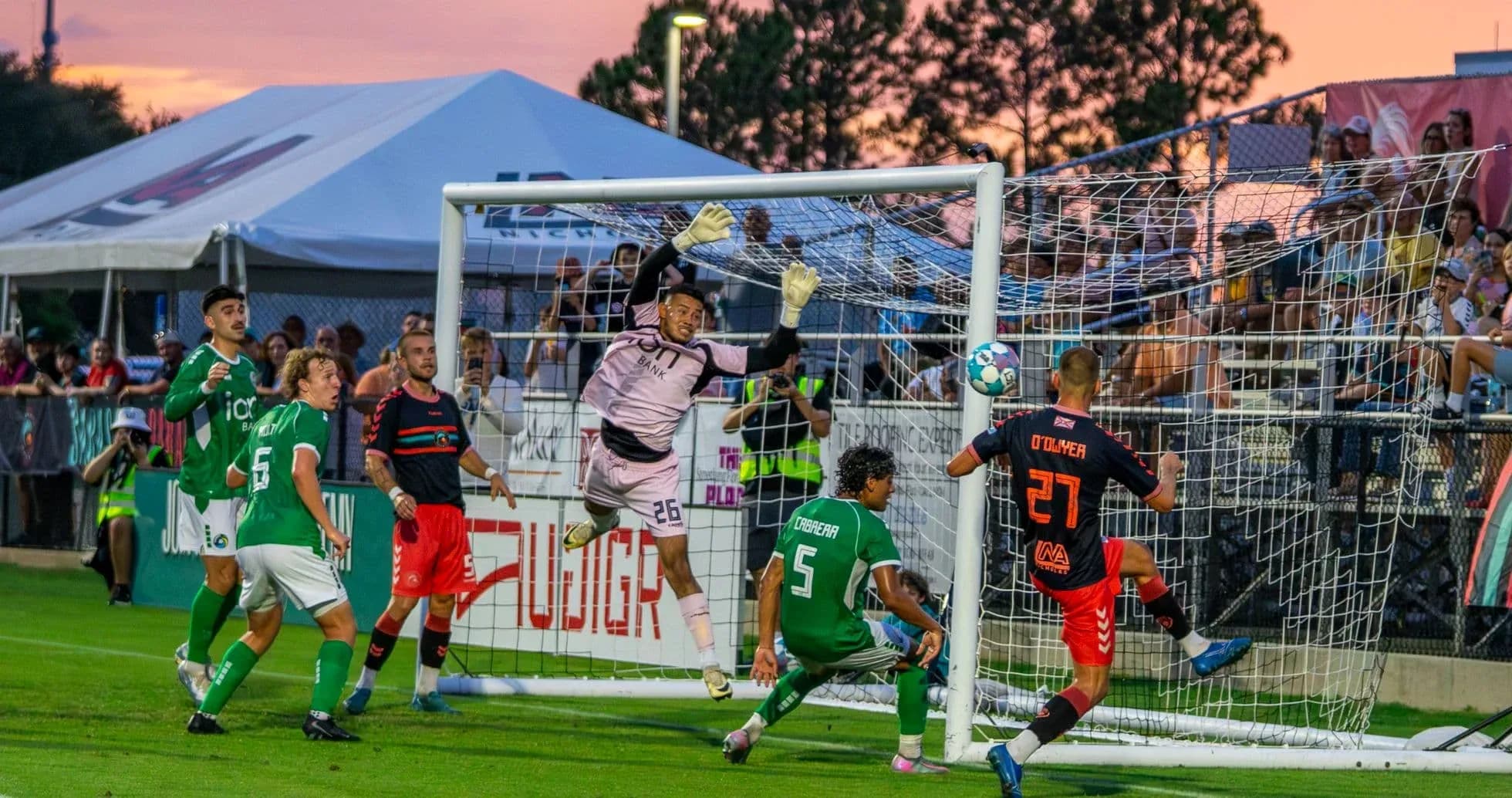
Indy Eleven's Tactical Dominance Over Forward Madison in USL League One Cup
Under the lights at Michael A. Carroll Stadium, Indy Eleven’s 2–0 win over Forward Madison felt less like a group-stage dead rubber and more like a quiet statement of intent in the USL League One Cup. Following this result, the numbers say Indy are a side growing into the competition, while Madison look like a group still searching for a stable identity.
Heading into this game, Indy’s seasonal DNA already hinted at controlled aggression. Overall they had scored 6 goals in total across 3 matches, with an overall average of 2.0 goals per game. At home, they were more measured but still effective, with 3 goals in total and a 1.5 average, conceding 2 at 1.0 per match. On their travels, they were more expansive and chaotic: 3 goals for at an average of 3.0, but 2 conceded at 2.0. The 2–0 scoreline here fit neatly into that pattern: assertive at home, but not reckless.
Forward Madison arrived with a very different profile. In total this campaign they had lost all 3 matches, scoring just 2 goals and conceding 7, for a goal difference of -5 (2 scored minus 7 conceded). Away from home, the picture was even starker: 2 goals for, 6 against, averaging 1.0 scored and 3.0 conceded. This was a side that could occasionally punch forward, but whose defensive structure had not yet survived sustained pressure.
Sean McAuley’s selection for Indy was coherent and balanced, even without a listed formation. The spine told the story: R. Charles-Cook between the posts, a defensive core featuring L. Neidlinger, M. Rasheed and P. Craig, and a midfield blend of control and craft in A. Quinn, C. Lindley and B. Rendon. Ahead of them, J. O’Brien, J. Blake, K. Williams and E. Kizza formed a front unit capable of rotating positions and attacking different channels.
McAuley’s bench options underlined the flexibility: E. Dick as the goalkeeping safety net, with outfield changes available in A. Mitrano, H. Barry, L. Mesanvi, M. Omar, D. Sing and T. Lowden. This is a squad built to change gears mid-match, even if the raw data does not show specific substitution timings.
Matt Glaeser’s Forward Madison side, by contrast, looked more experimental. T. Manske started in goal, shielded by defenders including J. Shannon and K. Toure, with G. Kanyane and H. Karamoko tasked with stitching together the middle third. In advanced areas, J. Bolma, M. Segbers, R. Torres, K. Romanshyn, R. Carmichael and C. Ngoubou gave Madison a spread of runners and ball-carriers, but not yet a clearly defined focal point.
On the bench, Glaeser had J. Harms as backup goalkeeper, with outfield alternatives in D. Gebhard, C. McCamy, S. Gyamfi, E. Munjoma, K. Carmichael and J. Castro. The depth is there, but the season-long data suggests the rotations have not yet produced a consistent defensive block or attacking rhythm.
Tactically, the key void for Madison is defensive resilience under pressure. In total this campaign they have conceded 7 goals, with an overall average of 2.3 against per match. Away, that climbs to 3.0 conceded per game. They have yet to keep a clean sheet, and in total have failed to score in 2 of their 3 fixtures. That combination – leaky at the back, blunt in front – leaves a narrow margin for error.
Indy, in contrast, have only conceded 4 goals in total, at an overall average of 1.3 per match. At home, they allow just 1.0 per game. They have kept 1 clean sheet in total and, crucially, have not failed to score in any match so far. That reliability in front of goal is the bedrock of their group campaign.
Disciplinary trends add another layer to the tactical story. Indy’s yellow cards are spread but with clear spikes: 28.57% of their bookings arrive between 31–45 minutes, and another 28.57% between 61–75. That hints at a side that tightens the screws at the end of each half, sometimes stepping over the line as they protect or chase game states. Forward Madison’s yellows peak between 46–60 minutes, with 37.50% of their cautions in that window, and a further 25.00% in both 0–15 and 61–75. They also carry a notable late-game risk: 100.00% of their red cards come in the 76–90 period. Even without specific incidents from this match, the pattern is clear – when games stretch and fatigue sets in, Madison’s defensive discipline can fracture.
That feeds directly into the “Hunter vs Shield” dynamic. Indy’s attack – with K. Williams and E. Kizza as natural reference points, supported by the intelligent movement of J. Blake and J. O’Brien – is facing a Madison back line that, on their travels, concedes 3.0 goals per match and has never yet shut out an opponent. The “Shield” here is brittle, and the 2–0 final felt like a controlled exploitation of that weakness rather than an outlier.
In the “Engine Room”, C. Lindley and A. Quinn form Indy’s metronome, tasked with dictating tempo and recycling possession. Up against them, G. Kanyane and H. Karamoko have to cover huge swathes of space for Madison, often under duress. Given Madison’s overall average of just 0.7 goals for per match and their lack of a consistent creator in the data, the burden on that central pair is immense – they must both screen and serve, often without the platform of sustained possession.
From a statistical prognosis standpoint, the Expected Goals story – even if not numerically provided – is strongly implied by the patterns. Indy’s consistent scoring (6 in total, never blanking) and relatively tight defence suggest they routinely generate higher-quality chances than they allow. Madison’s 2 goals in total, against 7 conceded, point towards a side whose xG conceded is likely to outstrip their xG created in most outings, especially away.
Following this result, nothing about the numbers feels accidental. Indy Eleven look like a team whose squad structure, tactical identity and statistical profile are converging. Forward Madison, by contrast, are still in the turbulence of early construction – flashes of individual talent, but without the collective scaffolding to withstand a well-organised opponent over 90 minutes.
Related News

Indy Eleven Edges Lexington in USL League One Cup Showdown
Louisville City Edges Detroit City in Penalty Shootout
Lexington vs Indy Eleven: Key USL League One Cup Clash
Lexington vs Indy Eleven: USL League One Cup Group Stage Preview
Detroit City vs Louisville City Match Preview

Lexington vs Indy Eleven Predicted Lineups: Team News and Match Insights