
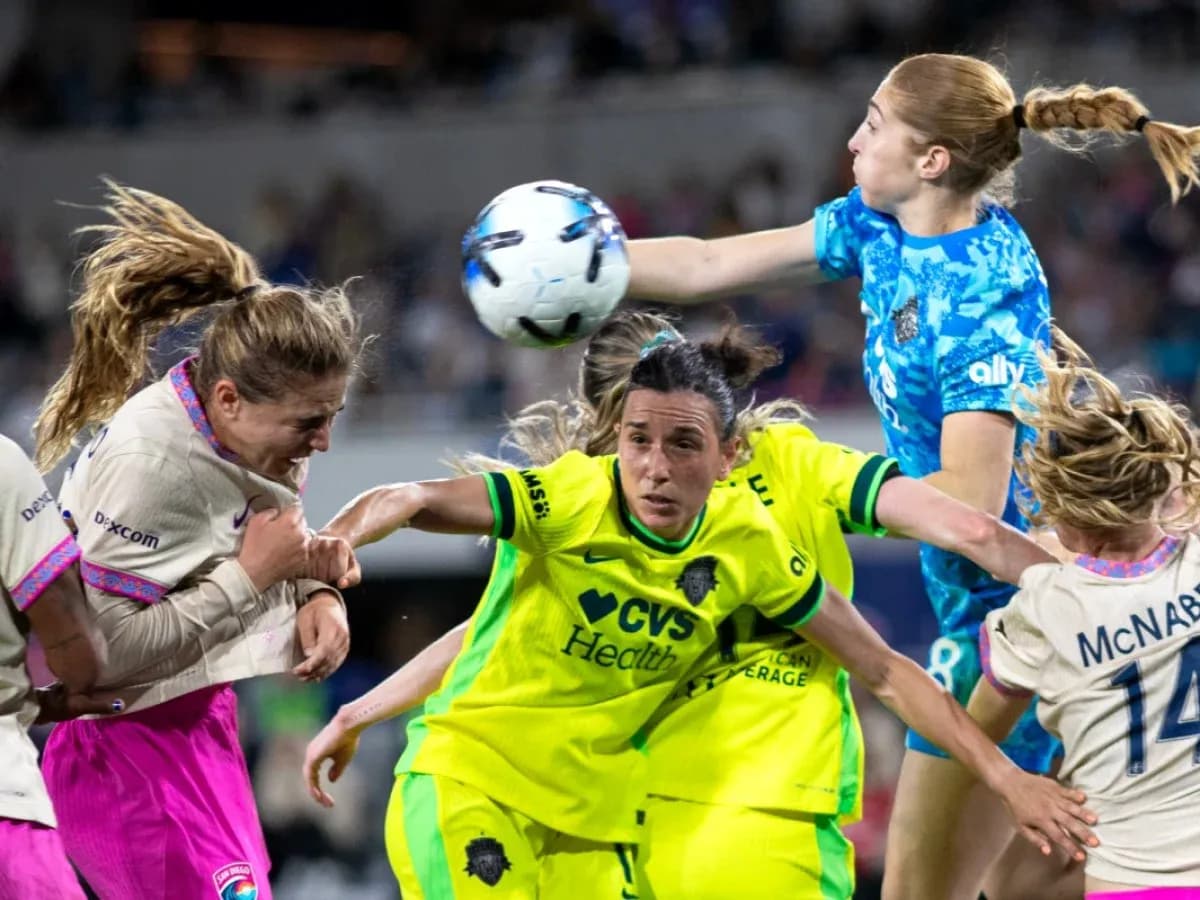
Houston Dash and San Diego Wave Share Points in NWSL Clash
Shell Energy Stadium staged a meeting of contrasts in the NWSL Women group stage: a Houston Dash W side fighting from 12th place against high‑flying San Diego Wave W, who arrived sitting 2nd and eyeing the play‑off quarter-finals. Across 90 minutes that swung in tone and tempo, the 2‑2 draw felt less like a stalemate and more like a tactical argument that never quite found a winner.
Match Overview
Heading into this game, the table had already drawn the battle lines. Houston’s overall record of 3 wins, 2 draws and 5 defeats from 10 matches, with a goal difference of -5 (12 scored, 17 conceded), painted them as a team still searching for stability. At home they had been far more competitive: 2 wins, 2 draws and 2 defeats, scoring 10 and conceding 10, an average of 1.7 goals both for and against at Shell Energy Stadium. San Diego, by contrast, carried the profile of a contender: 7 wins, 1 draw and 3 losses from 11, with a goal difference of +5 (17 scored, 12 conceded). On their travels they had been ruthless, winning 4 of 6 away, drawing 1 and losing just 1, with 10 goals scored and 8 conceded, an away average of 1.7 goals for and 1.3 against.
Tactical Approaches
Both coaches doubled down on a 4‑2‑3‑1, but the shapes told different stories. Fabrice Gautrat’s Houston were a hybrid of caution and ambition. J. Campbell anchored the side in goal, behind a back four of L. Boattin, P. K. Nielsen, M. Berkely and L. Klenke. In front of them, the double pivot of D. Colaprico and C. Hardin was tasked with stitching together a team that has conceded an overall average of 1.7 goals per game and often lives on the edge in midfield transitions.
Higher up, the trio of M. Graham, K. Rader and A. Patterson supported lone forward L. Ullmark. It was a nod to Houston’s gradual evolution: statistically, they have used a 4‑4‑2 in 8 matches this season, but the shift to 4‑2‑3‑1 in 2 games, including this one, reflects a desire for more control between the lines rather than pure verticality.
On the opposite bench, Jonas Eidevall’s San Diego Wave W also lined up in a 4‑2‑3‑1, but with a distinctly more aggressive edge. D. Haracic started in goal, protected by a back four of P. Morroni, K. McNabb, K. Wesley and A. D. Van Zanten. Ahead of them, the double pivot of K. Dali and K. Ascanio offered both ball progression and defensive screen, freeing the attacking line of Dudinha, L. E. Godfrey and M. Barcenas behind Ludmila up front.
Key Players
The attacking axis of Dudinha and L. E. Godfrey has defined San Diego’s season. Heading into this game, Dudinha had 4 goals and 4 assists from 11 appearances, with 17 shots and 9 on target, and 40 dribbles attempted with 24 successful. She is not just a scorer but a high‑volume ball carrier and creator, reflected in her 14 key passes and 70% passing accuracy. Godfrey, likewise on 4 goals and 2 assists from 11 appearances, had 9 shots with 8 on target and 17 key passes from 200 total passes at 82% accuracy. Together, they formed the “Hunter” unit of this fixture, constantly threatening to unpick a Houston defense that has already failed to keep a clean sheet in 7 of 10 league games.
Houston’s “Shield” in response was built around Colaprico and the back line. Colaprico, one of the league’s more industrious midfielders, came into the match with 20 tackles, 6 successful blocks and 9 interceptions in 10 appearances, plus 220 passes at 78% accuracy. Her disciplinary edge is clear: 3 yellow cards already, and she sits high on the league’s card charts. Behind her, P. K. Nielsen had blocked 7 shots this season and contributed 12 interceptions, while A. Patterson added 32 tackles, 3 blocks and 11 interceptions from 9 appearances. This trio formed the core of Houston’s resistance against San Diego’s multi‑channel threat.
Midfield Dynamics
The “Engine Room” duel, then, was between Dali and Ascanio on one side and Colaprico and Hardin on the other. San Diego’s season data shows a team that concedes an overall average of just 1.1 goals per match, thanks in part to the midfield’s ability to slow counters and protect central spaces. Houston, meanwhile, has leaned on its midfield to compensate for a defense that allows 1.7 goals per game overall and has only 3 clean sheets in total.
Discipline was always likely to shape the rhythm. Houston’s yellow card distribution reveals a tendency to foul in waves: 26.67% of their cautions between 16‑30 minutes, another 26.67% between 46‑60, and the same 26.67% between 76‑90, plus 13.33% in added time between 91‑105. They are a side that often has to foul to break momentum, especially as legs tire. San Diego, by contrast, spread their yellows more evenly across the second half, with 20.00% of cards in each of the 46‑60, 61‑75, 76‑90 and 91‑105 minute ranges. That pattern suggests a team willing to make tactical fouls late to protect leads or manage transitions.
Flank Battles
On the flanks, the clash between Houston’s full-backs and San Diego’s wide threats was central. Boattin and Klenke had to manage not only the overlapping runs of P. Morroni and A. D. Van Zanten but also the inward drifts of Dudinha and Godfrey. Morroni, who leads the league in yellow cards with 4 and features among the top disciplinary profiles, is an aggressive, front‑foot defender: 31 tackles, 2 blocked shots and 9 interceptions underline how often she steps into duels. Her willingness to commit fouls (17 committed, 17 drawn) adds both bite and risk to San Diego’s left flank.
Statistical Reflection
From a statistical prognosis standpoint, the 2‑2 full‑time scoreline felt like an accurate reflection of the underlying profiles. Houston at home averages 1.7 goals scored and 1.7 conceded; San Diego away averages 1.7 scored and 1.3 conceded. Overlay those numbers and a multi‑goal draw sits right in the expected band. Houston’s penalty record—3 taken, 3 scored overall, with 0 missed—meant that any incident in the box always threatened to tilt the balance, while San Diego’s lack of penalties this season (0 taken, 0 missed) underlined that their threat comes overwhelmingly from open play.
Conclusion
Following this result, Houston can frame the draw as a validation of their tactical shift towards 4‑2‑3‑1 and their capacity to trade punches with elite opposition. San Diego, meanwhile, will see it as two points dropped but also as confirmation that their attacking core of Dudinha, Godfrey and Ludmila can trouble any back line in the league. In a group stage defined by fine margins, this 2‑2 was less about the lost ground in the standings and more about the blueprint each side revealed for the battles still to come.
Related News
Orlando Pride W vs Portland Thorns W: Playoff Showdown
San Diego Wave W vs Kansas City W Predicted Lineups: Team News for NWSL Women
Orlando Pride W vs Portland Thorns W Prediction: Key Stats and Betting Tips
San Diego Wave W vs Kansas City W: Key NWSL Clash Preview
San Diego Wave W vs Kansas City W Prediction: Key Stats and Betting Tips
Portland Thorns and Chicago Red Stars Draw in NWSL Showdown