

Heart Of Midlothian vs Sturm Graz: Tactical Analysis of a 0-2 Defeat
Heart Of Midlothian’s 0-2 home defeat to Sturm Graz at Tynecastle Park was a study in contrasting game models: territorial, possession-heavy football from the hosts against a ruthlessly vertical, transition-driven display from the Austrians. Over 90 minutes in this UEFA Champions League 2nd Qualifying Round tie, Hearts controlled 64% of the ball and out-cornered Sturm 8-2, yet were consistently exposed in defensive transition and inside their own box, where the visitors generated 13 shots from close range and nine on target.
Structurally, Wouter Vrancken set Heart Of Midlothian up in a 4-3-3, with A. Schwolow in goal behind a back four of H. Milne, S. Kingsley, M. Fagan-Walcott and J. Altena. The midfield trio of S. Guendouz, O. McEntee and B. Spittal was tasked with controlling central zones and feeding a mobile front line of C. Miller, C. Braga and A. Kyziridis. The idea was clear: build through a three-man midfield, stretch Sturm’s 4-4-2 horizontally, and pin them back via sustained possession and wide overloads.
Fabio Ingolitsch’s Sturm Graz, by contrast, were compact and direct in a 4-4-2. D. Khudyakov started in goal, protected by a disciplined back four of E. Soglo, J. Mitchell, A. Vallci and J. Heil. In midfield, the band of four — J. Hodl, J. Gorenc Stankovic, L. Weinhandl and S. Seidl — worked in tight distances behind the strike pair of S. Jatta and S. Wlodarczyk. Sturm’s plan revolved around a narrow defensive block, aggressive ball-winning from Gorenc Stankovic, and rapid vertical attacks into the channels for Jatta and Wlodarczyk.
The first half followed Hearts’ script in terms of territory but not in penetration. With 473 total passes and an 80% completion rate, the hosts circulated the ball confidently, trying to drag Sturm’s two banks of four out of shape. However, much of this possession remained in front of Sturm’s midfield line. Hearts managed 15 total shots across the match, but only eight came from inside the box and just four were on target, underlining the visitors’ ability to protect the central lane and force lower-quality attempts.
Sturm, with only 268 passes at 68% accuracy, were far less concerned with ball retention. Their 36% possession was used as a platform for incisive attacks rather than control. The key tactical hinge was how quickly they could go from regain to final third: once Gorenc Stankovic or Seidl won the ball, the first pass was almost always vertical, targeting the space behind Milne and Altena. This approach produced 17 total shots, 13 of them from inside the area, exposing Hearts’ difficulty in defending their own box once the first line was broken.
Goalkeeper performance highlighted the imbalance in chance quality. A. Schwolow (Heart Of Midlothian) was forced into seven saves, reflecting the volume and clarity of Sturm’s chances. His work prevented a heavier defeat, particularly against close-range efforts that slipped through Hearts’ defensive structure. At the other end, D. Khudyakov (Sturm Graz) needed to make only three saves. That low workload, despite Hearts’ territorial dominance, speaks to how effectively Sturm restricted clear sights of goal and kept most of the hosts’ attempts either blocked (four shots) or from less threatening positions.
The key tactical turning point came after the interval. Ingolitsch’s first substitution at 46', with R. Fosso (IN) coming on for L. Weinhandl (OUT), injected fresh energy into midfield and reinforced Sturm’s pressing intensity on Hearts’ first phase. As Hearts tried to accelerate their tempo, they became increasingly stretched between lines. Sturm capitalised on this in the 64th minute when S. Seidl arrived from midfield to finish a move created by J. Gorenc Stankovic’s distribution, breaking the deadlock and rewarding Sturm’s vertical approach.
Just four minutes later, the structural cracks widened. With Hearts pushing full-backs higher and committing more numbers forward, Sturm again exploited the vacated spaces. Left-back E. Soglo stepped into advanced territory to score the second goal, a sequence that encapsulated the visitors’ confidence in stepping out of their low block once transitions were on. From a tactical perspective, both goals were the product of coordinated movements between Sturm’s midfield and back line, and Hearts’ inability to protect the half-spaces once their counter-press was bypassed.
Vrancken’s triple substitution on 69' — P. Kabore (IN) for C. Miller (OUT), A. Ba-Sy (IN) for S. Guendouz (OUT), and T. Renaud (IN) for B. Spittal (OUT) — was a clear attempt to add directness and fresh legs in the final third. Later, J. McCart (IN) for A. Kyziridis (OUT) at 80' slightly reshaped the back line. However, these changes did not fundamentally alter the dynamics: Hearts still circulated the ball, but Sturm’s compact 4-4-2, now energised by further substitutions — B. Beganovic (IN) for S. Wlodarczyk (OUT) at 72', A. Malic (IN) for E. Soglo (OUT) at 76', G. Mamageishvili (IN) for J. Hodl (OUT) at 77', and J. Halwachs (IN) for J. Gorenc Stankovic (OUT) at 81' — continued to deny central access and spring forward on the break.
Discipline and defensive aggression also framed the tactical battle. Sturm committed 15 fouls to Hearts’ 10, consistent with a side defending more and breaking up play. The only booking of the match went to Albert Vallci (Sturm Graz) at 61' for “Foul”, emblematic of the visitors’ readiness to take tactical infringements to stop Hearts’ counters at source. Crucially, Sturm managed this aggression without compromising their defensive shape or suffering dismissals.
Statistically, the verdict is clear: Hearts’ dominance of possession, passing volume, and corners did not translate into high-quality chances. Their 4-3-3 provided width and control but lacked penetration between Sturm’s lines and left them vulnerable to counters, particularly when full-backs advanced simultaneously. Sturm’s 4-4-2, meanwhile, maximised efficiency — 17 shots, nine on target, and 13 from inside the box — by focusing on compactness, verticality, and coordinated movements in transition.
From a broader tactical lens, this match underlines a familiar European lesson: volume of possession is less decisive than control of space and box quality. Sturm Graz won the key zones, protected their penalty area, and repeatedly accessed Hearts’ with speed and numbers. Heart Of Midlothian leave Tynecastle Park with more passes and more of the ball, but Sturm’s superior structure and transition execution delivered a deserved 2-0 away win.
Related News

Vincent Kompany's Bayern Munich Future Not Tied Solely to Champions League Outcome

Barcelona's Camp Nou Chosen for 2029 Champions League Final, Munich Set for 2028
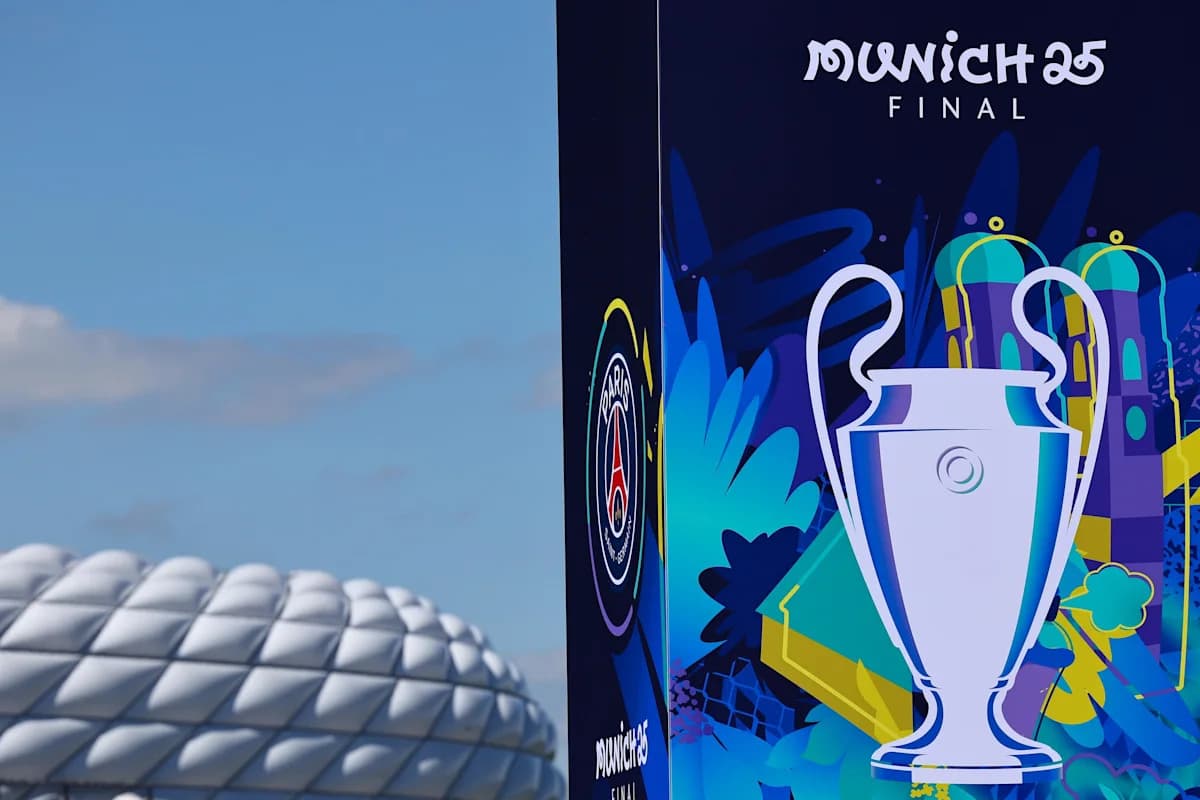
Allianz Arena to Host 2028 UEFA Champions League Final

Allianz Arena to Host 2028 Champions League Final for Third Time

Barcelona's Nou Camp Chosen for 2029 UEFA Champions League Final Over Wembley and Dortmund

Five English Clubs Secure Wins in Champions League Opening Round