
Hapoel Beer Sheva Dominates Crvena Zvezda in UEFA Champions League
FK Crvena Zvezda’s 0-2 home defeat to Hapoel Beer Sheva at Stadium Rajko Mitić in the UEFA Champions League 3rd Qualifying Round was fundamentally a structural and territorial collapse. The raw numbers frame the story starkly: Hapoel Beer Sheva held 96% of the ball, out-shot the hosts 6-2 on target, and forced a ten-man Crvena Zvezda side to defend almost exclusively in their own half for long stretches. The visitors’ 4-3-3 established a stable possession platform, while Dejan Stankovic’s 4-2-3-1 never translated into pressing pressure or counter-attacking threat, and was further undermined by two red cards.
Hapoel Beer Sheva's Tactical Structure
Hapoel Beer Sheva’s 4-3-3 functioned as a classic positional play structure. With P. Amador and G. Mizrahi wide in the back four and Miguel Vitor plus I. Rotman as central defenders, the visitors built calmly from deep, using Lucas Ventura as the central reference in midfield. Lucas Ventura, flanked by E. Peretz and N. Yehoshua, gave them a three-versus-two advantage against R. Krunic and T. Elsnik in Zvezda’s double pivot. This numerical superiority in the middle was the tactical engine behind the 96% possession figure: Beer Sheva consistently created free men between the lines and recycled the ball rather than forcing low-percentage entries.
Up front, the front three of J. East, I. Zlatanovic and Z. Ahmed stretched Zvezda’s back four horizontally. East and Ahmed held wide positions, pinning full-backs Seol Young-Woo and N. Tiknizyan (initially) deep, while Zlatanovic operated between the centre-backs D. Luckassen and S. Erakovic. This spacing prevented Zvezda’s full-backs from stepping out to press, which in turn left Krunic and Elsnik exposed and constantly late into duels. The consequence was a territorial lock: Beer Sheva could camp in the attacking half, choose their moments to shoot (six shots on goal from relatively few total attempts), and maintain rest defence against counters.
Crvena Zvezda's Struggles
Crvena Zvezda’s 4-2-3-1 looked coherent on paper but never manifested as an effective pressing or transition scheme. Bruno Duarte and J. Enem were supposed to provide vertical threat, supported by O. Bukari and V. Kostov from the wings and half-spaces. Yet with only 4% of the ball, their attacking structure was reduced to isolated clearances and rare, low-odds forays. The front four were too often detached from the double pivot, so when Zvezda did win the ball, the distances to progress were too large; Beer Sheva’s counter-press, anchored by Lucas Ventura and the centre-backs, quickly smothered any break.
Disciplinary Issues
The disciplinary events compounded these structural issues. The first half’s key defensive theme for Beer Sheva was controlled aggression: just 5 fouls and one yellow card, to I. Rotman for “Holding” at 22', showed a back line willing to stop transitions early but rarely overcommitting. Zvezda, by contrast, committed 10 fouls and saw their organisation unravel after the break. The red card to D. Stankovic at 57' removed a key figure from the technical area and symbolised the growing frustration as the hosts chased shadows. Reduced control from the bench at a critical juncture made it harder to recalibrate shape or tempo.
Goals and Tactical Responses
The first goal at 61' crystallised Beer Sheva’s structural superiority. I. Zlatanovic’s finish, assisted by J. East, was the product of sustained pressure rather than a single chaotic transition. With Zvezda pinned deep, Beer Sheva could circulate until they found the right angle; East’s involvement from the flank aligned with his wide starting position in the 4-3-3, pulling defenders out and opening a central lane for Zlatanovic. That this came just four minutes after the Stankovic dismissal underlined how psychological and organisational disruption off the pitch can quickly translate into lapses on it.
Substitution patterns further emphasised the tactical trajectories. At 46', Zvezda made two attacking-minded changes: M. Arnautovic (IN) came on for J. Enem (OUT), and M. Abu Fani (IN) came on for T. Elsnik (OUT). These moves suggested a desire to inject more energy and possibly more verticality into midfield. However, with possession so lopsided, Abu Fani’s role became more about emergency defending than orchestrating play. Later, at 62', M. Ivanic (IN) replaced V. Kostov (OUT), and at 73' M. Cham (IN) replaced O. Bukari (OUT), further signalling a search for creativity, but without the ball these technical profiles had little platform.
Beer Sheva’s substitutions were more about game management than tactical reconfiguration. At 66', H. Kanaan (IN) for G. Mizrahi (OUT) and M. Abu Rumi (IN) for N. Yehoshua (OUT) refreshed legs without altering the 4-3-3’s core structure. At 76', D. T. Diop (IN) for I. Zlatanovic (OUT) maintained a central reference in the front line, while the late changes at 90+2' — O. Davidzada (IN) for P. Amador (OUT) and A. Ohana (IN) for J. East (OUT) — were classic closing moves to protect the flanks and manage the clock.
The second goal at 79' — J. East scoring this time, assisted by E. Peretz — illustrated Beer Sheva’s midfield balance. Peretz, operating as one of the advanced midfielders, could step into the half-space and deliver the decisive action, with East again exploiting wide-to-in movements. That both goals involved East, once as provider and once as scorer, is consistent with the tactical importance of the wide forward in this 4-3-3: constantly attacking the channel between full-back and centre-back in a Zvezda side that spent most of the match retreating.
Late Frustrations
Late on, Zvezda’s frustration boiled over. At 90+2', M. Abu Fani received a red card for “Roughing”, leaving the hosts effectively two men down in terms of leadership and emotional control (coach sent off, player dismissed). This second dismissal did not change the result but confirmed the psychological toll of spending an entire match without the ball. Beer Sheva, by contrast, finished with two yellows — Rotman’s “Holding” and Lucas Ventura’s “Roughing” at 63' — but never lost their structural discipline.
Statistical Verdict
Statistically, the verdict is unambiguous. Hapoel Beer Sheva’s 96% possession was not sterile; it was backed by a 6-2 advantage in shots on goal, parity in corners (3-3), and a lower foul count (5 vs 10), suggesting control both with and without the ball. Crvena Zvezda’s 4% possession and mere two shots on goal from a nominally attacking 4-2-3-1 underscore a complete failure to establish either a pressing identity or a counter-attacking threat. Without meaningful passing data or xG values, the core truths still stand: Beer Sheva’s 4-3-3 imposed its rhythm, exploited numerical superiority in midfield, and translated territorial dominance into two well-constructed goals, while Zvezda’s structure disintegrated under pressure and indiscipline.
Related News
Lamine Yamal Shares What Barcelona Must Do to Triumph in the Champions League
Luis Díaz Confident Bayern Munich Can Win Champions League
Insights from AFC Champions League Matchday One: K League Clubs’ Strategies
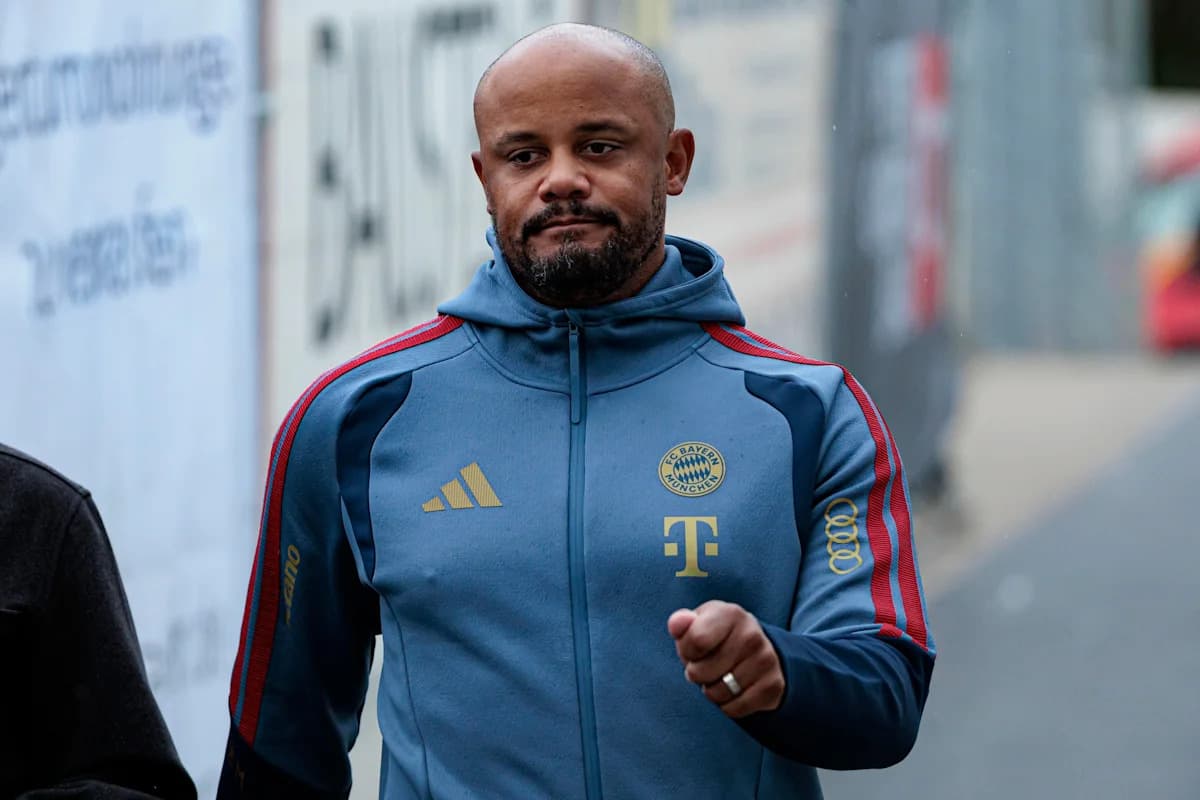
Vincent Kompany's Bayern Munich Future Not Tied Solely to Champions League Outcome
Barcelona's Camp Nou Chosen for 2029 Champions League Final, Munich Set for 2028
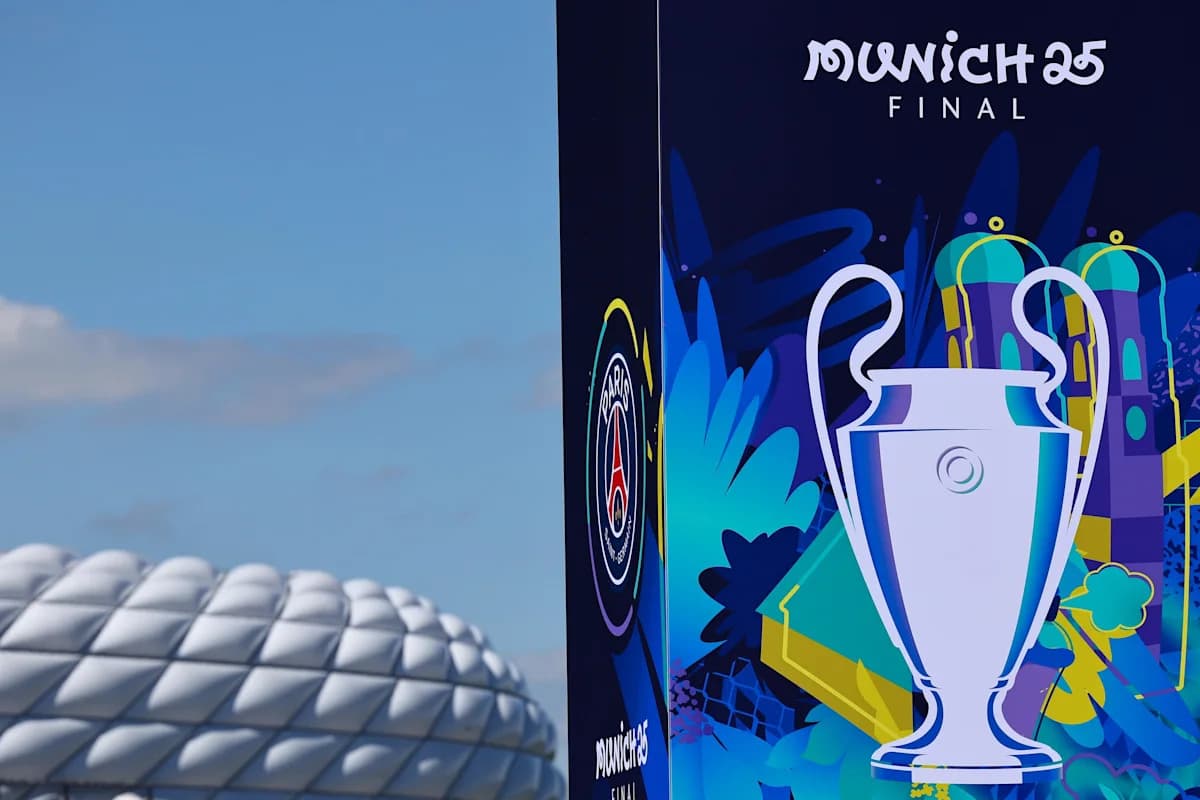
Allianz Arena to Host 2028 UEFA Champions League Final