
Forge Dominates Supra du Quebec in Tactical Showdown
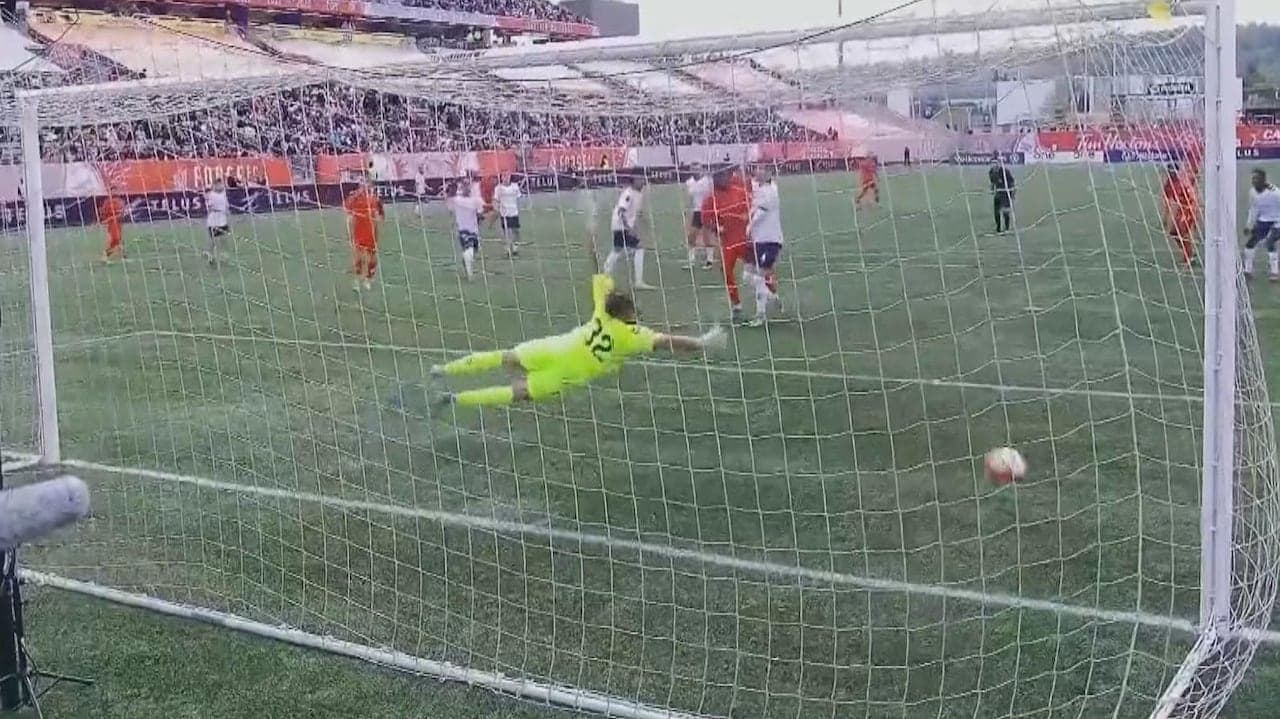
Under the Hamilton sky at Tim Hortons Field, Forge did what league leaders are supposed to do: they bent a stubborn Supra du Quebec side back toward their own box for long stretches, waited for the crack to appear, and slipped through it for a 1–0 win that felt as much like a statement of control as it did three points.
I. The Big Picture – Forge’s machine, Supra’s resistance
Following this result, the table underlines just how sharply defined these two sides’ identities already are in the Canadian Premier League’s group stage. Forge sit 1st with 16 points from 6 matches, unbeaten with 5 wins and 1 draw. Their overall goal difference of 7 is built on 8 goals scored and just 1 conceded in total, a defensive record that borders on the doctrinal. At home, they have played 3, winning 2 and drawing 1, scoring 3 and conceding 0. On their travels they have been more expansive, with 5 goals for and 1 against across 3 away fixtures.
Supra du Quebec, for all the ambition in their attacking names, are living a more fragile existence. They are 4th with 6 points from 5 games, having won 2 and lost 3. Overall they have scored 5 and conceded 6, for a goal difference of -1. On their travels they are high‑variance: 1 win and 1 loss from 2 away matches, with 3 goals scored and 3 conceded. This trip to Forge always looked like a stress test of their structure as much as their courage.
The 1–0 scoreline at full time fits both teams’ seasonal DNA. Forge’s campaign has been defined by control, clean sheets and a kind of suffocating territorial dominance. Supra’s, by flashes of quality from their technical core, undone by defensive lapses and disciplinary turbulence.
II. Tactical Voids and Discipline – Edges of risk
The lineups told a story of continuity for Forge. Bobby Smyrniotis trusted the backbone that has carried this start: D. Bertaud in goal; a defensive unit built around D. Nimick and A. Batisse; and a midfield spine featuring A. Aromatario and B. Paton, both of whom arrive in this match as statistical pillars.
Paton, with 270 minutes and 1 goal this season, is more than a defender on paper; he steps into midfield lines, having taken 4 shots (2 on target) and made 77 passes with 1 key pass. Aromatario, ever-present with 270 minutes, has stitched together 128 passes at 77% accuracy, plus 8 tackles and 9 interceptions. His 2 yellow cards underline that he is Forge’s risk‑taker in the press as much as their metronome.
Supra’s starting XI was notable for the presence of ball‑players like S. Mlah and A. Sissoko in midfield, flanked by the creative pair of D. Choiniere and A. Marcoux. Behind them, the defensive line of C. Auguste, K. Ferdinand, S. Deslandes and C. Bayiha had to carry a burden they have not yet solved this season: a team that has not kept a single clean sheet, home or away.
The disciplinary context added another layer. Heading into this game, Forge’s card profile was controlled but spiky in specific windows: 25.00% of their yellow cards have come in the 31–45 minute range, and another 25.00% between 46–60 and 61–75. They also have a single red card in the 46–60 window. Supra, by contrast, are a chaos team in the book: 28.57% of their yellows arrive between 46–60 and another 28.57% between 76–90, with a red card already on the ledger between 91–105.
In personnel terms, that volatility is embodied by players like D. Abzi (3 yellows), M. Chretien (2 yellows), A. Sissoko (2 yellows) and S. Mlah (2 yellows). For Forge, R. Rama (2 yellows and a yellow‑red) and Aromatario (2 yellows) are the prime candidates to walk the disciplinary tightrope. That mix all but guaranteed that the middle third of this match would be contested on the brink of the referee’s tolerance.
III. Key Matchups – Hunter vs Shield, Engine Room vs Enforcer
The headline duel was always going to be Brian Wright against Supra’s defensive shield. Wright arrives as Forge’s most dangerous finisher: 2 goals in 5 appearances, including 1 penalty scored from 1 taken, 5 total shots with 2 on target, and a rating of 7.07. He is not a volume striker yet, but his efficiency and his ability to win duels (8 won from 22) make him a constant reference point.
Across from him, Supra’s best defensive performer statistically is M. Chretien. A defender with an 8.0 rating, he has 1 goal, 1 shot on target from 1 attempt, and a passing accuracy of 96% over 78 passes. He has blocked 1 shot and made 1 interception, while winning all 4 of his duels. Chretien’s 2 yellow cards and 1 conceded penalty this season, however, hint at the cost of his aggression.
This is the “Hunter vs Shield” axis: Wright’s penalty‑box movement and ability to draw fouls (6 drawn, 1 penalty won) against a defender who defends front‑foot, sometimes too front‑foot. Over 90 minutes, Forge’s patient occupation of the final third was always likely to drag Chretien and his back line into decision‑making zones they do not yet manage cleanly.
Behind that duel, the “Engine Room” battle was fought between Forge’s double‑pivot and Supra’s creative core. Aromatario and Paton, with 205 combined passes, 10 tackles and 11 interceptions between them this season, form a disruptive screen that feeds quick transitions to T. Borges and Wright. Supra’s answer lay with S. Rea and Mlah. Rea, one of the league’s top assist providers with 1 assist and 5 key passes from 46 total passes at 84% accuracy, is their primary conduit between lines. Mlah, with 1 goal from 1 shot on target and 93% passing, offers vertical threat from deeper spaces.
On paper, this is where Supra could have hurt Forge: quick combinations between Rea and Mlah to bypass Aromatario’s pressing lane and isolate Forge’s full-backs. In practice, Forge’s structure and their season‑long habit of denying central progression meant those windows were rare and fleeting.
IV. Statistical Prognosis – Why 1–0 made sense
Even without explicit xG values, the season data sketches a clear expected pattern. Heading into this game, Forge’s attack at home was steady rather than explosive, with 1.0 home goals for on average and 0.0 goals against. Supra’s away profile – 1.5 goals for and 1.5 goals against on their travels – suggested an open, stretched contest when they are on the road.
But defensive solidity tends to dictate the ceiling of a match more than attacking averages do. Forge’s overall concession rate of 0.2 goals per game, plus 5 clean sheets in 6, points to a side that almost always drags the game toward their preferred rhythm: low‑event in their own box, high‑event in terms of territory and control. Supra, with 6 goals conceded in 5 and no clean sheets, are the opposite: every match is a negotiation with their own instability.
Overlay that with discipline and the prognosis becomes sharper. Supra’s yellow‑card surges in the 46–60 and 76–90 windows intersect directly with the periods when Forge typically ramp up pressure and tempo after the break. That intersection – Supra’s defensive weakness in late, tired minutes and Forge’s habit of controlling the second half – is exactly where a tight 0–0 tends to tilt into a 1–0 for the hosts.
In narrative terms, that is what unfolded here. Forge’s structure, anchored by Bertaud, Nimick, Batisse, Aromatario and Paton, suffocated Supra’s creative outlets. Wright’s presence and the wide craft of Borges kept Supra’s back line pinned. Supra’s best hope lay in transitional bursts from Rea, Mlah and Choiniere, but those moments never multiplied into sustained threat.
Following this result, the tactical verdict is clear: Forge remain the league’s benchmark for control and defensive clarity, a side whose numbers and on‑pitch behaviour align almost perfectly. Supra du Quebec, meanwhile, stay perched on the edge between promise and peril – talented enough to trouble anyone on their travels, but still too porous and too combustible to consistently survive nights like this in Hamilton.
Related News

Cavalry FC vs Forge: Intense Rivalry Returns to ATCO Field
Pacific FC vs Vancouver FC Prediction: Key Stats and Betting Tips

Cavalry FC vs Forge Prediction: Key Stats and Betting Tips

Cavalry FC Dominates Pacific FC in 1-0 Clash

York United Triumphs Over Vancouver FC in Canadian Premier League Clash

Atlético Ottawa vs Supra du Quebec Stats: Head-to-Head Record