
Fenerbahçe Dominates Sturm Graz in UEFA Champions League Qualifier
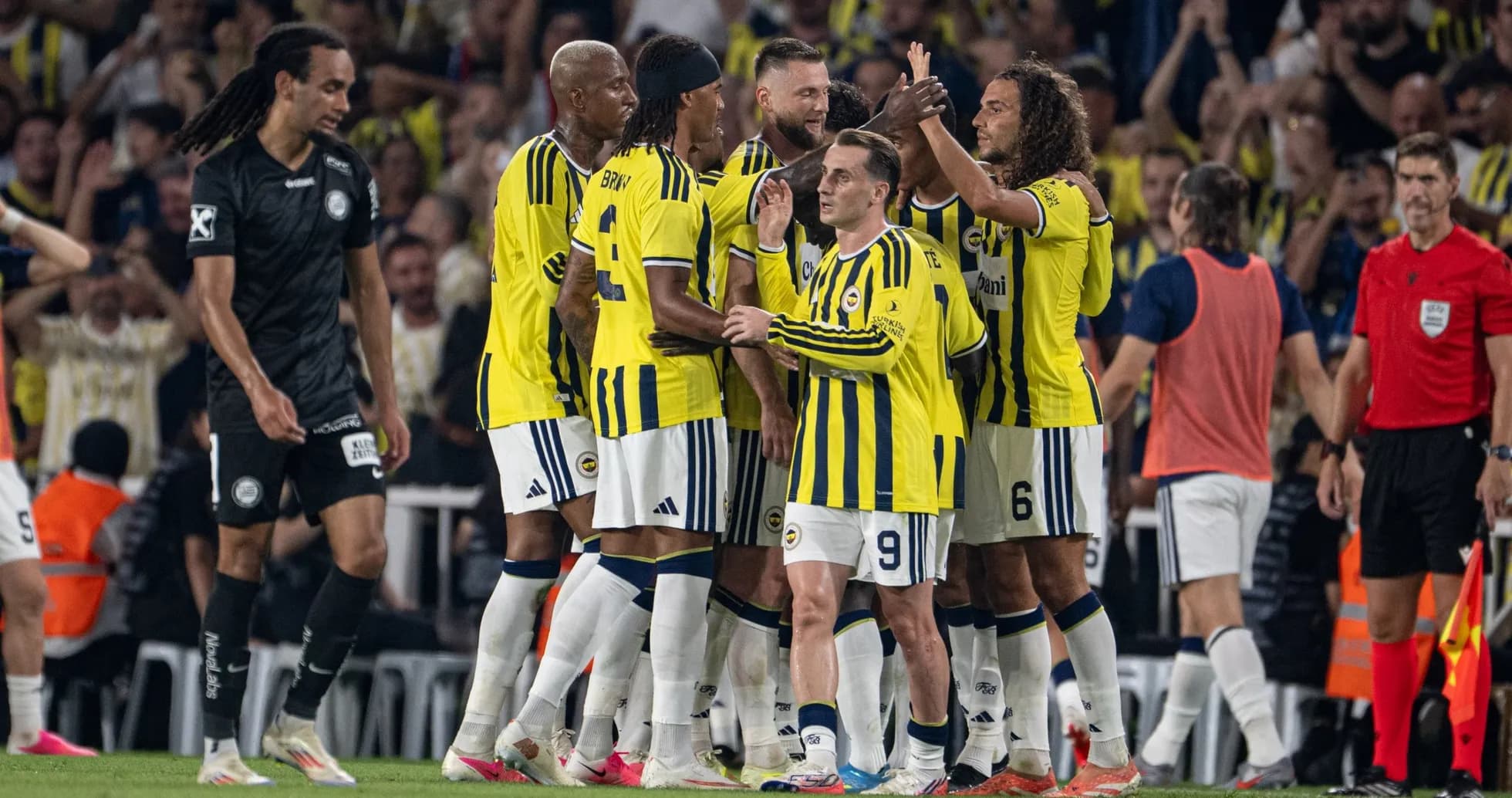
Fenerbahçe’s 2-0 win over Sturm Graz at Chobani Stadium was a textbook example of territorial domination translated into a controlled, low-risk European home performance. Ismail Kartal’s 4-2-3-1 not only secured the first-leg advantage in this UEFA Champions League 3rd Qualifying Round tie but also suffocated Sturm’s 4-4-2 to the point of near-impotence in open play. The statistical profile — 72% possession, 17 total shots to 5, and a 578–222 passing split — underlines how one-sided the tactical battle became, especially after Fenerbahçe built a 2-0 half-time lead and then managed the tempo with authority.
Fenerbahçe’s structure was clear from the opening minutes. The back four of N. Semedo, M. Skriniar, N. Ake and J. Oosterwolde provided a high starting line, with N. Kante and M. Guendouzi as a double pivot to secure rest defence and recycle possession. Ahead of them, the line of three — K. Akturkoglu drifting inside from the left, M. Asensio between the lines, and M. Greenwood from the right — constantly overloaded the half-spaces around Sturm’s central midfield pairing of J. Gorenc Stankovic and L. Weinhandl. Talisca operated as a classic hybrid nine, dropping into pockets to link play and then attacking the box once the ball was shifted wide.
First Goal
The first goal at 9' encapsulated this design. Fenerbahçe’s ability to pin Sturm’s full-backs deep created room for K. Akturkoglu to receive between the lines and supply Talisca. The combination shows how the 4-2-3-1 morphed into a 2-3-5 in possession: full-backs high, pivots staggering behind, and all three attacking midfielders plus Talisca occupying the last line. With Sturm’s 4-4-2 block forced narrow, the visitors struggled to apply any coordinated pressure to the ball carrier, which explains why Fenerbahçe finished with 90% passing accuracy (520 accurate from 578 passes).
Second Goal
The second goal on 45' — M. Greenwood finishing from an M. Asensio assist — reflected the same pattern but from the opposite flank. Greenwood’s role as an inverted right-sided midfielder allowed him to attack the inside channel, while Asensio’s positioning as a central playmaker drew out one of Sturm’s pivots, opening a seam in front of the centre-backs. That Fenerbahçe generated 12 shots inside the box (out of 17 total) shows how consistently they managed to progress into high-value areas rather than settling for speculative efforts.
Out of possession, Fenerbahçe were rarely stretched. Sturm Graz managed only 5 total shots, with just 1 on goal, despite trailing for over 80 minutes. The double pivot of Kante and Guendouzi was crucial: they screened passes into S. Wlodarczyk and S. Jatta, and were aggressive in collapsing on second balls. The relatively low foul count for Fenerbahçe (10 fouls to Sturm’s 19) indicates control rather than desperation — they could delay and channel rather than resort to last-ditch challenges.
The game state after 2-0 allowed Kartal to shift from high-tempo dominance to energy management. Substitutions were used to maintain structural integrity rather than chase further goals. At 30', A. Brown (IN) came on for J. Oosterwolde (OUT), a like-for-like defensive change that preserved the back four shape. On 69', Fred (IN) replaced M. Greenwood (OUT) and I. Kahveci (IN) came on for M. Asensio (OUT), freshening the midfield line of three while keeping the same positional profiles: a right-sided midfielder and a central creator. At 85', M. Muldur (IN) for N. Semedo (OUT) and O. Aydin (IN) for K. Akturkoglu (OUT) again replicated roles rather than formations, ensuring Fenerbahçe could see out the match without tactical disruption.
Sturm Graz's Approach
Sturm Graz, by contrast, were reactive from the outset. Their 4-4-2, with S. Seidl and J. Hodl (initially) wide and Wlodarczyk–Jatta up front, was intended to offer two outlets in transition. But with only 28% possession and a passing accuracy of 74% (164 accurate from 222 passes), they rarely built sustained attacks. Their 3 blocked shots hint at occasional forays into Fenerbahçe’s defensive third, but the lack of volume and quality — just 3 shots inside the box — shows how effectively the hosts compressed space around their own area.
Fabio Ingolitsch’s substitutions were an attempt to inject energy and vertical threat rather than to alter the basic 4-4-2 framework. Immediately after half-time, at 46', A. Kayombo (IN) came on for S. Wlodarczyk (OUT), a straight swap up front to add pace in behind. The triple change on 64' — G. Mamageishvili (IN) for S. Seidl (OUT), R. Fosso (IN) for L. Weinhandl (OUT), and N. Weiper (IN) for S. Jatta (OUT) — refreshed both central and wide midfield zones and the second striker role, but the positional map stayed similar. Later, at 87', B. Beganovic (IN) replaced J. Hodl (OUT) on the flank. Despite these changes, Sturm never solved the problem of progressing through Fenerbahçe’s compact mid-block; their forwards remained isolated and service into them sporadic.
Discipline further underlined the tactical story. Sturm collected 3 yellow cards — Jon Gorenc Stankovic (Foul at 21'), Jurgen Heil (Foul at 58'), and Axel Kayombo (Simulation at 65') — all symptomatic of a side arriving late into duels or trying to manufacture advantages once their build-up was stifled. Fenerbahçe, by contrast, finished without a card, consistent with their controlled pressing and secure rest defence.
In goal, both keepers had relatively quiet but telling evenings. M. Gunok (Fenerbahçe) faced just 1 shot on target and made 1 save, a testament to the protection offered by the defensive unit and the midfield screen. At the other end, D. Khudyakov (Sturm Graz) made 8 saves, a high workload that reflects both Fenerbahçe’s attacking volume (10 shots on goal) and the visitors’ reliance on their goalkeeper to keep the tie alive.
Statistically, the match reads like a classic dominant home-leg performance in Europe. Fenerbahçe’s 72% possession and 578 passes at 90% accuracy allowed them to dictate rhythm, while their 17 total shots, 10 on goal, and 12 from inside the box show that this was not sterile control but purposeful occupation of dangerous zones. Sturm Graz’s 5 shots, 1 on target, and 222 passes at 74% accuracy underline their difficulty escaping pressure. The 19–10 foul imbalance and 3–0 yellow card split align with a side under sustained defensive strain.
Taken together, the tactical and statistical picture is of a Fenerbahçe team that imposed its 4-2-3-1 structure, manipulated Sturm’s 4-4-2 block, and then managed the second half with maturity. Sturm Graz remain alive thanks largely to Khudyakov’s saves and some last-line defending, but they will need a radically different pressing and build-up plan in the return leg if they are to overturn a tie that, on this evidence, Fenerbahçe controlled almost entirely.
Related News
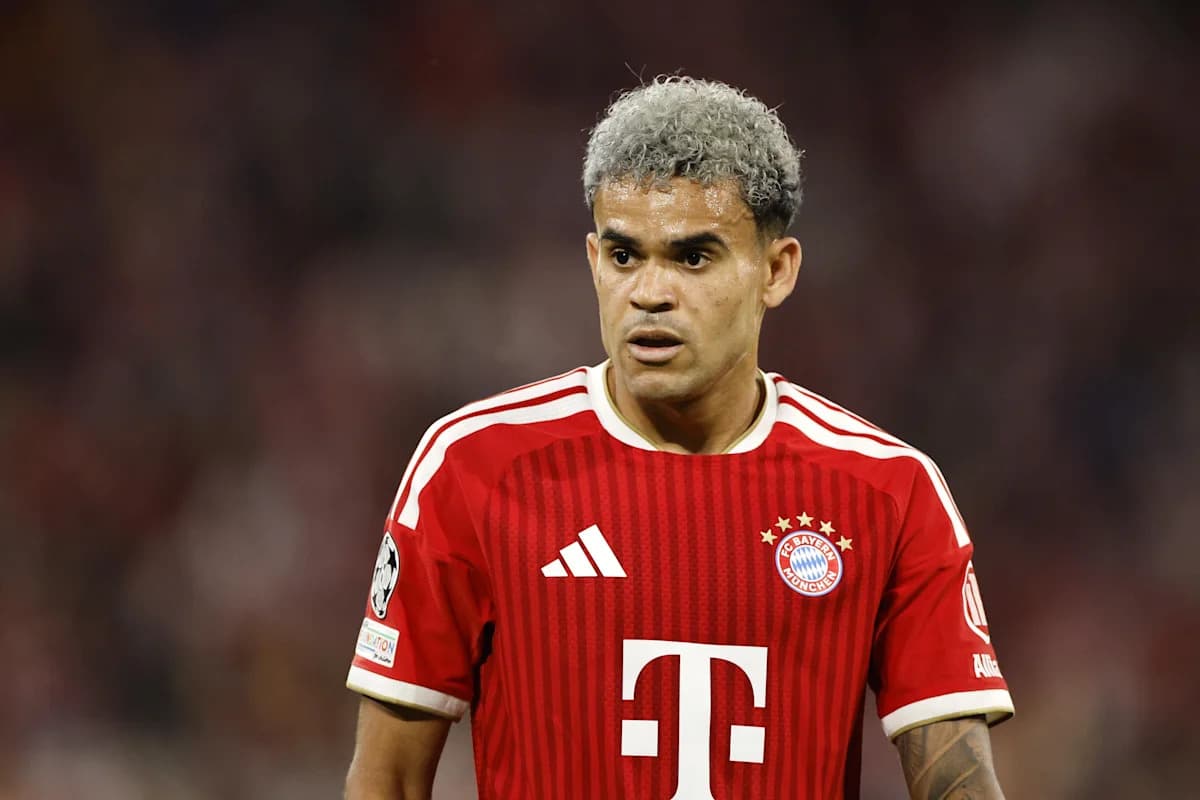
Luis Díaz Confident Bayern Munich Can Win Champions League

Insights from AFC Champions League Matchday One: K League Clubs’ Strategies

Vincent Kompany's Bayern Munich Future Not Tied Solely to Champions League Outcome
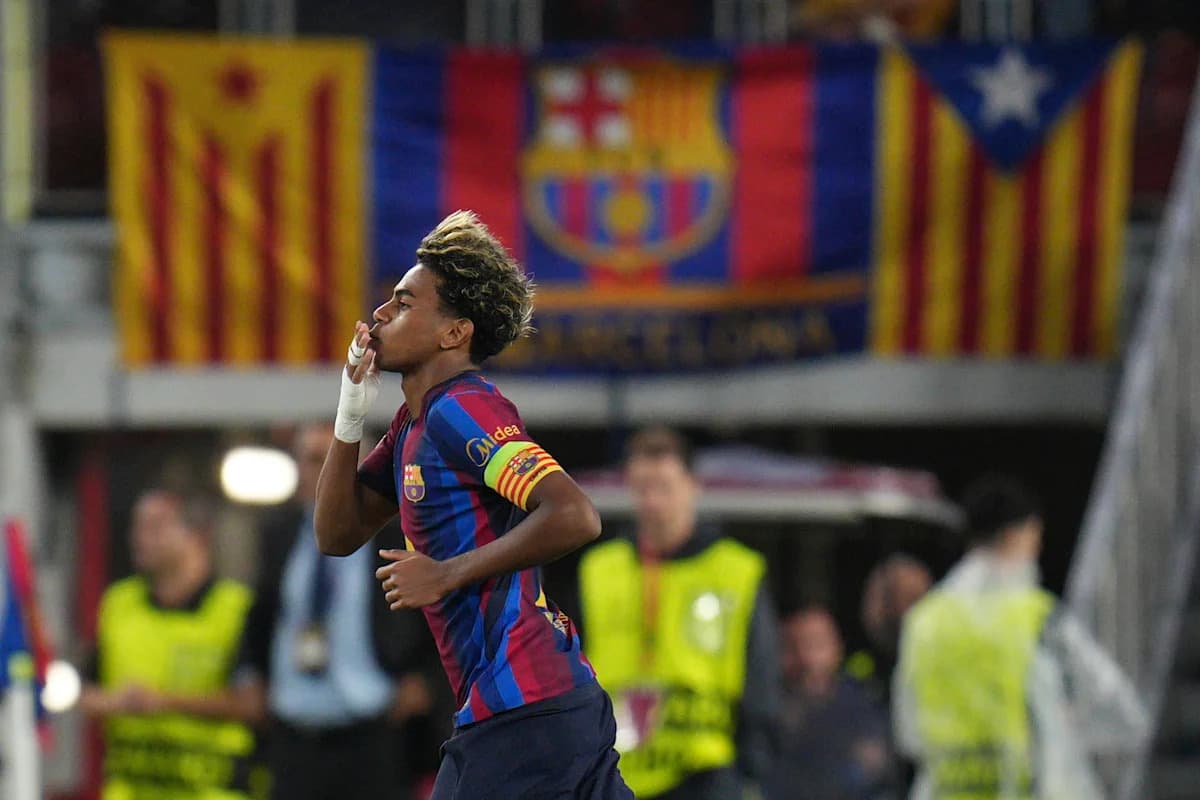
Barcelona's Camp Nou Chosen for 2029 Champions League Final, Munich Set for 2028
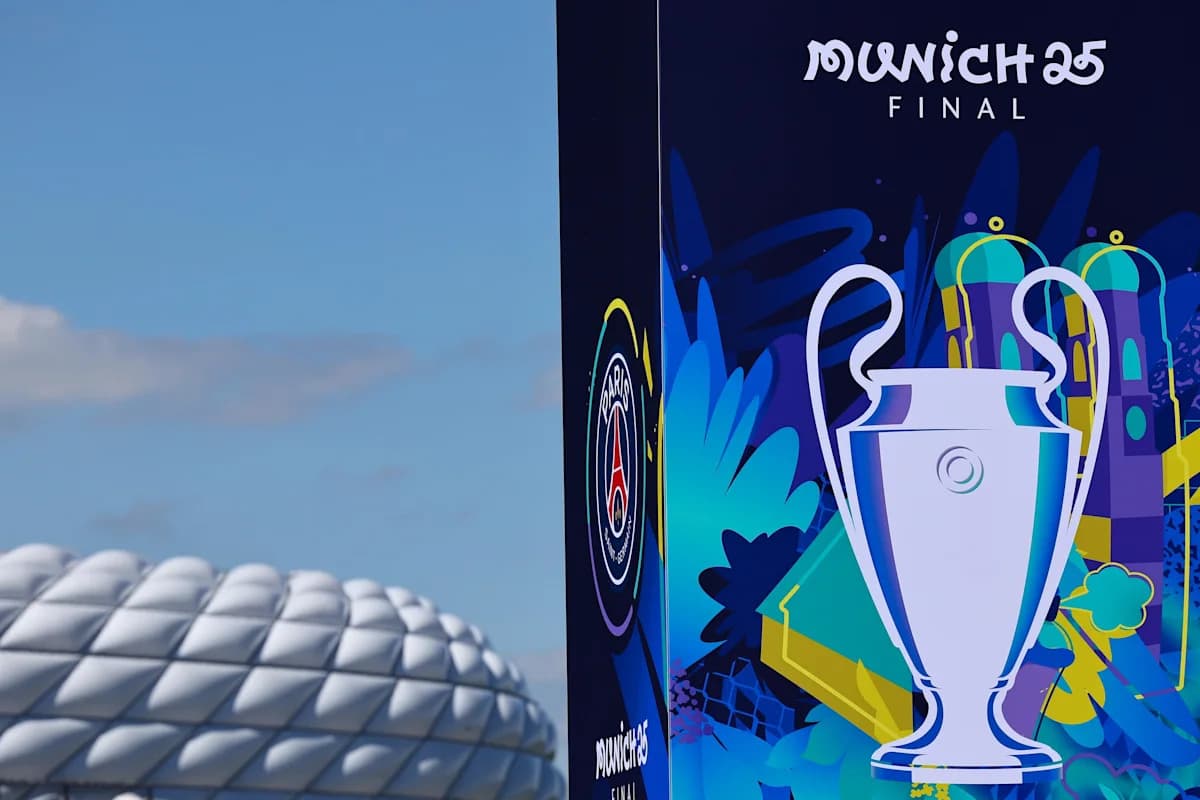
Allianz Arena to Host 2028 UEFA Champions League Final

Allianz Arena to Host 2028 Champions League Final for Third Time