
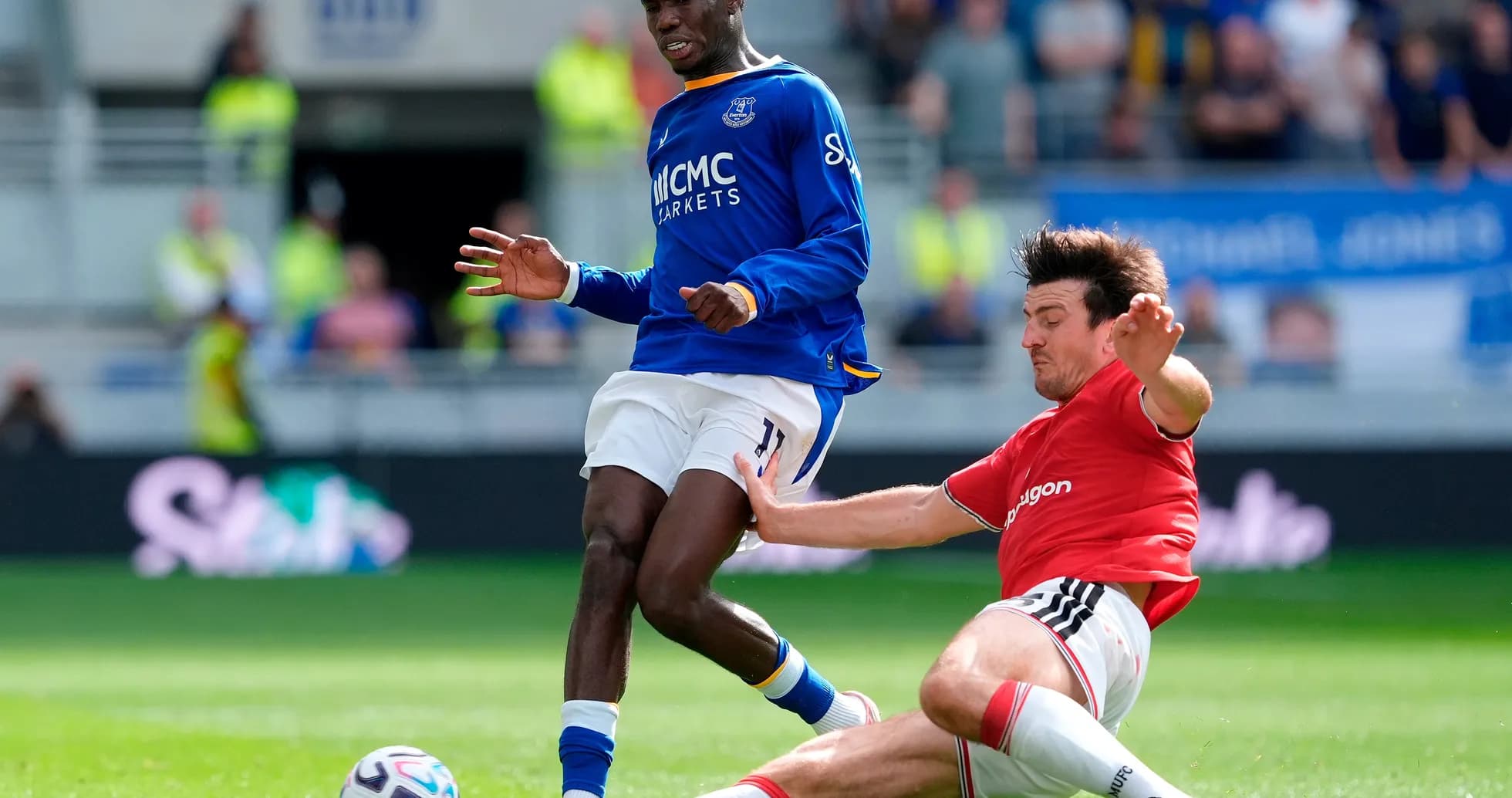
Everton and Manchester United Share Points in Tactical Stalemate
Under grey Merseyside skies at Hill Dickinson Stadium, Everton and Manchester United played out a 2-2 draw that said as much about their emerging identities as the scoreline itself. In the Premier League’s Regular Season - 3 round, the point leaves Everton sitting 8th with 5 points and a goal difference of 2, while United trail just behind in 11th on 4 points with a goal difference of 1. Following this result, both sides remain very much in character: Everton unbeaten, United thrilling yet flawed.
The Big Picture – Two 4-2-3-1s, Two Different Stories
Both managers doubled down on a 4-2-3-1, but the shapes carried different intentions.
Leighton Baines’ Everton have built a compact, organised platform. Overall this campaign they have played 3 matches, winning 1 and drawing 2, and they are yet to lose. At home they have played 2, winning 1 and drawing 1, scoring 4 and conceding 2. The numbers back the eye test: overall Everton average 1.7 goals scored per game and 1.0 conceded; at home they sit at 2.0 scored and 1.0 against. This is a side that scores enough and rarely collapses.
Michael Carrick’s United arrive as a high-variance proposition. Overall they have also played 3 matches, with 1 win, 1 draw and 1 defeat. At Old Trafford they have been explosive, scoring 5 and conceding 2 in a single home match, but on their travels they have played 2, taking just 1 point with 2 goals scored and 4 conceded. Overall, United’s attack is potent at 2.3 goals per game, but they leak 2.0 per match at the other end.
On the pitch, the symmetry of the 4-2-3-1s framed a tactical arm wrestle. Everton’s back four of M. Rohl, J. Tarkowski, J. Branthwaite and V. Mykolenko sat behind a double pivot of H. Armstrong and J. Garner, with a fluid band of three in B. Johnson, K. Dewsbury-Hall and T. George supporting lone forward T. Barry. United mirrored them: D. Dalot, H. Maguire, L. Martinez and L. Shaw protected S. Lammens, with K. Mainoo and Y. Tielemans as the double pivot, and a high-talent trio of B. Mbeumo, Bruno Fernandes and M. Rashford behind M. Cunha.
Tactical Voids – Absences and Edge
The absentees subtly reshaped both squads.
Everton were without C. Norgaard, missing through injury. For a side that already leans on collective structure, the absence of a controlling midfielder placed more responsibility on Armstrong and Garner to screen transitions and build from deep. That Everton still managed to keep their unbeaten record (overall 1 win, 2 draws, 0 defeats) underlines the resilience of Baines’ structure.
United’s injury list was longer and more destabilising. C. Baleba (ankle injury), A. Diallo, T. Heaton, M. Ugarte and M. de Ligt all missed out. The knock-on effect was clear: S. Lammens continued in goal without Heaton’s experience behind him; the absence of M. de Ligt and M. Ugarte forced Carrick to lean heavily on L. Martinez and H. Maguire as the central defensive axis and on K. Mainoo and Y. Tielemans for all phases in midfield. It left United’s spine technically gifted but a touch light on pure defensive steel.
Disciplinary trends added another layer. Everton’s yellow cards this season are spread almost evenly across the match, with 20.00% of bookings coming in each of the 0-15, 31-45, 46-60, 61-75 and 91-105 minute ranges. They do not have a specific meltdown window; instead, there is a persistent edge to their game. United’s cautions, by contrast, cluster late: 20.00% between 31-45, 20.00% from 61-75, and a striking 40.00% between 76-90, with another 20.00% in 91-105. This is a team that becomes increasingly desperate and stretched as the game enters its final quarter.
Key Matchups – Hunter vs Shield, Engine Room Battles
Hunter vs Shield: Bruno Fernandes and Bryan Mbeumo vs Everton’s Block
Heading into this game, United’s offensive talisman was unmistakable. Bruno Fernandes arrived with 3 goals and 1 assist in 3 appearances, firing 9 shots with 4 on target, and creating 8 key passes from 203 total passes at 84% accuracy. He is not just United’s creator; he is their primary finisher as well. Alongside him, B. Mbeumo brought 2 goals from 7 shots (4 on target) and 5 key passes, plus solid defensive work with 3 tackles and 3 interceptions.
Their task was to unpick an Everton side that, overall, concede just 1.0 goal per match and have already kept 1 clean sheet, with no failures to score themselves. At home, Everton’s defensive record is similarly tight: 2 goals conceded in 2 matches, an average of 1.0. Tarkowski and Branthwaite, flanked by Rohl and Mykolenko, formed a compact line that sought to keep Fernandes between the lines but away from central shooting lanes, forcing him into wider or deeper zones where Armstrong and Garner could engage.
The Shield vs United’s Away Fragility
On their travels, United concede 2.0 goals per game (4 allowed in 2 away matches), a vulnerability that Everton’s attacking unit looked primed to exploit. Barry’s movement across the front line, supported by the inside runs of Johnson and George and the late surges of Dewsbury-Hall, repeatedly probed the half-spaces between Dalot and Maguire on one side and Shaw and Martinez on the other.
Johnson’s profile is instructive: in limited minutes this season he has attempted to be direct, with 2 key passes and 1 blocked shot defensively, but also 4 fouls committed and 1 yellow card. He embodies Everton’s willingness to take risks in transition, even at the cost of fouls, to exploit United’s unstable defensive phases away from home.
Engine Room: Mainoo and Tielemans vs Armstrong and Garner
The midfield duel defined the flow. Mainoo and Tielemans carried the creative and connective burden for United, tasked with progressing the ball under Everton’s structured press. Without Ugarte, United lacked a pure destroyer, making them more vulnerable when possession was lost.
Everton’s pair of Armstrong and Garner, by contrast, played as disciplined sentries. Garner, already established as a metronome, provided vertical passing and second-ball security, while Armstrong added legs and aggression. Their remit was clear: limit Bruno’s touches between the lines, track Mbeumo’s inside drifts, and spring quick counters into Barry and the wide trio.
From the bench, H. Hackney loomed as Everton’s change-of-pace midfielder. With 1 assist, 3 key passes and 3 tackles across 3 appearances, he offers both creativity and bite. Baines could deploy him to either protect a lead or chase a deficit, adding another passer against a United side that do not keep many clean sheets (overall 0 so far, with 1 match where they failed to score themselves).
On United’s side, P. Dorgu – already on the disciplinary radar with 1 yellow card and 4 fouls committed this season – represented an aggressive option down the flank. His 5 shots and willingness to engage in 15 duels show a player who can tilt a game, but also one who risks adding to United’s late-card pattern if introduced in a frantic closing spell.
Statistical Prognosis – Chaos vs Control
Blend the numbers with the tactical shapes and a clear picture emerges. Everton, overall, are a control-oriented side: unbeaten, averaging 1.7 goals scored and 1.0 conceded, with no penalties taken and none missed. They manage games, rarely implode, and share their bookings across the full 90 minutes plus stoppage time.
United are chaos merchants. They score 2.3 per match but concede 2.0, have yet to keep a clean sheet, and on their travels their defensive record deteriorates to 2.0 goals conceded per game. Their attacking ceiling is raised by Bruno Fernandes’ form – 3 goals, 1 assist, 8 key passes, 1 penalty scored from 1 taken – and Mbeumo’s dual threat, but their defensive floor remains low, especially late on when 40.00% of their yellow cards arrive between 76-90 minutes.
The 2-2 draw at Hill Dickinson Stadium felt like the logical intersection of these trends. Everton’s structure and home solidity ensured they could trade punches with United’s firepower without being overwhelmed. United’s attacking stars still found ways through, but their away fragility and late-game indiscipline prevented them from closing the door.
Looking ahead, the tactical verdict is clear. In similar fixtures, Everton’s blend of compact 4-2-3-1 structure, balanced scoring and steady defensive record should continue to make them awkward hosts, particularly against sides with volatile away numbers. United, meanwhile, will remain must-watch: as long as Bruno Fernandes and B. Mbeumo are in this kind of form, they will create and convert chances, but until Carrick finds a way to stabilise their away defending and curb their late-card surge, their matches will hover on the edge between statement wins and points dropped.
Related News
Tottenham vs Aston Villa Predicted Lineups: Team News for Premier League Clash
Brighton vs Arsenal: Premier League Clash Preview
Manchester City vs Sunderland: Premier League Clash Preview
Tottenham vs Aston Villa: Early Relegation Battle
Brentford vs Chelsea Predicted Lineups: Team News and Match Insights
Brighton vs Arsenal Prediction: Key Stats and Betting Tips