
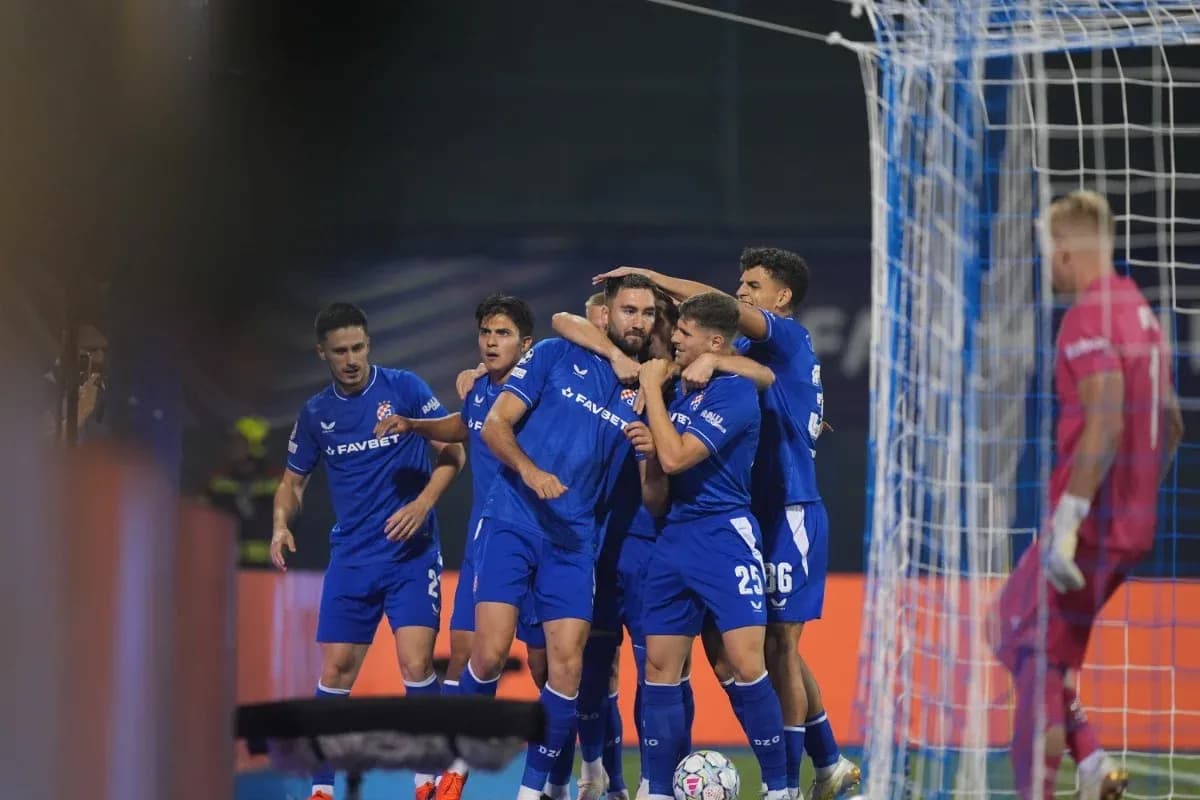
Dinamo Zagreb vs Viking: Tactical Insights from a 2-2 Draw
Dinamo Zagreb and Viking produced a tactically rich 2-2 draw at Stadion Maksimir in the UEFA Champions League Play-offs, a match defined by Dinamo’s territorial dominance and Viking’s ruthless efficiency in transition. With 60% possession, 23 total shots and a 2-0 lead inside ten minutes, Dinamo appeared in full control, yet Viking’s compact 4-3-3 and sharp counter-attacking movements dragged the tie back to parity before half-time and then held firm under sustained second-half pressure.
First Half
The scoring unfolded quickly and then decisively swung. At 6', D. Beljo (Dinamo Zagreb) converted after a delivery from left-back M. Perez Vinlof, capitalising on Dinamo’s early high press and aggressive full-back positioning. Four minutes later, at 10', M. Lisica (Dinamo Zagreb) finished a move assisted by Beljo, illustrating the 4-1-4-1’s verticality: a lone striker linking with an advanced midfield line flooding the half-spaces.
Viking responded through their front three exploiting space behind Dinamo’s advanced full-backs. At 26', P. Christiansen (Viking) scored from a transition move assisted by T. Moi, with Viking breaking Dinamo’s counter-press and attacking quickly through central channels. At 39', Z. Tripic (Viking), again assisted by Moi, levelled at 2-2, this time attacking from the left side of the front three, punishing Dinamo’s stretched defensive line and the gaps left by their high full-backs.
Discipline and Tactics
Discipline remained relatively controlled but tactically relevant. At 65', Joe Bell (Viking) received a yellow card — Foul — reflecting the increased need for Viking’s midfield to break up Dinamo’s rhythm as the hosts pushed harder. At 83', Moris Valinčić (Dinamo Zagreb) was booked — Foul — emblematic of Dinamo’s own defensive interventions to prevent Viking counters when their structure was exposed. Card totals were balanced: Dinamo Zagreb 1, Viking 1, Total: 2, with both bookings arriving in the more stretched, transitional phase of the second half.
Tactical Setup
Mario Kovacevic set Dinamo Zagreb up in a 4-1-4-1 that was clearly designed to dominate the ball and pin Viking back. J. Misic operated as the single pivot in front of the back four, with M. Lisica and M. Zajc initially as advanced interiors, flanked by L. Stojkovic and M. Orsic, and D. Beljo as the reference point up front. The structure produced control and volume: Dinamo completed 544 passes, with 438 accurate at 81%, and generated 23 total shots, including 17 from inside the box and 7 blocked shots. The pattern was clear: sustained possession, wide overloads, crosses and cut-backs into a crowded penalty area.
Viking, under Bjarte Aarsheim, replied with a 4-3-3 that morphed into a 4-5-1 without the ball. The back four of K. Haugen, H. Falchener, G. Stensness and H. Heggheim initially sat relatively deep, with the midfield trio of K. Askildsen, Joe Bell and T. Moi tasked with screening central zones and jumping out to press triggers. In possession, Viking were far more direct: only 371 passes (272 accurate, 73%) and just 6 total shots, 5 of them inside the box. Their offensive focus lay in quick vertical progressions and exploiting the channels for Tripic and Christiansen once Dinamo lost the ball.
Goalkeeper Dynamics
The goalkeeper dynamics underline the tactical story. I. Nevistic (Dinamo Zagreb) made 1 save, a figure that underlines how few clear chances Viking actually needed to score twice; their finishing and shot selection were extremely efficient. At the other end, A. Ostbo (Viking) produced 2 saves, but the key to Viking’s resistance was less about spectacular goalkeeping and more about structural compactness: they allowed 4 shots on goal from 23 attempts, with many efforts forced into blocks or off-target by good spacing and last-ditch defending.
Substitutions
Substitutions from both coaches reflected evolving tactical needs. At 58', Viking replaced T. Moi (OUT) with S. Kvia-Egeskog (IN), sacrificing Moi’s creative influence but adding fresh legs to help in wide defensive work and transitions. Two minutes later, at 60', Dinamo brought on L. Kacavenda (IN) for M. Zajc (OUT), injecting more creative impetus between the lines to try to unpick Viking’s now deeper block.
As Dinamo’s territorial dominance grew, Kovacevic doubled down on attacking changes. At 68', R. Mudrazija (IN) came on for L. Stojkovic (OUT), adding more central drive, while A. Hoxha (IN) replaced M. Lisica (OUT), giving Dinamo a fresh attacking runner from midfield. These moves tilted the structure even more aggressively, with the nominal 4-1-4-1 often resembling a 2-3-5 in sustained possession as full-backs pushed high and central midfielders advanced.
Aarsheim responded at 72' with a double defensive switch: S. Bjorshol (IN) for H. Heggheim (OUT) and H. J. Haugen (IN) for K. Haugen (OUT), refreshing both full-back positions to cope with Dinamo’s relentless wing pressure and to maintain concentration against repeated crosses. Late in the game, Dinamo introduced N. Galesic (IN) for M. Valincic (OUT) and S. Prevljak (IN) for M. Orsic (OUT) at 84', further adjusting the balance between width and penalty-box presence. Viking, in turn, brought on J. Hansen (IN) for Z. Tripic (OUT) and R. Postema (IN) for P. Christiansen (OUT) at 87', shifting towards fresh legs up front to chase clearances and threaten sporadic counters rather than sustained attacks.
Statistics
Statistically, Dinamo Zagreb’s dominance was clear: 60% possession, 544 passes to Viking’s 371, 23 shots to 6, and 9 corners to 3. Their 4 shots on goal versus Viking’s 3, however, reveals an issue of shot quality and decision-making in the final third. Despite 17 shots inside the box, many were either crowded out (7 blocked) or rushed, reflecting Viking’s disciplined low-to-mid block and compact penalty-area defence.
Viking’s 40% possession and 6-shot output underline a game plan built on efficiency and moments rather than volume. With 3 shots on goal and 2 goals, they maximised the value of each attack, especially through the first-half contributions of T. Moi, Tripic and Christiansen. Fouls were relatively balanced (Dinamo 12, Viking 10), reinforcing that the match was more about structural and positional duels than pure physical disruption.
Conclusion
In tactical terms, the 2-2 draw encapsulates a classic contrast: a ball-dominant side in Dinamo Zagreb, whose 4-1-4-1 produced sustained pressure but not a decisive margin, against a compact, transition-focused Viking 4-3-3 that accepted territorial inferiority in exchange for high-impact counter-attacks and resilient penalty-box defence.
Related News

Lamine Yamal Shares What Barcelona Must Do to Triumph in the Champions League
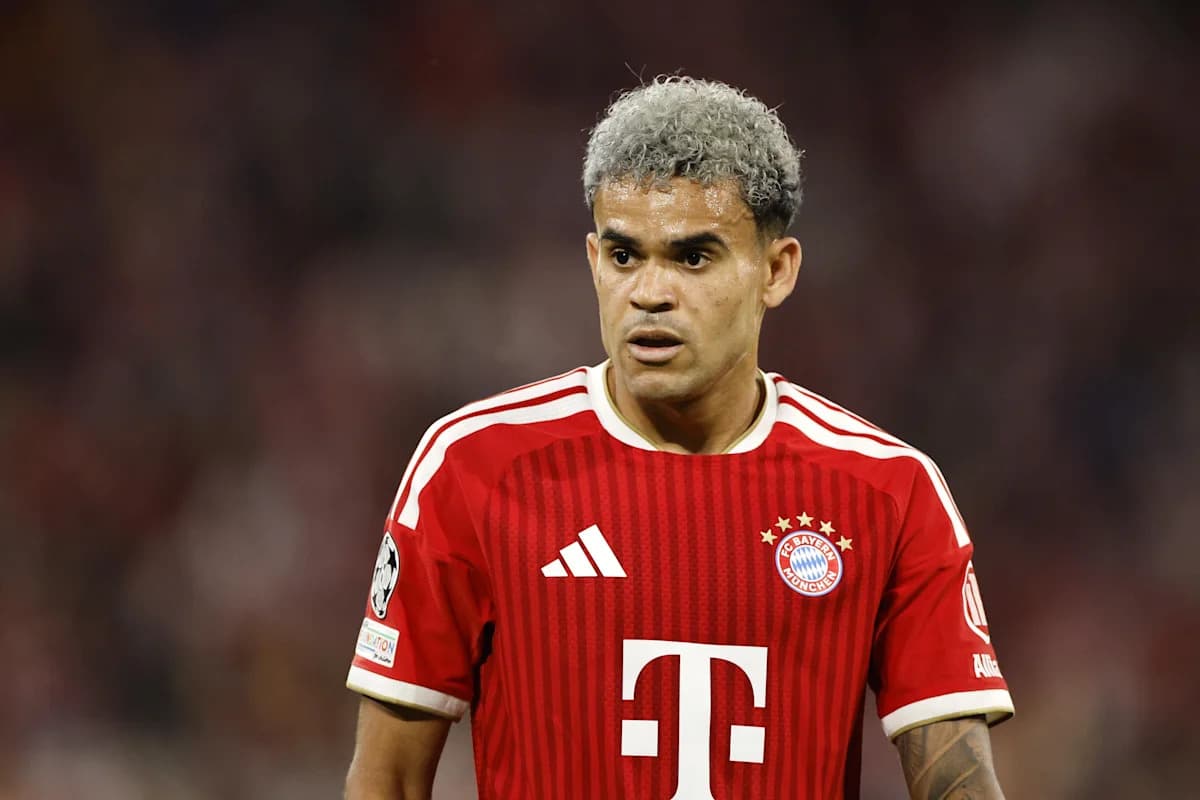
Luis Díaz Confident Bayern Munich Can Win Champions League

Insights from AFC Champions League Matchday One: K League Clubs’ Strategies

Vincent Kompany's Bayern Munich Future Not Tied Solely to Champions League Outcome
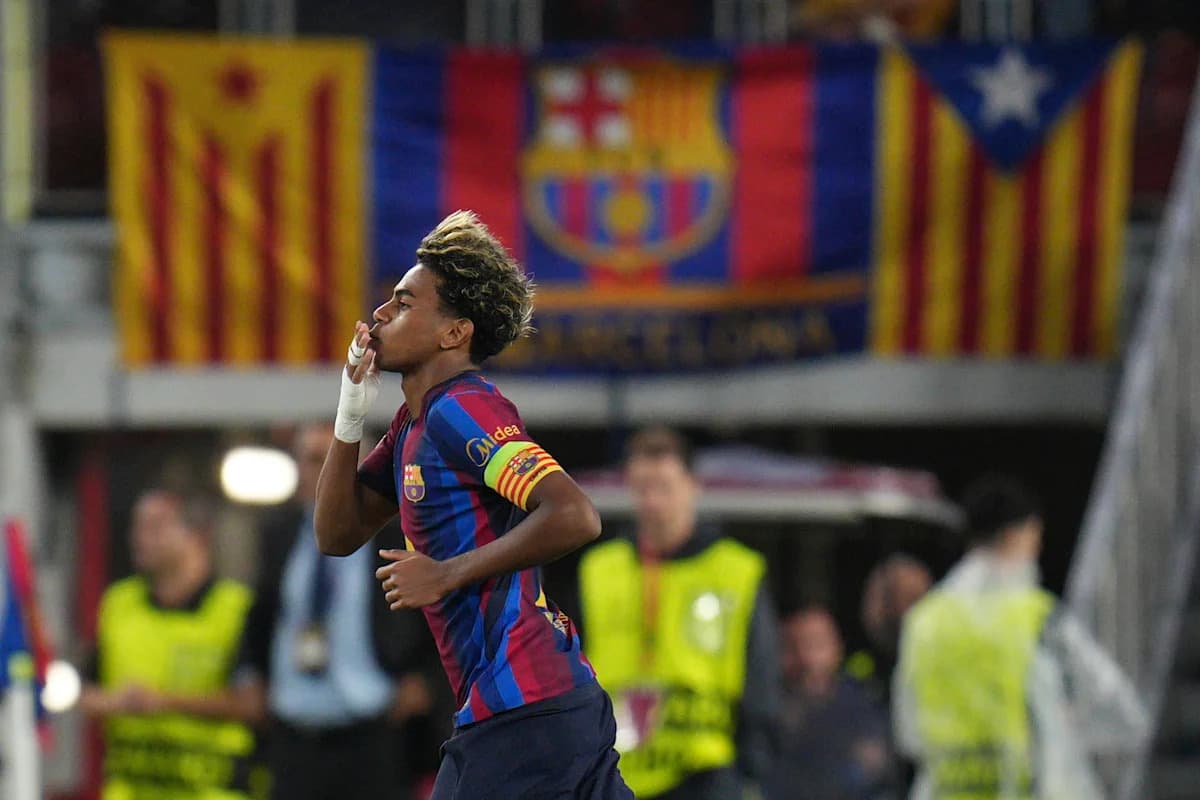
Barcelona's Camp Nou Chosen for 2029 Champions League Final, Munich Set for 2028
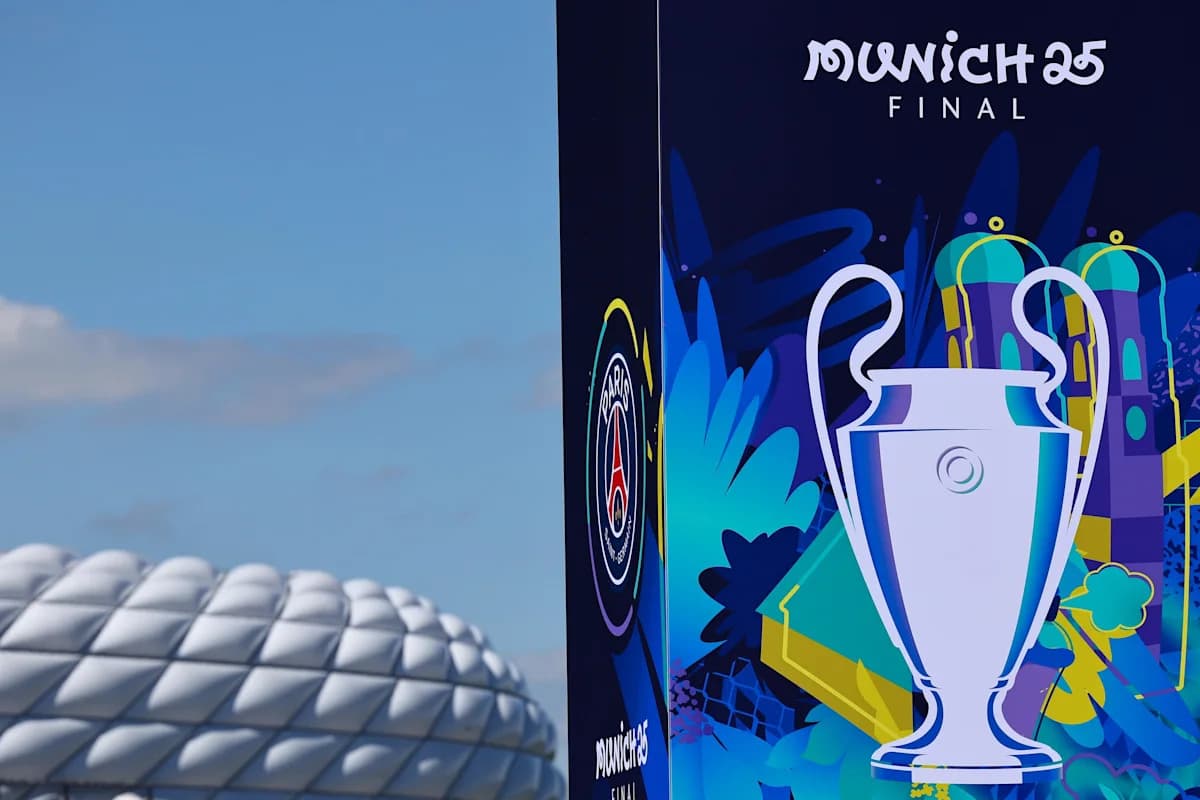
Allianz Arena to Host 2028 UEFA Champions League Final