

Dinamo Zagreb vs FC Thun: UEFA Champions League Second Leg Preview
Dinamo Zagreb host FC Thun at Stadion Maksimir in the UEFA Champions League 2nd Qualifying Round second leg with the tie finely poised after a 1–1 draw in Switzerland. With away goals no longer a factor in UEFA competitions, this is effectively a one-off decider, but the market and the prediction data both lean strongly towards Dinamo taking care of business at home.
In the first leg on 21 July at Stockhorn Arena, Thun led 1–0 at half-time and were pegged back to 1–1 by full-time. That single match forms the entirety of both sides’ Champions League sample so far in 2026, so all statistical and predictive signals are drawn from that game plus the model’s underlying team strength assumptions.
On pure prediction data, the API model sits on the fence: 33% home, 33% draw, 33% away, and the advice field explicitly states “No predictions available”. That tells us the internal model is effectively neutral and not committing to an edge. However, the comparison block rates both teams identically across all dimensions: form 50 vs 50, attack 50 vs 50, defense 50 vs 50, goals 50 vs 50, total 50.0 vs 50.0. In other words, based solely on the one match played, there is no measurable gap in performance – each side has scored and conceded one goal, and both carry the same recent form string of “D”.
Looking closer at recent tournament form from the predictions league blocks: Dinamo’s Champions League record is 0 wins, 1 draw, 0 losses, with 1 goal scored and 1 conceded in that away fixture. Their goal profile shows they struck in the 76–90 minute interval, suggesting they finished strongly, while conceding early in the 16–30 window. Thun mirror this almost perfectly: 0 wins, 1 draw, 0 losses, 1 scored and 1 conceded, but with their goal coming in the 16–30 range and the goal conceded in the 76–90 range. Both sides have failed to keep a clean sheet and have not failed to score. From a tactical betting perspective, that symmetry points towards another tight game where neither team is obviously superior on recent European evidence.
Head-to-Head History
Head-to-head history is minimal but relevant. The only recorded meeting is that first leg on 21 July 2026 in Thun, a 1–1 draw where neither side could convert periods of control into a decisive advantage. With no previous competitive clashes in the data, we cannot infer any long-term matchup trends or stylistic dominance; all we know is that Dinamo managed to avoid defeat away and now return to Zagreb with the psychological and logistical benefit of playing in front of their own fans.
Pre-Match Odds
Where the analysis really shifts is when we overlay the pre-match odds. Across 10 major bookmakers, the home win is priced between 1.30 and 1.38. That translates to an implied probability range of roughly 72–77% for a Dinamo victory (1 ÷ 1.38 ≈ 72.5%, 1 ÷ 1.30 ≈ 76.9%). The draw sits between 4.22 and 5.00, implying about 20–24%, while the away win is out at 6.38 to 8.50, or roughly 12–16%. The market, therefore, is very clear: despite the level first leg and equal statistical comparison indices, Dinamo are rated as strong favourites to win this second leg in regulation time.
The discrepancy between the flat 33–33–33 model output and the strongly pro-Dinamo betting market suggests that the internal prediction engine is either conservative or not fully incorporating team-strength priors, while bookmakers are pricing in Dinamo’s broader European pedigree and home advantage. For bettors, the value question is whether those short home odds still offer an edge. With the market already implying around a three-in-four chance of a Dinamo win, any personal model would need to rate them significantly higher than that to justify backing the home side at the moneyline.
Given the data, the most rational stance is to align the core outcome with the market rather than the neutral model output, but to be cautious about over-staking at such compressed prices. Dinamo have shown they can respond late and now have home conditions in their favour, while Thun’s chances, although not negligible, are clearly priced as an upset.
Betting verdict: despite the prediction block’s 33–33–33 split and “No predictions available” comment, the combination of first-leg context and strong market consensus supports a Dinamo Zagreb home win as the most likely outcome. However, with implied probabilities already in the 72–77% band, the straight home moneyline is more suitable as part of accumulators or structured staking rather than a heavy single, unless you rate Dinamo even more strongly than the market does.
Related News

Insights from AFC Champions League Matchday One: K League Clubs’ Strategies

Vincent Kompany's Bayern Munich Future Not Tied Solely to Champions League Outcome

Barcelona's Camp Nou Chosen for 2029 Champions League Final, Munich Set for 2028

Allianz Arena to Host 2028 UEFA Champions League Final

Allianz Arena to Host 2028 Champions League Final for Third Time
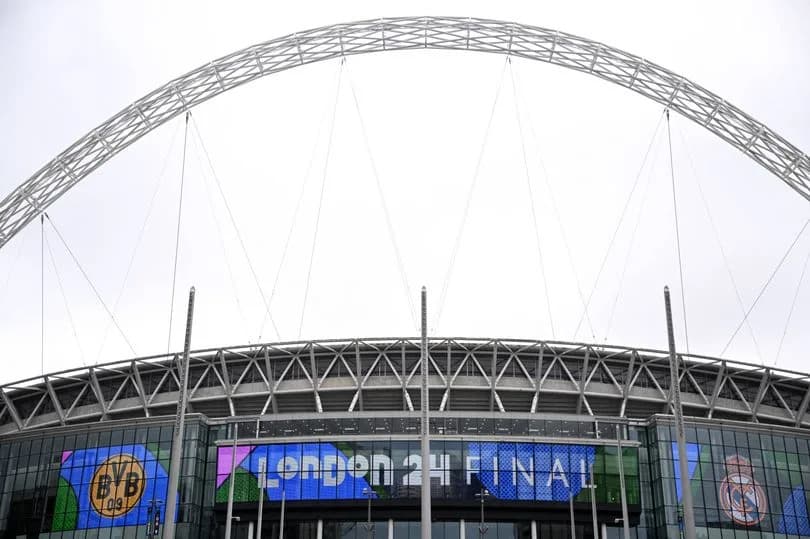
Barcelona's Nou Camp Chosen for 2029 UEFA Champions League Final Over Wembley and Dortmund