
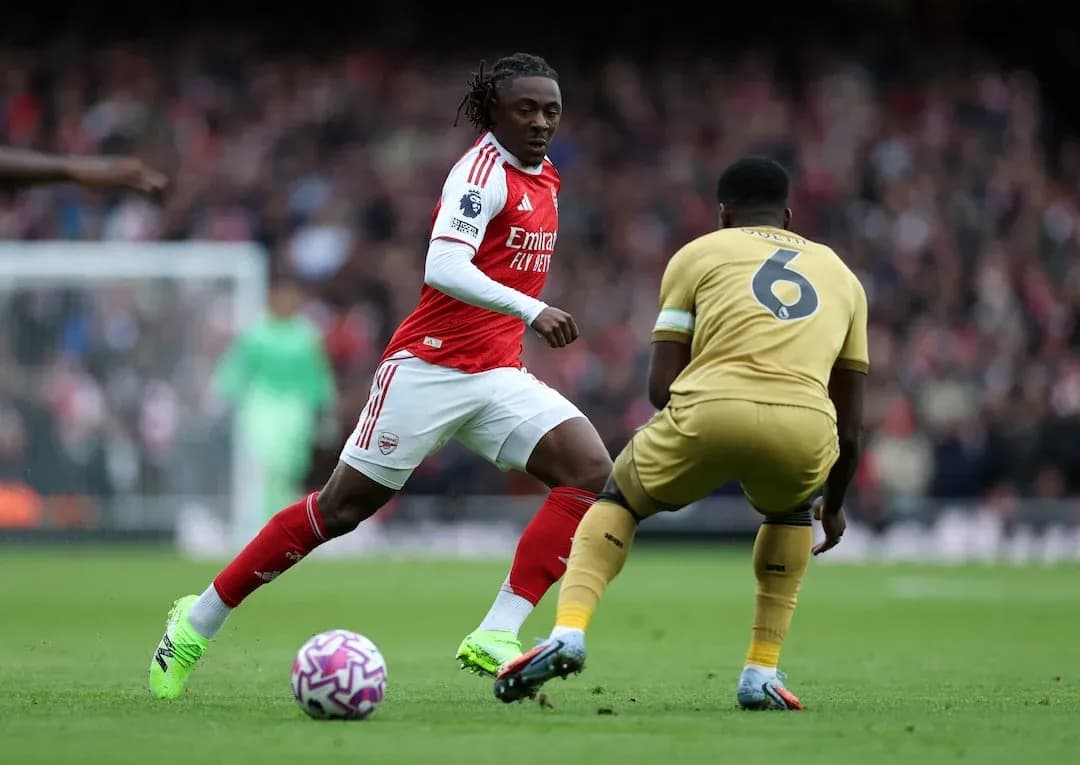
Crystal Palace vs Arsenal: Tactical Analysis of the Premier League Finale
Selhurst Park closed its Premier League season under grey London skies with a game that felt like a microcosm of the campaign: Crystal Palace, 15th with 45 points, stubborn and streaky; Arsenal, champions-elect in all but name, finishing top with 85 points and a 44 goal difference built on control, repetition and ruthless detail. Following this result, a 2-1 away win, the gap in league position was vast, but on the pitch the story was more nuanced.
I. The Big Picture – Structures and Seasonal DNA
Oliver Glasner stayed loyal to his season’s blueprint, rolling out the 3-4-2-1 that has been Palace’s default in 33 league matches. D. Henderson anchored a back three of N. Clyne, J. Lerma and C. Riad, with D. Munoz and the young R. Cardines as wing-backs. Inside, W. Hughes and D. Kamada formed the double pivot behind a fluid line of J. Devenny and I. Sarr, supporting lone forward J. S. Larsen.
This shape mirrors Palace’s broader identity: compact, reactive, and often more comfortable without the ball. Overall this campaign they scored 41 goals and conceded 51, giving them a goal difference of -10. At home they averaged 1.0 goals for and 1.2 against, a narrow margin that framed this match as a tightrope walk against the league’s most balanced side.
Arsenal arrived as a finished article. Mikel Arteta leaned into the 4-2-3-1 variant he has used 14 times this season, a slightly more controlled version of his 4-3-3. K. Arrizabalaga started in goal behind a back four of M. Zubimendi, C. Mosquera, P. Hincapie and R. Calafiori. C. Norgaard and M. Lewis-Skelly formed the double pivot, with an attacking trio of N. Madueke, academy product M. Dowman and G. Martinelli supporting Gabriel Jesus.
Heading into this game, Arsenal’s numbers were those of a side that knows exactly what it is: in total this campaign they scored 71 and conceded 27 (goal difference 44), averaging 1.9 goals for and 0.7 against. On their travels they still produced 1.6 goals per game while allowing just 0.8 – elite control that shaped every tactical decision.
II. Tactical Voids – Absences and Discipline
Palace’s squad sheet carried familiar scars. C. Doucoure’s knee injury removed their most natural ball-winner and vertical carrier from midfield, forcing Hughes and Kamada into a more conservative, metronomic pairing. The absence of C. Richards and B. Sosa further thinned Glasner’s defensive options, while the listing of E. Nketiah as a Palace absentee was a curious administrative echo rather than a genuine selection issue.
For Arsenal, the missing J. Timber and B. White mattered structurally. Without White’s overlapping presence and Timber’s hybrid full-back/centre-back profile, Arteta leaned more on Calafiori’s progressive instincts from the left and Zubimendi’s disciplined right-sided defending. It nudged Arsenal’s build-up slightly asymmetrical, with Hincapie and Calafiori more involved in early phases.
Disciplinary trends framed the risk. Palace’s yellow cards this season have been spread, but with a notable spike between 31-45 minutes and 46-60 minutes, each holding 18.42% of their bookings. Arsenal, by contrast, tend to pick up their cautions late: 21.57% of their yellows arrive between 61-75 minutes and 25.49% between 76-90. The pattern played into the narrative: Palace needing to be aggressive early to disrupt rhythm, Arsenal risking late cards as they defended a lead.
III. Key Matchups – Hunter vs Shield, Engine Room Battles
The headline duel lived on the Arsenal bench. V. Gyökeres, with 14 league goals and 3 penalties scored from 3, is Arsenal’s statistical spearhead, a classic “Hunter” who has underpinned their attack across 36 appearances. Even though he did not start, his mere presence shaped Palace’s defensive approach: the back three could never fully relax, knowing a direct, physical option was waiting.
On the Palace side, J. Mateta – 12 league goals, 4 penalties scored, none missed – sat among the substitutes, a reminder that Glasner had a proven finisher in reserve. His profile is brutally simple: 56 shots, 32 on target, strong in duels (110 won from 292) and willing to do the dirty work. In a game where Palace were likely to be chasing, Mateta was the late-game battering ram.
The “Shield” was Arsenal’s collective defence. In total this campaign they conceded just 27 goals, with only 16 on their travels. That defensive platform allowed Arteta to field a more experimental attacking midfield three without losing structural integrity. Mosquera and Hincapie, protected by Norgaard’s positional discipline, formed a central block that Palace rarely dislodged in open play.
In the engine room, Kamada and Hughes tried to manipulate Arsenal’s double pivot. Kamada’s role was to find pockets between the lines, turning Arsenal’s compact 4-2-3-1 into a decision-making test for Norgaard and Lewis-Skelly. On the other side, Norgaard’s job was to suffocate those spaces, recycle possession and trigger Arsenal’s wide rotations with Madueke and Martinelli.
IV. Statistical Prognosis and Narrative Verdict
From a statistical lens, Arsenal’s superiority was always likely to manifest in shot quality and territory. Their season-long attacking averages suggested a higher xG baseline: with 71 goals from 38 games, their attack consistently generated chances above league median, especially given their low tally of failed-to-score matches (just 3 in total).
Palace, with 12 clean sheets but also 12 games where they failed to score, were the archetype of volatility. At home they managed 19 goals from 19 matches; that 1.0 goal-per-game ceiling implied that to beat Arsenal they would need either set-piece efficiency or a rare finishing surge.
The 2-1 scoreline ultimately fit the underlying trends. Arsenal’s away defensive average of 0.8 goals conceded aligned with Palace’s modest home output. Palace’s resilience ensured the game never became a rout, but Arsenal’s structural superiority – in pressing triggers, rest defence and rotational fluency – translated into better chances and, by extension, a higher expected goals profile.
Following this result, the campaign’s storylines crystallised. Arsenal’s title-winning metrics were confirmed by another controlled away victory; Palace’s season ended as it had so often played out: organised, occasionally dangerous, but living on margins too fine to consistently trouble the division’s elite.
Related News

Bournemouth vs Liverpool Prediction: Key Stats and Betting Tips

Tottenham vs Aston Villa Predicted Lineups: Team News for Premier League Clash
Brighton vs Arsenal: Premier League Clash Preview

Manchester City vs Sunderland: Premier League Clash Preview
Tottenham vs Aston Villa: Early Relegation Battle

Brentford vs Chelsea Predicted Lineups: Team News and Match Insights