
How Chip-in-Ball Tech Impacted Croatia's Controversial Offside Call Against Portugal
Portugal secured a narrow 2-1 victory against Croatia, the 2018 World Cup runners-up, during the 2026 FIFA World Cup. The match seemed to end in Portugal's favor thanks to a late goal by Goncalo Ramos, but the outcome was nearly overturned when Josko Gvardiol appeared to score a stoppage-time equalizer for Croatia.
The referee paused the celebration and consulted the video assistant referee (VAR) system. After review, the goal was disallowed for offside, leaving Portugal as the winners. This article breaks down why that decision was made and how new technology played a crucial role.
Why Was Croatia's Last-Minute Goal Disallowed?
In the 12th minute of added time, Gvardiol struck what looked like a dramatic equalizer. Yet, after a VAR check, officials ruled offside. The key moment involved Igor Matanovic, who was judged to have barely touched the ball with his head before it reached Mario Pasalic, who was in an offside position.
If Matanovic had not touched the ball, Pasalic would have been onside because he was aligned with the initial pass from deep on the left flank. The VAR process then examined whether Portuguese defender Renato Veiga deliberately played the ball since it also grazed his head.
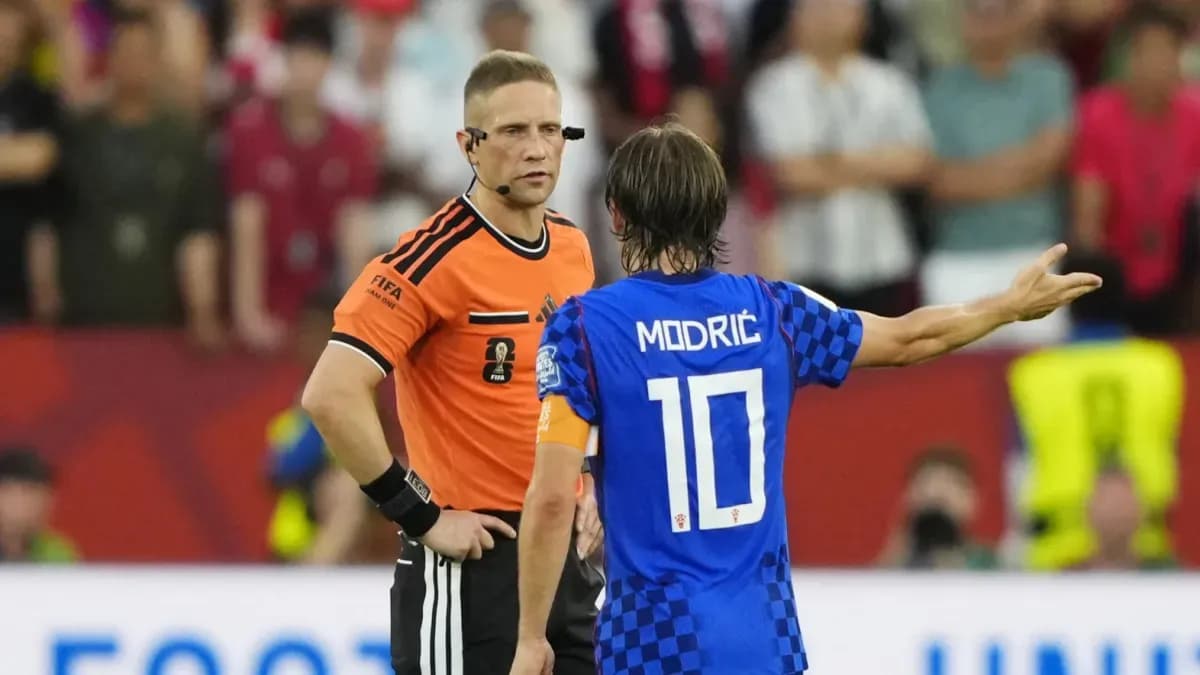
Referee Espen Eskas decided Veiga did not intentionally play the ball, as it seemed he tried to avoid contact. Deflections like these do not reset offside calls, so the ruling stood and the goal was ruled out.
Connected Ball Technology's Role in the Decision
The Adidas Trionda match ball at the 2026 World Cup contains embedded sensors known as Connected Ball technology. This tech detects every touch on the ball, helping officials precisely determine when contact is made.
At first, replays suggested Matanovic never touched the ball. But the VAR team used data from the ball's chip to confirm a subtle contact. The system displayed a waveform graphic synced with video footage, showing a distortion as the ball passed Matanovic’s head, proving contact occurred.
This confirmed Pasalic was offside at the critical moment, leading to the goal being disallowed. The technology works similarly to Ultra Edge in cricket, which detects faint bat-ball contacts.
How Connected Ball Technology Functions
Developed by FIFA and adidas, Connected Ball technology embeds a small inertial measurement unit (IMU) sensor inside the match ball. This sensor operates at around 500Hz, collecting detailed data on acceleration and movement in three dimensions.
The data streams in real-time to the video operation room, where it integrates with player tracking from stadium cameras. This combined information helps VAR officials make faster and more accurate decisions, especially for semi-automated offside rulings.
Besides offside calls, this technology assists in analyzing handball incidents and penalty situations by pinpointing exact moments of ball contact. It adds transparency and accuracy to officiating while offering fans deeper insights into the game’s dynamics.
Related News

FIFA World Cup 2026 Commentary Team: Complete List of Presenters and Analysts

World Cup 2026 Best XI: Messi, Rodri, Mbappe Lead the Lineup

Spain’s Tactical Mastery Behind Their Second World Cup Triumph

Gianni Infantino Criticizes World Cup 2026 Detractors Amid Event's Success

FIFA President Gianni Infantino Responds Strongly to 2026 World Cup Critics

Kylian Mbappé Pens Open Letter to France Fans After 2026 World Cup