
Why Covering Your Mouth Led to a Red Card at the 2026 World Cup
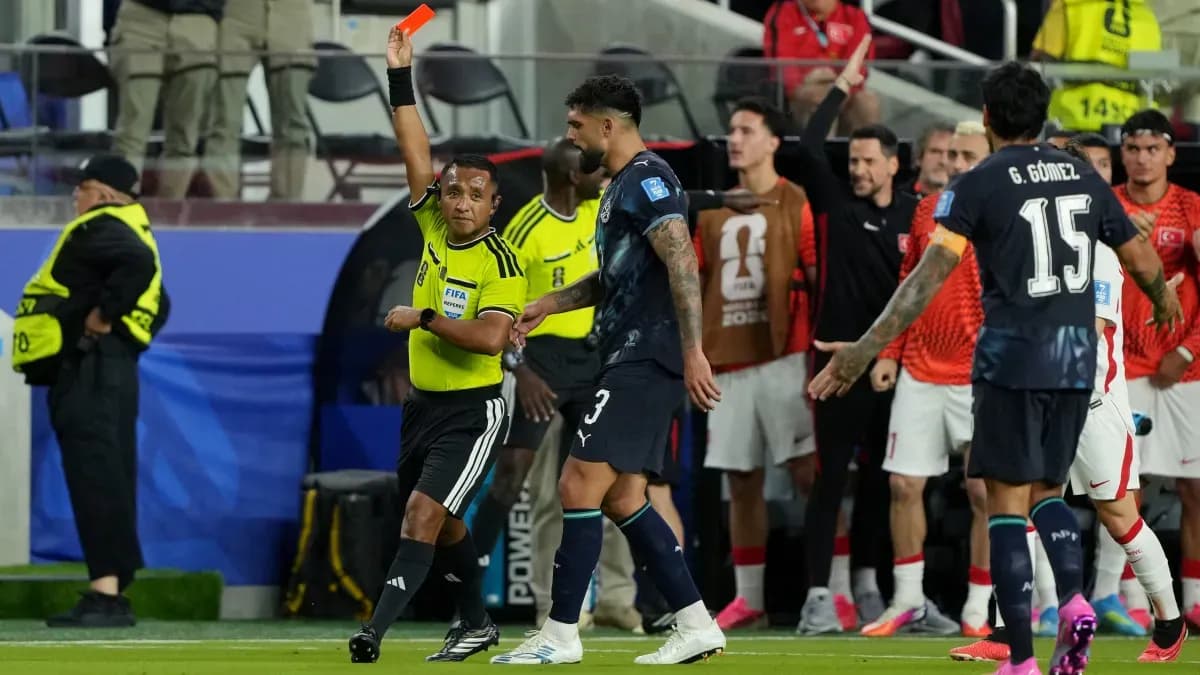
During the 2026 World Cup match on June 20 between Paraguay and Turkey, Miguel Almirón became the first player ever to be shown a red card for covering his mouth while speaking to an opponent. This unusual penalty was introduced by FIFA as a response to concerns about players hiding what they say during confrontations on the field.
Why Did FIFA Change the Rules?
The rule came after a controversial moment in a 2026 Champions League game between Real Madrid and Atletico Madrid. Atletico's Gianluca Prestianni covered his mouth while talking to Vinicius Jr., who later accused Prestianni of racial abuse. The situation was complicated because no one could clearly hear what was said, making it impossible to confirm the claim. UEFA struggled to decide on a punishment since there was no proof either way.
This incident led FIFA and the International Football Association Board (IFAB) to create a new rule: if a player covers their mouth during an exchange with an opponent, they receive an automatic red card. This was intended to prevent players from hiding offensive or abusive language behind covered mouths.
"Following a VAR review in the FIFA World Cup match between Türkiye and Paraguay, Miguel Almirón was shown red card for covering his mouth. Following a special meeting of The IFAB held in April, a number of amendments were introduced to be implemented at the FIFA World Cup 2026." — FIFA (@FIFAcom)
The Impact at the 2026 World Cup
Miguel Almirón's red card made history as the first at a World Cup given for this specific offense. Paraguay still won the match 1-0, but the incident set a precedent for future tournaments. The new rule makes no distinction about what is said; simply covering the mouth in a confrontation is enough to warrant sending off.
The rule quickly came into play again on June 30 when Colombia's Piero Hincapie received a red card for covering his mouth while talking to Mexico's Santiago Jimenez during the closing moments of their match. These two cases highlight how strictly the rule is enforced.
Why Covering Your Mouth Matters
Players sometimes cover their mouths to avoid lip-reading cameras or on-field microphones, especially when exchanging heated words. But this rule aims to keep all communication transparent, preventing abusive remarks from slipping under the radar simply because they can't be heard or confirmed.
The so-called "Prestianni Law," named by fans after the Champions League incident, symbolizes FIFA’s effort to curb hidden misconduct and promote fair play.
Related News
FIFA World Cup 2026 Commentary Team: Complete List of Presenters and Analysts
World Cup 2026 Best XI: Messi, Rodri, Mbappe Lead the Lineup

Spain’s Tactical Mastery Behind Their Second World Cup Triumph
Gianni Infantino Criticizes World Cup 2026 Detractors Amid Event's Success
FIFA President Gianni Infantino Responds Strongly to 2026 World Cup Critics
Kylian Mbappé Pens Open Letter to France Fans After 2026 World Cup