

Celje vs Ararat-Armenia: UEFA Champions League Qualifying Round Showdown
Celje host Ararat-Armenia in Celje in the second leg of the UEFA Champions League 3rd Qualifying Round, a pivotal tie for both clubs’ ambitions of reaching the playoff round and staying on the Champions League pathway; with Ararat-Armenia carrying a 2–1 advantage from the first leg, the seasonal weight here is clear: progression sustains European revenue and prestige, while elimination forces an early reset toward domestic priorities and potentially the Europa League route.
Head-to-Head Tactical Summary
The first leg of this tie on 4 August 2026 at Vazgen Sargsyan Republican Stadium in Yerevan saw Ararat-Armenia beat Celje 2–1, after a 1–1 half-time scoreline, under referee I. Kruzliak. Historically, these sides also met in European competition on 24 September 2020 in the UEFA Europa League 3rd Qualifying Round at Yerevan Football Academy, where Ararat-Armenia again hosted and won 1–0 after extra time (0–0 in normal time) under referee J. Beaton. Across both previous encounters, Ararat-Armenia have twice used home advantage to edge tight, low-margin games, with Celje yet to record a win in this matchup and having scored only twice in 210 minutes of football.
Global Season Picture
- League Phase Performance: There is no current group-stage standings data available for either Celje or Ararat-Armenia in the 2026 UEFA Champions League, so their league-phase goals for, goals against and points cannot be precisely quantified at this stage of qualifying.
- Season Metrics: In the league phase so far, Celje have played 3 matches (1 at home, 2 away), with 1 win, 1 draw and 1 loss, scoring 7 goals and conceding 7. Their scoring profile is high-variance: 3 goals in their single home match and 4 across two away games, but they also allow 2 goals at home and 5 away, reflecting an open, risk-tolerant approach. They have used three different formations (4-4-2, 4-3-3 and 3-4-3), suggesting tactical flexibility. Discipline-wise, their yellow cards cluster heavily between minutes 46–75 and into added time, pointing to rising aggression as matches progress, though they have avoided red cards so far. Ararat-Armenia have a broader sample with 5 matches (3 at home, 2 away), winning 3 and losing 2, with no draws. They have scored 9 goals and conceded 6, with a strong defensive record at home (1 goal conceded in 3 games) and more vulnerability away (5 conceded in 2). They favour a 4-3-3 base shape (4 of 5 games) with one outing in 3-4-3, and their yellow cards are concentrated in the final quarter-hour, indicating late-game physicality and game-management.
- Form Trajectory: Celje’s form line of D–W–L indicates an initially solid platform that has dipped at precisely the wrong time: they arrived into this second leg off a defeat, which included the first-leg loss in Yerevan. Ararat-Armenia’s W–L–W–L–W sequence shows volatility but also resilience: they have consistently bounced back from defeats with immediate wins, and their most recent result is a victory, giving them a positive psychological edge and momentum into this decisive away leg.
Tactical Efficiency
Celje’s season metrics show a side that can create and convert but at the cost of defensive exposure: 7 goals scored and 7 conceded in 3 Champions League fixtures underline a near one-for-one trade-off between attacking intent and defensive stability. Their willingness to shift between 4-4-2, 4-3-3 and 3-4-3 suggests they may again tilt the balance toward attack in this home leg as they chase at least a one-goal margin to overturn the deficit, accepting the risk of transitions against. The penalty record (2 taken, 2 scored) points to composure in high-pressure moments, which could be decisive if they generate box entries and contact in a match where a single goal swing can flip the tie.
Ararat-Armenia’s efficiency profile is more controlled at home and more chaotic away. Across 5 games they average just under 2 goals scored per match and a little over 1 conceded, but the split is stark: home matches are built on defensive solidity (2 clean sheets and only 1 goal conceded), while away fixtures open up, with 3 goals scored but 5 conceded in 2 games. Their consistent 4-3-3 base suggests a clear identity, likely focused on structured pressing and wide attacks, and the late accumulation of yellow cards indicates a team that is prepared to foul to disrupt rhythm and protect leads in the closing stages. In this second leg, that pattern implies a game plan of controlled risk: protect the 2–1 aggregate lead with a compact mid-block, use the front three in transition, and accept tactical fouls if Celje build sustained pressure.
The Verdict: Seasonal Impact
From a seasonal perspective, this second leg in Celje is a hinge point for both clubs. For Celje, overturning the 2–1 deficit would keep their Champions League qualification route alive, extending their European calendar deeper into 2026 and sustaining the financial and sporting upside that comes with reaching the playoff round. Failure to progress would force an early pivot back to domestic competition and potentially a lower-tier European pathway, reducing exposure to top-level opposition and revenue. Given their current pattern of high-scoring, high-conceding matches, the risk is that an aggressive chase for goals could leave them exposed to the away goal threat that effectively kills the tie.
For Ararat-Armenia, successfully managing this away leg to protect or extend their aggregate advantage would represent a significant step forward in their European trajectory: three European wins already in 2026 underline their capacity to handle knockout-style pressure, and progression would consolidate that identity, enhance their coefficient, and raise the club’s profile. An exit, especially from a leading position, would underline the structural issue of their away defensive record and raise questions about how their 4-3-3 translates outside Yerevan. The result, therefore, will likely define the narrative of their 2026 campaign: either as a breakthrough qualifying run or another reminder that their current model is still short of consistent Champions League-level resilience.
Related News

Luis Díaz Confident Bayern Munich Can Win Champions League

Insights from AFC Champions League Matchday One: K League Clubs’ Strategies

Vincent Kompany's Bayern Munich Future Not Tied Solely to Champions League Outcome

Barcelona's Camp Nou Chosen for 2029 Champions League Final, Munich Set for 2028
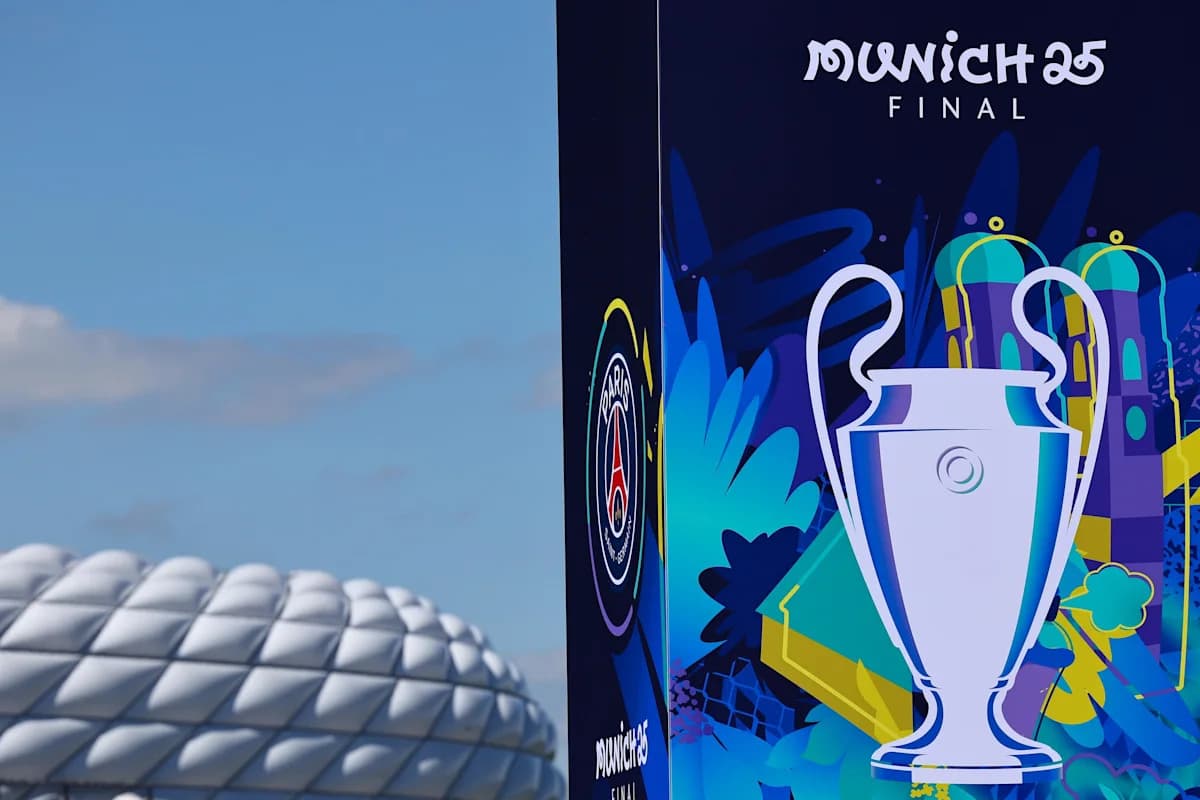
Allianz Arena to Host 2028 UEFA Champions League Final

Allianz Arena to Host 2028 Champions League Final for Third Time