
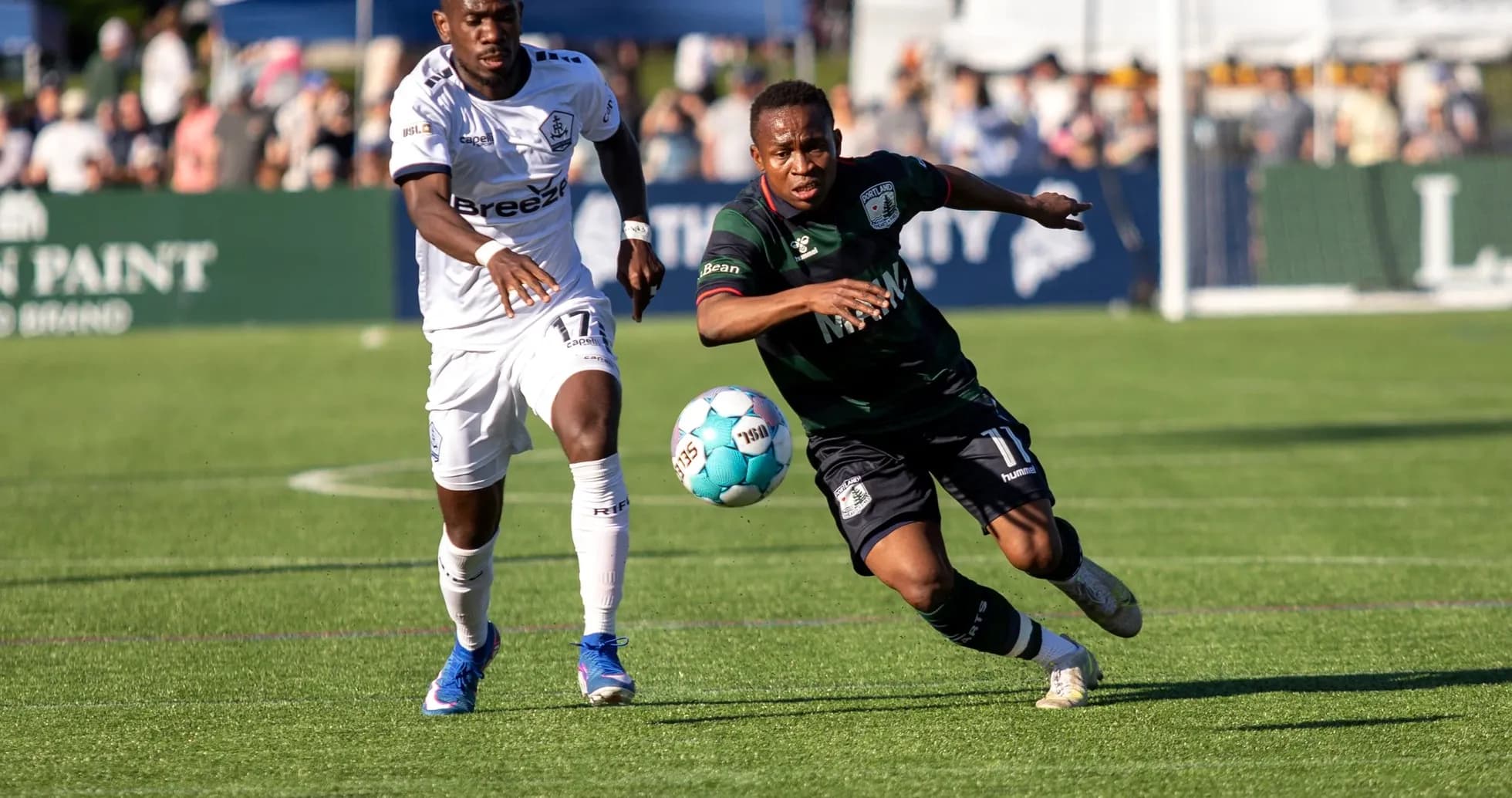
Brooklyn Dominates Portland in USL League One Cup
Under the Brooklyn lights at Maimonides Park, this USL League One Cup group-stage tie became a statement win. Brooklyn’s 5-1 dismantling of Portland Hearts of Pine did more than settle a single fixture; it crystallised the identities of two sides heading in opposite directions in Group 5.
I. The Big Picture – Brooklyn’s blueprint takes shape
Following this result, Brooklyn sit as a high‑ceiling, high‑control outfit. Across the group campaign they have taken 6 points from 3 matches, with a total goal difference of +5, built from 8 goals for and 3 against. At home, their profile is particularly striking: 2 matches, 1 win, 1 defeat, but 5 goals scored and 3 conceded. The numbers confirm the eye test from this 5-1: when they click, they overwhelm.
Portland, by contrast, are a volatile side whose attacking promise is constantly undercut by defensive chaos. They have 4 points from 3 games, but their total goal difference of -4 (9 scored, 13 conceded) underlines a structural fragility. On their travels, the story is stark: 2 away fixtures, 0 points, 3 goals scored and 8 conceded, with an away goals-against average of 4.0. The 5-1 here in Brooklyn is not an outlier; it is the logical extension of their season-long pattern.
The match itself was effectively decided by half-time. Brooklyn surged to a 3-1 lead by the interval, leaning into their attacking averages at home: 2.5 goals for and 1.5 against per home game heading into this tie. Portland’s away profile – 1.5 goals for but 4.0 against – foreshadowed exactly the kind of open, punishing encounter that unfolded.
II. Tactical Voids – Discipline, resilience, and what’s missing
There is no formal injury or suspension list in the data, but the tactical voids are etched in the disciplinary and goals-against profiles.
Brooklyn’s defensive record in the competition is deceptively solid: only 3 goals conceded in total, with a total goals-against average of 1.0. Yet their card distribution hints at periods of strain. Their yellow cards cluster between 31-45 minutes (20.00%), 46-60 (20.00%) and 61-75 (a peak 40.00%), with another 20.00% in the final 76-90 segment. This is a team that defends aggressively in the middle third of the game, often needing tactical fouls to protect their structure once the tempo rises.
Portland’s disciplinary map is even more revealing. Their yellow cards spike brutally between 61-75 minutes, where 50.00% of their cautions arrive, backed by 25.00% in the 46-60 window and 12.50% in the 16-30 and 76-90 ranges. Add in a red card in the 46-60 segment (100.00% of their reds in that band) and a picture emerges of a side that unravels under sustained pressure after the break. In Brooklyn, that fragility was punished ruthlessly as the hosts turned a promising first half into a rout.
On the personnel front, Brooklyn’s XI looks balanced and experienced. At the back, L. Burns, T. Vancaeyezeele, C. Frogson, V. Latinovich and Gabriel Alves formed the defensive spine. In midfield, M. Pinto and T. McNamara provided control, with S. Stojanovic and P. Mangione offering connective tissue between the lines. Ahead of them, C. Olney JR and M. Anderson gave Brooklyn vertical threat and pressing intensity.
Portland’s starting group had plenty of attacking flair – O. Wright, W. Varela, L. Kunga and A. Camara – supported by M. Mohamed, K. Green and B. Evans deeper. But what they lacked was a defensive anchor capable of absorbing Brooklyn’s waves of pressure, especially once legs tired and the card count rose.
III. Key Matchups – Hunter vs Shield, Engine Room battles
The “Hunter vs Shield” dynamic in this tie centred on Brooklyn’s collective attack against Portland’s away defence. Brooklyn’s total goals-for average of 2.7, underpinned by 3.0 on their travels and 2.5 at home, speaks to a side that generates chances in volume. Portland arrived with a total goals-against average of 3.0, but the away figure of 4.0 was the real alarm bell. Their biggest away loss – 5-1 – came here, perfectly mirroring that statistical frailty.
Brooklyn’s forward line, led by the movement of C. Olney JR and the presence of M. Anderson, repeatedly targeted the half-spaces between Portland’s centre-backs and full-backs. With O. Wright and L. Kunga often high and wide in transition, Portland’s shape stretched, leaving M. Mohamed and K. Green exposed. The result was a constant cascade of overloads, second balls and late runs from midfield.
In the “Engine Room”, M. Pinto and T. McNamara quietly dictated terms. Their ability to recycle possession and compress the pitch meant Portland’s creators – notably W. Varela and O. Wright – were forced to receive under pressure, often with their backs to goal. When Portland did break lines, A. Camara’s work rate kept them competitive, but without a true holding midfielder to screen, the Hearts of Pine were always one turnover away from disaster.
IV. Statistical Prognosis – What this result tells us going forward
Following this result, Brooklyn emerge as a dark horse in the USL League One Cup. Their total record – 2 wins, 1 defeat, 8 scored and 3 conceded – suggests a side with both firepower and a functioning defensive structure. The fact they have already delivered a 5-1 home win and a 3-0 away victory (their biggest away win) indicates that their attacking model travels, not just thrives at Maimonides Park.
Portland, meanwhile, are locked in a dangerous pattern. They have failed to keep a clean sheet in any of their 3 matches, with 9 goals conceded overall and 8 of those on their travels. Their total goals-for average of 1.7 shows they can hurt teams, but the defensive leak of 3.0 goals against per game – and specifically 4.0 away – will continue to undermine them unless the structure in front of K. Oladapo is significantly tightened.
In xG terms, a 5-1 usually reflects not just clinical finishing but territorial dominance and repeated high-quality entries into the box. Brooklyn’s shot volume and chance quality, supported by their season-long scoring averages, point to a side whose offensive output is sustainable rather than freakish. Portland’s concession pattern, especially their late-game disciplinary spikes, suggests that even if their underlying xG against were to improve slightly, game-state pressure and lapses in concentration will keep them vulnerable.
As the group phase tightens, Brooklyn look like a team with a clear identity: assertive, front-foot, and increasingly ruthless once they smell weakness. Portland remain a compelling but flawed story – a side whose attacking talent is undeniable, but whose defensive and disciplinary cracks, brutally exposed in this 5-1 defeat, threaten to define their entire campaign.
Related News

Indy Eleven Edges Lexington in USL League One Cup Showdown
Louisville City Edges Detroit City in Penalty Shootout
Lexington vs Indy Eleven: Key USL League One Cup Clash
Lexington vs Indy Eleven: USL League One Cup Group Stage Preview
Detroit City vs Louisville City Match Preview

Lexington vs Indy Eleven Predicted Lineups: Team News and Match Insights