
Bodo/Glimt's Tactical Masterclass in Extra Time Victory Over Union St. Gilloise
Bodo/Glimt’s 3-2 extra-time win over Union St. Gilloise at Aspmyra Stadion was a tactical siege decided by structure, ball circulation and depth management rather than sheer chaos. Over 120 minutes, Kjetil Knutsen’s 4-3-3 imposed a territorial lock: 70% possession, 23 total shots and 10 corners against a Union side set up by David Hubert in a 3-5-2 that was primarily reactive, vertical and reliant on transitional punches.
From the outset, Bodo/Glimt’s 4-3-3 was textbook: a flat back four, a three-man midfield triangle and a wide front line designed to pin Union’s wing‑backs. Fredrik Bjorkan and F. Sjovold pushed high from full-back, creating a de facto front five in settled possession. In midfield, Sondre Auklend, P. Berg and S. Fet rotated to keep the ball circulating and to drag Union’s central trio out of shape. The statistical profile — 999 total passes, 889 accurate at 89% — underlines a deliberate, patient possession game, with the ball almost constantly in Union’s half.
Union’s 3-5-2 was built to absorb and break. The back three of N. Havenaar, M. Sylla and Kevin Mac Allister stayed narrow, with L. Patris and Guilherme Smith as wing‑backs tasked with double duty: closing Bodo/Glimt’s wide forwards while sprinting out on the counter. Their 427 passes (78% accuracy) and only 1 corner show a side that accepted long stretches without the ball, waiting for moments to release P. David and D. Olaru into space.
Key Substitutions
The first major structural shift came with the 41' substitution: H. Aleesami (IN) came on for J. Gundersen (OUT). This was not just like-for-like at left centre-back; it brought a more aggressive, front-foot defender into the line, enabling Bodo/Glimt to hold a higher block and compress Union deeper. That aggression later manifested in Aleesami’s 92' yellow card for “Foul”, but it also underpinned Bodo/Glimt’s ability to sustain attacks into extra time.
The breakthrough on 51' reflected the host’s positional play: O. Blomberg scored after a pass from J. Hauge, a classic wide-forward combination. With Bodo/Glimt’s front three stretching Union’s back line horizontally, the interior midfielders could step into half-spaces, forcing Union’s wing‑backs to choose between tracking inside or holding width. When those decisions were mistimed, Bodo/Glimt’s wide players exploited the gaps.
Union’s response at 61' — the substitution vector and immediate goal — was their clearest tactical punch. M. Fuseini (IN) came on for P. David (OUT), adding more direct running and physical presence up front. Seconds later, Guilherme Smith equalised from a D. Olaru assist, a move that crystallised Union’s plan: win the ball, break quickly into the channels behind Bodo/Glimt’s advanced full-backs, and use the forwards’ movement to attack the box. Despite being out‑possessed, Union finished with 19 shots, 15 inside the box, a high proportion that speaks to the quality of their counters rather than volume.
Knutsen’s reaction at 70' was decisive and layered. First, J. Kitolano (IN) came on for S. Auklend (OUT), then A. Helmersen (IN) for O. Brynhildsen (OUT). Kitolano added fresh legs and more vertical running from midfield, while Helmersen offered a different profile up front: more central presence, better hold‑up and penalty‑box instincts. That tweak paid off at 76', when Hauge scored from a Helmersen assist — a direct payoff of the substitution vector, with the new striker linking play and Hauge attacking the far side.
Union’s bench moves at 70' and 74' — R. Schoofs (IN) for A. Zorgane (OUT) and M. Biondic (IN) for D. Olaru (OUT) — were aimed at freshening the midfield and keeping a vertical threat. Yet Bodo/Glimt’s territorial control continued: 9 shots on goal to Union’s 5, 6 blocked shots versus 4, and a 10-1 corner advantage. Structurally, Union were forced deeper into a 5-3-2 for long spells, with Patris and Smith often pinned alongside the back line.
Late Equaliser and Discipline
The late equaliser at 88' from Fuseini, assisted by Patris, was the logical outcome of Union’s persistence in transition. Even under siege, their 3-5-2 could spring forward quickly when Bodo/Glimt overcommitted. Fuseini’s presence, introduced at 61', gave Union a more dynamic reference point, and Patris’s delivery from wing‑back showed that the flanks remained their clearest attacking outlet.
Discipline then reshaped the tactical balance. Union accumulated four yellow cards and one red, all under pressure. Kamiel Van de Perre’s first yellow at 81' for “Foul” reflected the strain in midfield. At 90+6', a chaotic sequence saw Guilherme Smith booked for “Argument”, Van de Perre booked again for “Foul” and then sent off with a red card for “Foul”. Reduced to ten men, Union’s 3-5-2 collapsed into a 5-3-1 in extra time, with less ability to contest central spaces or launch meaningful counters. Hubert’s late changes — R. Mofokeng (IN) for B. Zeneli (OUT) at 91', and then R. Florucz (IN) for L. Patris (OUT) plus O. Niang (IN) for Guilherme Smith (OUT) at 120+1' — came too late to re‑balance the structure.
On the Bodo/Glimt side, discipline was controlled: two yellow cards total. Auklend’s 16' booking for “Foul” did not significantly alter his early role, and Aleesami’s 92' caution was the cost of aggressive defending in a game Bodo/Glimt were determined to tilt.
Extra Time and Tactical Management
Extra time showcased squad management and depth. Knutsen used his bench to maintain intensity: I. Maatta (IN) for Bjorkan (OUT) at 103', U. Saltnes (IN) for Fet (OUT) at 104', and finally V. Nielsen (IN) for Hauge (OUT) at 120+1'. Each move preserved the 4-3-3 structure while refreshing legs in key lanes — full-back, midfield and wide forward. The decisive moment came at 117', when Helmersen, already influential as a substitute, scored the 3-2 winner. That goal validated the earlier tactical choice to introduce him at 70' and keep him on through extra time as the central reference in the box.
Between the posts, N. Haikin (Bodo/Glimt) made 3 saves, while V. Chambaere (Union St. Gilloise) registered 5 saves. The discrepancy aligns with the shot profile: Bodo/Glimt’s sustained pressure forced Chambaere into more interventions, whereas Union’s attacks were fewer but often clearer, explaining why Haikin’s save count remained lower despite conceding twice.
Statistically, the match underlines Bodo/Glimt’s territorial and possession dominance against a resilient, transition-focused Union side. With 70% possession, almost 1,000 passes and 10 corners, the hosts controlled the rhythm and space, using a flexible 4-3-3 and well-timed substitutions to eventually break a compact 3-5-2 that was further weakened by late indiscipline and a red card. In tactical terms, it was a controlled siege resolved by structural consistency, bench impact and superior management of extra time.
Related News

Lamine Yamal Shares What Barcelona Must Do to Triumph in the Champions League
Luis Díaz Confident Bayern Munich Can Win Champions League
Insights from AFC Champions League Matchday One: K League Clubs’ Strategies

Vincent Kompany's Bayern Munich Future Not Tied Solely to Champions League Outcome
Barcelona's Camp Nou Chosen for 2029 Champions League Final, Munich Set for 2028
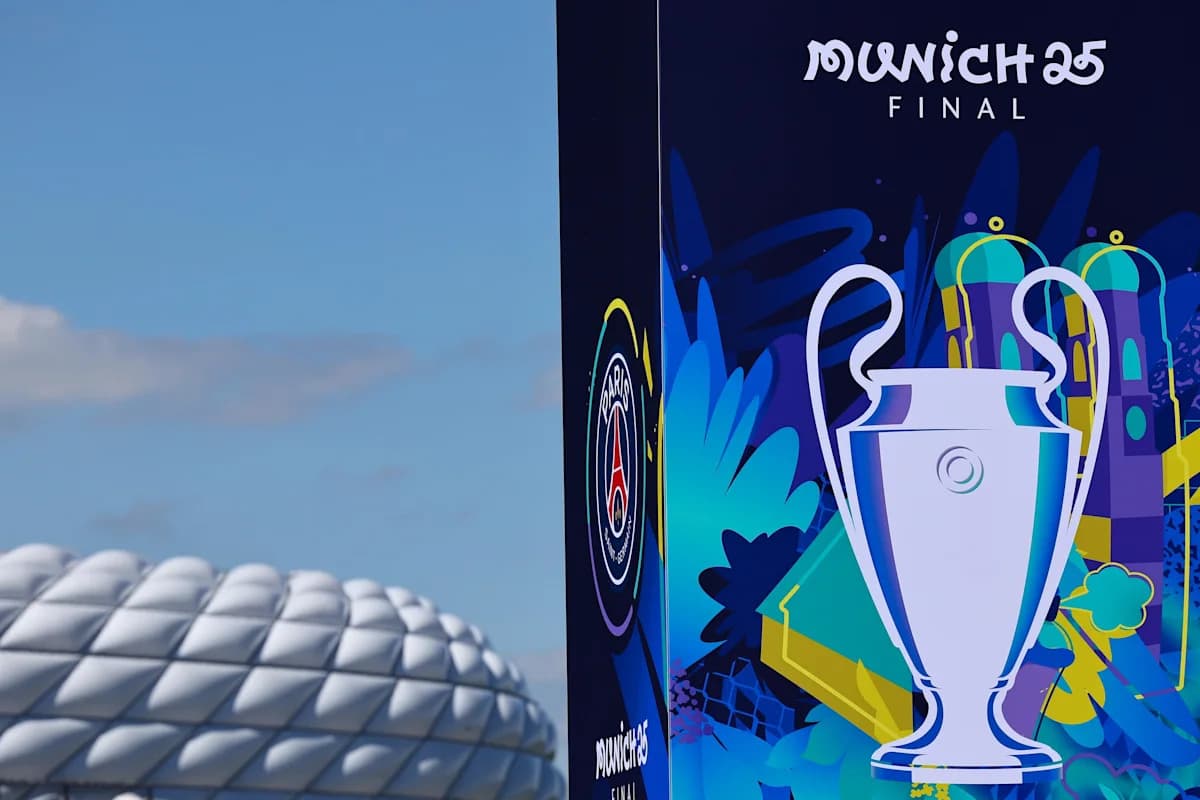
Allianz Arena to Host 2028 UEFA Champions League Final