
Bayern vs PSG: Champions League Semi-Final Tactical Analysis
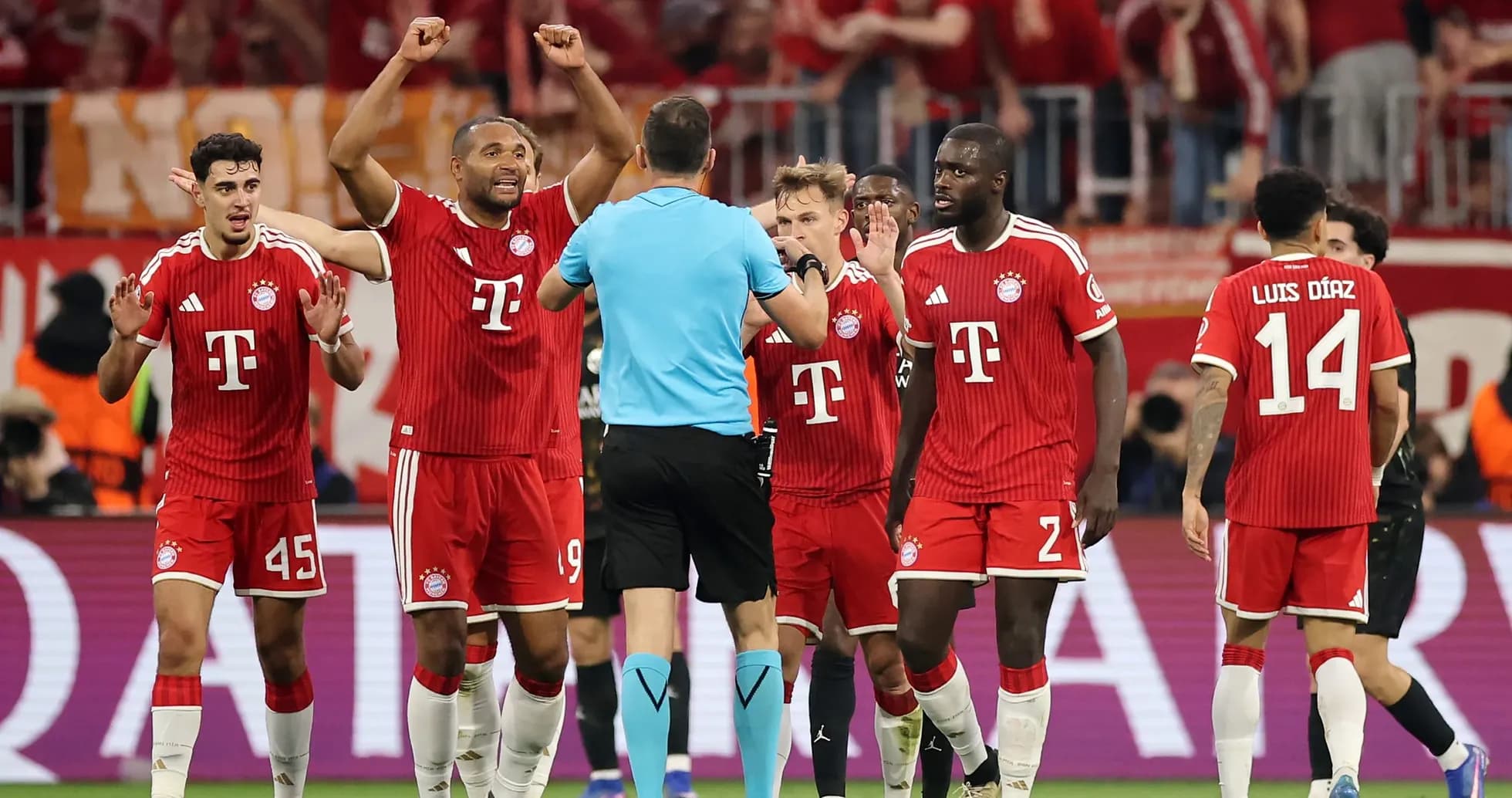
Under the lights of the Allianz Arena, this semi-final first leg in the UEFA Champions League felt less like a single match and more like a clash of entire footballing philosophies. Bayern München and Paris Saint Germain walked in as two of the competition’s most explosive attacks, and a 1–1 draw at full time only hinted at the tactical depth beneath the surface.
I. The Big Picture – Two Superpowers, One Thin Margin
Following this result, Bayern’s broader Champions League campaign still speaks of controlled dominance. Overall this season they have played 14 matches in the competition, winning 11, drawing 1 and losing just 2. At home they have been ruthless: 7 fixtures, 6 wins, 1 draw, 0 defeats. The Allianz has seen them score 21 goals at home, conceding 7, for a home average of 3.0 goals scored and 1.0 conceded. The goal difference in the group-stage standings snapshot was already strong: 22 goals for and 8 against overall, a GD of +14.
PSG arrive from a different route but with similar attacking menace. Overall in this Champions League season they have played 16 fixtures, winning 10, drawing 4 and losing only 2. On their travels they have been composed and efficient: 8 away games, 5 wins, 2 draws, 1 defeat, with 19 away goals scored and 8 conceded. That yields an away average of 2.4 goals for and 1.0 against, mirroring Bayern’s defensive numbers at home.
This semi-final, then, is framed by two attacks averaging well over two goals per game overall – Bayern at 3.1 goals for per match, PSG at 2.8 – against defences that concede 1.4 goals per game overall each. A deadlock in Munich leaves everything finely poised for the return leg, but the patterns of this night will echo loudly in Paris.
II. Tactical Voids – What Was Missing, What Was Rebuilt
Both managers had to redraw their plans around significant absences. For Bayern, Vincent Kompany was without S. Gnabry, M. Cardozo, C. Kiala, W. Mike and B. Ndiaye, stripping away depth in wide and attacking rotations. That context explains the heavy creative burden placed on L. Díaz, M. Olise and J. Musiala behind H. Kane in the 4-2-3-1. With no Gnabry to stretch the line or arrive late in the box, Díaz’s role from the left became doubly important: a scorer, a ball-carrier, and a pressing trigger.
Paris Saint Germain, under Enrique Luis, were forced into a different sort of compromise. A. Hakimi, one of the Champions League’s top creators with 6 assists, was missing, as were L. Chevalier and Q. Ndjantou. Without Hakimi’s vertical thrust on the right, PSG’s 4-3-3 leaned more heavily on W. Zaire-Emery at full-back and the fluidity of O. Dembele and K. Kvaratskhelia ahead of him. It shifted the creative axis slightly infield toward Vitinha and J. Neves, who had to knit together progression without the usual overlapping chaos.
Disciplinary history also hovered over the contest. Bayern’s card profile in this campaign shows a late-game edge: 37.04% of their yellow cards arrive between 76–90 minutes, while 50.00% of their reds have come in each of the 46–60 and 61–75 ranges. PSG mirror that late volatility; 42.86% of their yellows come between 76–90 minutes, and they have seen red both in the 31–45 and 91–105 intervals (50.00% of their reds in each of those ranges). Even without a specific in-game flashpoint here, both squads carried the knowledge that emotional control in the final quarter-hour is often the difference between a semi-final and a heartbreak.
III. Key Matchups – Hunter vs Shield, Engine Room vs Enforcer
The night’s central narrative was always going to orbit H. Kane and K. Kvaratskhelia, two of Europe’s most decisive forwards.
Kane, with 14 goals and 2 assists in this Champions League season, is not just a finisher but a complete attacking reference. He has taken 36 shots, 25 on target, and drawn 23 fouls, while also delivering 16 key passes. His penalty record in the competition is nuanced: he has scored 4 but also missed 1, a reminder that even his ruthlessness has human margins. Against a PSG defence that, on their travels, concedes only 1.0 goal per match, his ability to drop off, combine with Musiala and Olise, and attack Marquinhos and W. Pacho in the box was the “Hunter vs Shield” duel in its purest form.
For PSG, Kvaratskhelia is both Hunter and Architect. With 10 goals and 6 assists, plus 30 shots (18 on target) and 20 key passes, he leads the competition in combined goal contribution and sits atop the assists chart. His duel volume – 163 contests, 82 won – and 51 dribbles attempted (29 successful) underline his role as the carrier who bends defensive structures out of shape. Up against K. Laimer and J. Tah on Bayern’s right side, his inside drives and combination play with Vitinha and D. Doue constantly probed the seams of the 4-2-3-1 block.
In the engine room, the confrontation between J. Kimmich and Vitinha shaped the rhythm. Kimmich, with 1117 passes at 90% accuracy and 30 key passes, is Bayern’s metronome and enforcer rolled into one. His 4 yellow cards in this campaign speak to the fine line he treads between aggression and risk. Vitinha, meanwhile, has completed 1553 passes at 93% accuracy, with 23 key passes, 25 tackles and 17 interceptions. He is PSG’s tempo-setter and first presser, the player who turns recoveries into platforms.
Around them, M. Olise and L. Díaz on one side, and O. Dembele plus D. Doue on the other, formed mirrored creative trios. Olise’s 5 goals, 6 assists and 75 dribbles attempted (45 successful) made him Bayern’s chief one-v-one threat, while Díaz’s 7 goals, 3 assists and a history of one red card in this campaign added both incision and an edge. For PSG, Dembele’s 7 goals and 2 assists, alongside a penalty record of 1 scored and 1 missed, provided unpredictability, while Doue’s 5 goals, 4 assists and 28 key passes showed why he has quickly become a secondary playmaker rather than a mere winger.
IV. Statistical Prognosis – Margins, xG Patterns and the Second Leg
Even without explicit xG values in the data, the season-long profiles sketch a clear expected-goals landscape for the tie. Bayern’s overall average of 3.1 goals scored and 1.4 conceded per match, combined with PSG’s 2.8 scored and 1.4 conceded, suggests a second leg tilted toward multiple high-quality chances at both ends. On their travels PSG average 2.4 goals for; at home Bayern average 3.0. Translating those season-long trends into a semi-final context, a combined xG in the 2.5–3.5 range for the return leg would be no surprise, with both sides likely to create more than one clear opportunity apiece.
Defensively, both teams sit on the same overall average of 1.4 goals against, but the nuance lies in context. Bayern have kept only 2 clean sheets in total, both at home, and have conceded 13 goals away from home at an average of 1.9. PSG, by contrast, have 5 clean sheets overall, 3 of them on their travels, conceding just 8 away. That suggests that as the tie moves to Paris, Bayern’s attacking weight will be balanced by a slightly more robust PSG structure in their own stadium.
Discipline could tilt the tactical scales late on. With Bayern accumulating 37.04% of their yellows in the final 15 minutes and PSG 42.86% in the same window, the closing stages in Paris are likely to be played on an emotional knife-edge. Players like Kimmich and Laimer, already prominent in the yellow-card charts, will need to manage the line between tactical fouling and self-destruction, particularly against the dribbling volume of Kvaratskhelia, Dembele and Doue.
In narrative terms, this semi-final remains perfectly balanced. The first chapter in Munich showed that Bayern’s structured aggression and PSG’s fluid front three can cancel each other out over 90 minutes. Yet the underlying numbers insist that such equilibrium is fragile. With Kane’s penalty threat (and one miss on his ledger), Kvaratskhelia’s dual role as scorer and creator, and an engine-room duel between Kimmich and Vitinha that will again dictate tempo, the second leg is set up as a contest where xG, discipline and small tactical adjustments will decide who walks out of this tie and into the final.
Related News
Vincent Kompany's Bayern Munich Future Not Tied Solely to Champions League Outcome
Barcelona's Camp Nou Chosen for 2029 Champions League Final, Munich Set for 2028
Allianz Arena to Host 2028 UEFA Champions League Final
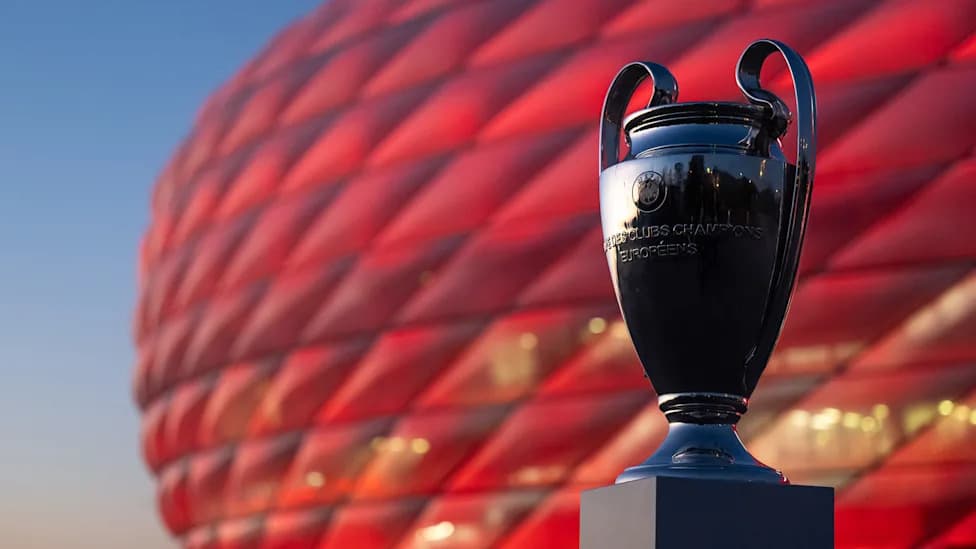
Allianz Arena to Host 2028 Champions League Final for Third Time
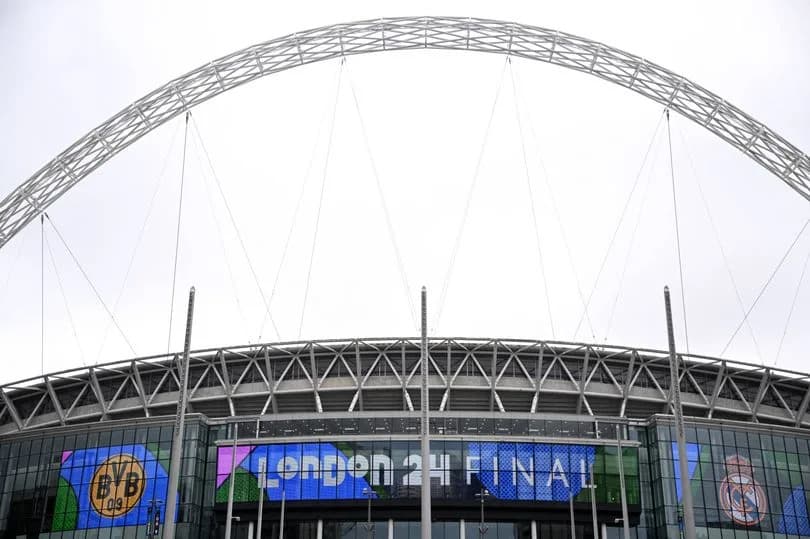
Barcelona's Nou Camp Chosen for 2029 UEFA Champions League Final Over Wembley and Dortmund
Five English Clubs Secure Wins in Champions League Opening Round