
Bayern München vs Paris Saint Germain: UEFA Champions League Semi-Final Draw
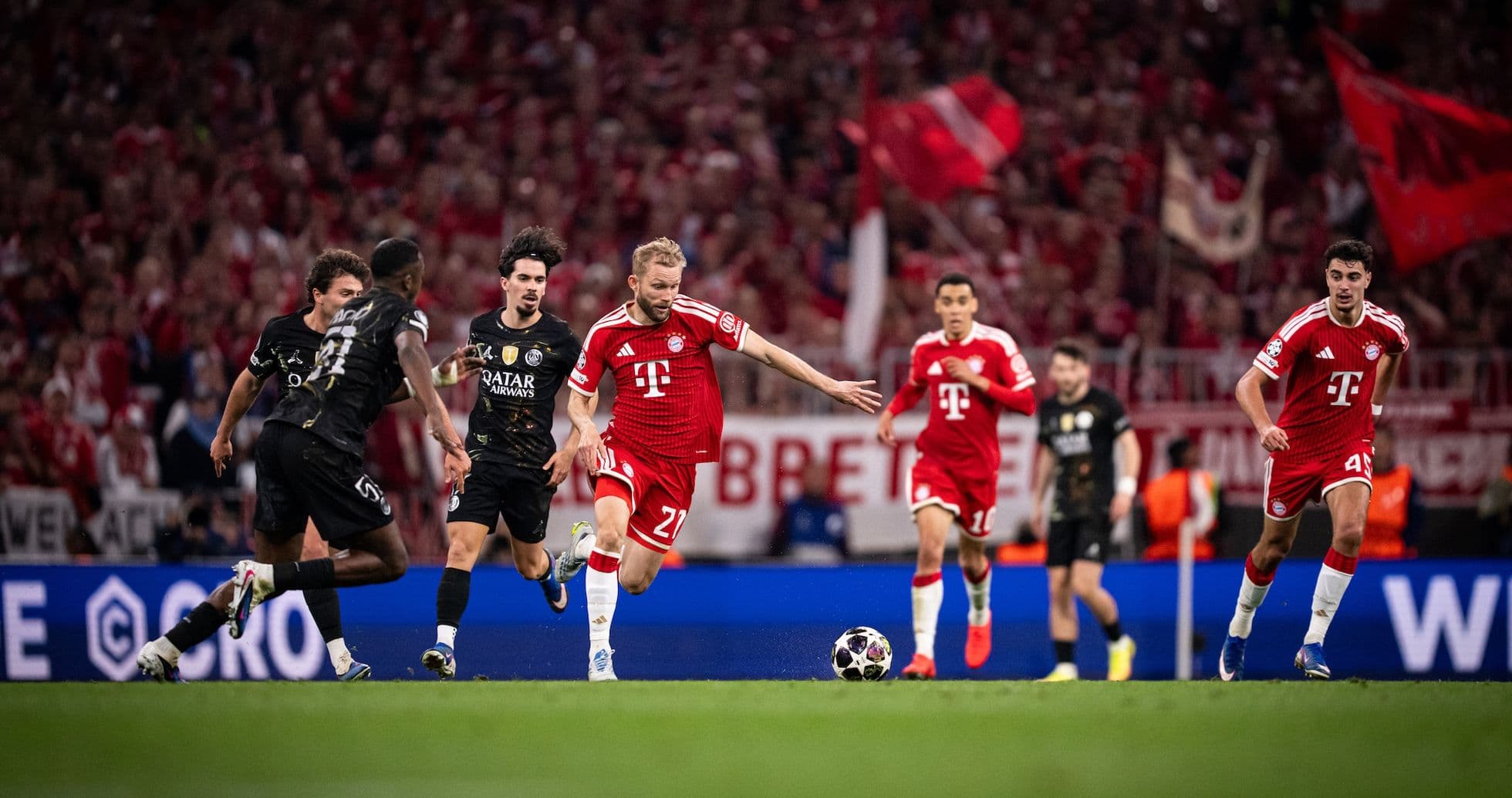
Bayern München and Paris Saint Germain played out a 1–1 draw at the Allianz Arena in this UEFA Champions League 2025 semi-final, a contest defined by contrasting game plans and finely balanced underlying numbers. PSG struck early through O. Dembele and then defended compactly, while Bayern, under Vincent Kompany, dominated territory and possession, eventually forcing a late equaliser from H. Kane. With Bayern holding 66% of the ball and a 1.4 to 1.03 edge in xG, the scoreline reflected a tactical stalemate more than clear superiority, leaving the tie finely poised despite Bayern’s territorial control and PSG’s counter-attacking menace.
I. Executive Summary of Scoring and Discipline
The scoring opened almost immediately: at 3', O. Dembele (Paris Saint Germain) finished a move assisted by K. Kvaratskhelia, punishing Bayern’s back four before they had settled into their defensive shape. That early goal allowed Enrique Luis’s side to retreat into a compact 4-3-3 block and play the game largely on their own terms without the ball.
Bayern’s response was gradual rather than explosive, and they had to wait until 90' for H. Kane to level, assisted by A. Davies. The timing is critical tactically: Davies had entered from the bench at 67', giving Bayern extra thrust on the left just as PSG’s defensive line tired and substitutions disrupted their original back-four chemistry.
Disciplinary Log
(all cards in chronological order, with exact reasons):
- 8' Nuno Mendes (Paris Saint Germain) — Foul
- 33' Jonathan Tah (Bayern München) — Argument
- 45+3' Khvicha Kvaratskhelia (Paris Saint Germain) — Time wasting
- 78' Luis Díaz (Bayern München) — Argument
- 86' Marquinhos (Paris Saint Germain) — Foul
- 90+7' Joshua Kimmich (Bayern München) — Argument
Card verification: Bayern München: 3, Paris Saint Germain: 3, Total: 6.
The pattern of “Argument” bookings for Bayern (Tah, Díaz, Kimmich) underlined growing frustration with PSG’s game management, while PSG’s cards for Nuno Mendes and Marquinhos (“Foul”) plus Kvaratskhelia’s “Time wasting” reflected the physical and temporal tactics used to protect the lead.
II. Scoring Sequence & Event Flow
The match’s first key tactical moment came at 3'. PSG’s front three of D. Doue, O. Dembele and K. Kvaratskhelia exploited Bayern’s high 4-2-3-1 line. A direct combination between Kvaratskhelia and Dembele pulled D. Upamecano and Jonathan Tah out of their zones, with Dembele finishing clinically. From that point, PSG could compress the field and invite Bayern onto them.
The first card at 8' to Nuno Mendes for “Foul” signalled the physical edge in PSG’s wide defending, as he was repeatedly asked to defend large spaces behind K. Kvaratskhelia. At 33', Jonathan Tah’s “Argument” yellow suggested growing tension as Bayern struggled to convert possession into clean chances.
By 45+3', Kvaratskhelia’s yellow for “Time wasting” showed PSG leaning fully into game management, slowing restarts to disrupt Bayern’s rhythm. The halftime score of 0–1 accurately reflected PSG’s early punch and subsequent defensive control, despite Bayern’s ball dominance.
Second-half substitutions reshaped the tactical picture. At 65', B. Barcola (IN) came on for O. Dembele (OUT), injecting fresh pace to threaten Bayern’s right side in transition. Bayern responded at 67' as A. Davies (IN) came on for J. Stanisic (OUT), and at 68' Kim Min-Jae (IN) came on for J. Tah (OUT), a double move that added attacking thrust from left-back and fresh legs in central defence.
PSG’s double change at 76' — L. Hernandez (IN) for D. Doue (OUT) and L. Beraldo (IN) for F. Ruiz (OUT) — shifted them towards a more defensively solid, hybrid back line, effectively moving from an attacking 4-3-3 to a more conservative structure with extra defensive profiles.
At 78', Luis Díaz’s “Argument” yellow underlined Bayern’s frustration as they still trailed. Bayern then introduced N. Jackson (IN) for J. Musiala (OUT) at 79', adding a more vertical presence around Kane. At 85', L. Karl (IN) replaced D. Upamecano (OUT), while PSG brought on S. Mayulu (IN) for N. Mendes (OUT), further refreshing legs on both flanks.
Marquinhos’s “Foul” yellow at 86' came as Bayern intensified their late pressure. The tactical payoff arrived at 90', when H. Kane scored from an A. Davies assist. Davies, operating high and wide from left-back, finally broke PSG’s compactness, providing the delivery for Kane to convert. The final card, Joshua Kimmich’s “Argument” yellow at 90+7', came amid a tense finish as Bayern pressed for a winner that never came.
III. Tactical Breakdown & Personnel
Bayern’s 4-2-3-1, with M. Neuer behind a back four of K. Laimer, D. Upamecano, J. Tah and J. Stanisic, and a double pivot of Joshua Kimmich and A. Pavlovic, was built for territorial control. With 570 passes and 87% accuracy, Bayern’s Overall Form in possession was strong: they recycled the ball well, pushed full-backs into advanced zones, and used J. Musiala and M. Olise between the lines to pin PSG’s midfield three.
However, the early goal exposed a structural risk: the high line left space behind Stanisic and Laimer, and the centre-backs were dragged into wide channels by PSG’s fluid front three. Once ahead, PSG’s 4-3-3, with F. Ruiz, Vitinha and J. Neves in midfield, compressed centrally and forced Bayern to circulate the ball around the block rather than through it.
Defensively, Bayern’s index was mixed. They limited PSG to 15 total shots and an xG of 1.03, a respectable containment given the early concession. Neuer’s 6 saves underline that PSG’s chances, when they came, were dangerous enough to test him repeatedly. His performance, aligned with a goals-prevented value of 0.23, suggests he slightly outperformed the quality of shots faced, stabilising Bayern after the early setback.
On the other side, PSG’s Defensive Index was notably resilient. With only 301 passes and 34% possession, they were under consistent pressure, yet M. Safonov made 5 saves and also registered 0.23 goals prevented. That symmetry in goals-prevented, despite Bayern’s higher xG (1.4), indicates that both keepers were decisive in maintaining the 1–1 scoreline.
Personnel decisions were central. A. Davies’s introduction for J. Stanisic tilted Bayern’s left side from conservative to aggressive, stretching PSG and directly contributing to the equaliser. Kim Min-Jae’s entry for Tah, who had been booked for “Argument”, reduced Bayern’s risk of a second yellow in central defence and allowed them to maintain a high line without excessive caution.
For PSG, the shift from O. Dembele and D. Doue to B. Barcola and L. Hernandez rebalanced the front line towards defensive security, with Hernandez providing more defensive reliability on the flank. The late replacement of Nuno Mendes by S. Mayulu was partly protective (Mendes was on a “Foul” yellow) and partly about energy against Bayern’s surging left side led by Davies and Díaz.
IV. Statistical Verdict
The statistical profile supports the narrative of Bayern control against PSG efficiency. Bayern’s 18 total shots to PSG’s 15, combined with a 66%–34% possession split, shows Kompany’s side dictating the tempo and territory. Their xG of 1.4 against PSG’s 1.03 suggests Bayern created the slightly better overall chances, but not enough to claim clear dominance on shot quality.
Fouls were close (Bayern 11, PSG 12), but the card profile — Bayern three yellows all for “Argument”, PSG three yellows split between “Foul” and “Time wasting” — reveals different tactical behaviours: Bayern’s emotional reaction to game state versus PSG’s deliberate disruption and time management.
Corner Kicks (Bayern 1, PSG 8) underline PSG’s threat in transition and wide attacks despite less possession; when they advanced, they often forced Bayern into last-ditch defending and concessions of set pieces. Meanwhile, Bayern’s high passing volume and accuracy did not translate into many corners, reflecting more controlled but less chaotic final-third play.
Goalkeeper saves (Neuer 6, Safonov 5) and identical goals-prevented values highlight that both keepers were central to the outcome. The 1–1 draw, in light of the xG and possession data, feels tactically fair: Bayern’s structured dominance offset by PSG’s sharp counters and disciplined defending, leaving the semi-final delicately balanced for the return leg.
Related News
Vincent Kompany's Bayern Munich Future Not Tied Solely to Champions League Outcome
Barcelona's Camp Nou Chosen for 2029 Champions League Final, Munich Set for 2028
Allianz Arena to Host 2028 UEFA Champions League Final
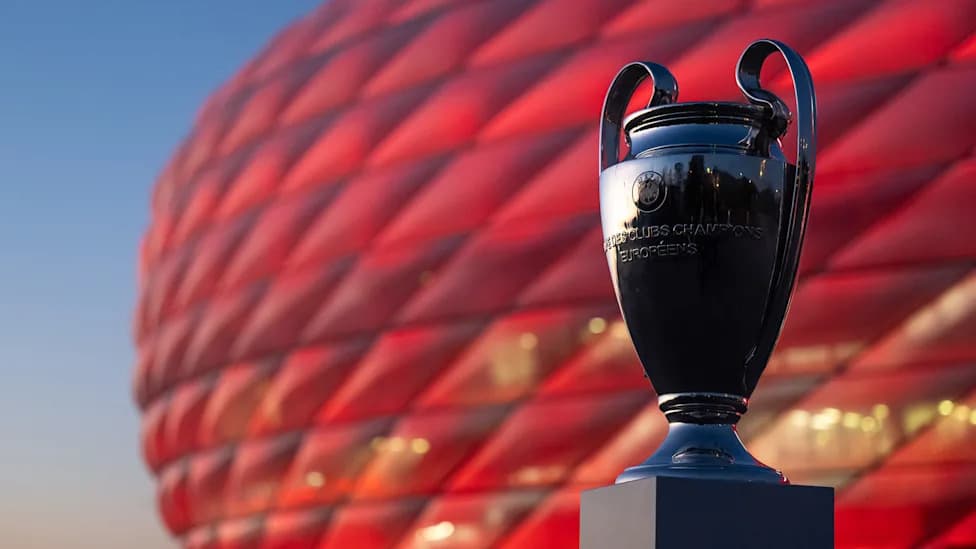
Allianz Arena to Host 2028 Champions League Final for Third Time
Barcelona's Nou Camp Chosen for 2029 UEFA Champions League Final Over Wembley and Dortmund
Five English Clubs Secure Wins in Champions League Opening Round