

Aston Villa vs Fenerbahçe: Champions League Showdown
Under the lights of Villa Park in Birmingham on 14 October 2026, Aston Villa step into the UEFA Champions League League Stage still as an unknown quantity, while visitors Fenerbahçe arrive with the swagger of a side already hardened by early European battles. For Villa, this is about announcing themselves on the continent and turning home advantage into a launchpad. For Fenerbahçe, it is the chance to prove that their strong early campaign form can travel, and that their ambitions stretch well beyond simply reaching the play-offs.
Season Context
Aston Villa enter this League Phase as something of a blank page. In the standings they sit 3rd in the League Phase section with 0 points, 0 goals scored and 0 conceded from 0 matches played. The numbers tell us nothing yet; the pressure of a demanding Champions League calendar at Villa Park will soon reveal whether this squad can cope with the dual demands of domestic and European football.
Fenerbahçe, ranked 11th in the League Phase, are also on 0 points with 0 goals scored and 0 conceded from 0 matches in the standings, but their tag of “Play Offs” contenders underlines the expectation around them. The table is still clean, yet their recent European record and status suggest this is a team fully expected to be in the qualification mix once the League Stage takes shape.
Form & Momentum
For Aston Villa, there is no recorded recent form string in the Champions League standings, and their broader European profile in this data set is still empty. That makes Villa something of a mystery: tactically rich on paper, but untested in this specific competition sample. The lack of goals for or against across 0 matches means we cannot yet speak of strengths or weaknesses in numbers, only of potential and the weight of expectation at Villa Park.
Fenerbahçe, by contrast, arrive with clear momentum. Their Champions League league record shows “WDWWDW”, a sequence that underlines how consistently they have taken points (4 wins and 2 draws from 6 matches, with 8 goals scored and only 3 conceded). Averaging 1.3 goals per game while allowing just 0.5, they look both efficient in attack and well-organised at the back. Three clean sheets in those 6 fixtures reinforce the sense of a side that knows how to manage tight European nights.
Head-to-Head Patterns
Recent history between these two clubs carries a subtle psychological weight. The data offers one competitive clash, but it is a fresh and relevant one. On 22 January 2026, Aston Villa travelled to Istanbul and beat Fenerbahçe 1-0 in the UEFA Europa League (score 0-1, UEFA Europa League, season 2025, January 2026) at Chobani Stadium. Villa’s ability to win away in Turkey, in a high-stakes European environment, will give them quiet confidence that Fenerbahçe are a puzzle they can solve again. For the visitors, that defeat is a reminder of the margins at this level and a clear motivation to rewrite the script on English soil.
Tactical Preview
Aston Villa’s European statistics are a blank, but their squad profile hints at a side built for structured, modern football. At the back, options like Pau Torres, Tyrone Mings, Victor Lindelöf and full-backs Matty Cash, Aaron Wan-Bissaka and Ian Maatsen suggest the capacity to mix ball-playing defenders with aggressive one‑v‑one markers. In midfield, the presence of Leon Goretzka, Boubacar Kamara, João Gomes, John McGinn and Ross Barkley offers a blend of physicality, pressing energy and long-range passing. Up front, Tammy Abraham provides a classic penalty‑box focal point, while wide threats such as Leon Bailey and Alejandro Garnacho hint at a plan built around quick transitions and service into the box. With no Champions League matches played yet, Villa’s tactical identity here will likely lean on compact defensive structure at home and using the crowd to fuel high-intensity pressing phases.
Fenerbahçe arrive with a far clearer tactical fingerprint. Their preferred system in this Champions League sample is a 4-2-3-1, used in all 6 recorded fixtures. That shape has delivered 8 goals scored and just 3 conceded, with 4 wins and 2 draws, underlining a well-balanced setup. The double pivot is anchored by experienced midfielders such as N’Golo Kanté and M. Guendouzi, giving the back line strong protection and a platform to recycle possession. Ahead of them, creativity and goal threat come from the likes of Marco Asensio, Talisca and M. Greenwood. Talisca has been a standout in this competition, with 4 goals from 6 appearances, while Greenwood has chipped in with 2 goals and 1 assist. On the flanks, K. Aktürkoğlu adds both work rate and end product, with 2 assists from 5 matches and a high volume of key passes. Defensively, three clean sheets in 6 games and an average of just 0.5 goals conceded per match indicate a side comfortable sitting in a mid-block and springing forward through its attacking quartet.
The key tactical question is whether Aston Villa’s as‑yet‑unseen Champions League blueprint can disrupt Fenerbahçe’s well‑rehearsed 4-2-3-1. Villa’s array of ball‑winning midfielders and dynamic wingers is well-suited to attacking the spaces around Fenerbahçe’s full-backs, but the visitors’ disciplined central core and proven ability to keep matches low-scoring could turn this into a cagey, attritional contest.
Statistical Snapshot
- Competition: UEFA Champions League, season 2026 — 14 October 2026.
- Venue: Villa Park, Birmingham.
- Prediction: Win or draw — Combo Double chance : Aston Villa or draw and -2.5 goals.
- Win Probabilities: Home 50% / Draw 50% / Away 0%.
- Model: Aston Villa 0 — Fenerbahçe 0.
Betting Verdict
The prediction model leans firmly towards Aston Villa avoiding defeat, recommending a double chance on Villa or draw combined with a low total goals angle. That aligns with Fenerbahçe’s tendency towards tight games in this competition (8 scored and 3 conceded in 6 matches) and the under‑2.5 pattern suggested in the advice. Villa’s recent head-to-head success in Istanbul adds another layer in their favour, even if their current Champions League sample is empty. With the probabilities split 50% for a home win and 50% for a draw, and Fenerbahçe given effectively no chance by this model, the analytical case points towards a cautious, low‑scoring contest where Villa’s home advantage and Fenerbahçe’s defensive solidity keep the scoreline narrow and the double‑chance, under‑goals combination in play.
Related News

Vincent Kompany's Bayern Munich Future Not Tied Solely to Champions League Outcome

Barcelona's Camp Nou Chosen for 2029 Champions League Final, Munich Set for 2028

Allianz Arena to Host 2028 UEFA Champions League Final

Allianz Arena to Host 2028 Champions League Final for Third Time
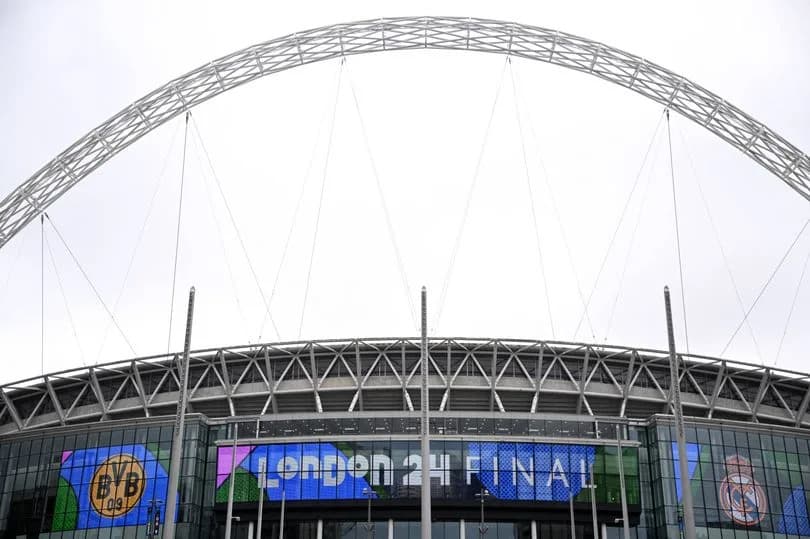
Barcelona's Nou Camp Chosen for 2029 UEFA Champions League Final Over Wembley and Dortmund

Five English Clubs Secure Wins in Champions League Opening Round