
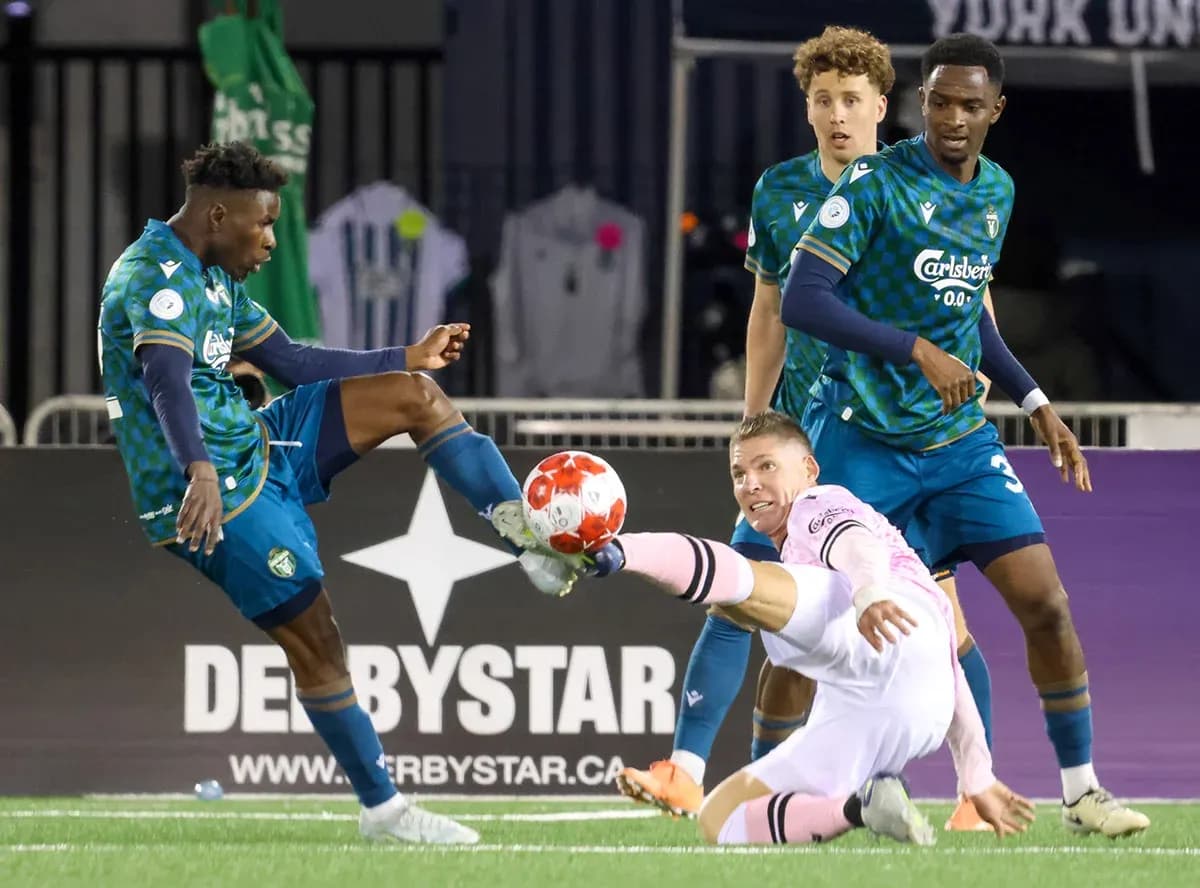
York United Triumphs Over Vancouver FC in Canadian Premier League Clash
Under the floodlights at York Lions Stadium, this Group Stage clash in the Canadian Premier League brought together two sides whose seasons have been defined by very different storylines. York United, sitting 6th with 23 points and a goal difference of -13, have lived on the edge all year: free-scoring at home, porous at the back. Vancouver FC arrived in 4th with 30 points and a goal difference of 2, a side that has flirted with consistency but stumbled into this fixture on a run of three straight defeats.
The 3-1 full-time score in favour of York felt like a crystallisation of those season-long trends. The home side’s attacking volatility, especially in front of their own fans, finally broke a Vancouver team whose away record has been fragile despite their overall higher rank.
York’s seasonal DNA is clear in the numbers. Heading into this game they had played 20 league matches overall, scoring 29 and conceding 42. That gives them an overall scoring average of 1.5 goals per game against 2.1 conceded, the kind of profile that guarantees drama. At home they had been even more extreme: 21 goals scored and 23 conceded across 10 matches, an average of 2.1 scored and 2.3 allowed. York do not do quiet nights.
Vancouver, by contrast, have been more balanced. Across 22 matches they had scored 30 and conceded 28, averaging 1.4 goals for and 1.3 against. On their travels they had 13 goals scored and 17 conceded in 11 away games, with away averages of 1.2 for and 1.5 against. It is a profile of a side that can compete anywhere, but is never fully secure.
I. The Big Picture: Shapes, context, and momentum
York leaned into their attacking instincts with a 3-4-3 under M. Eustáquio. Campos Ralston Kai Antonio anchored a back three of L. Singh, F. Sturing and O. León. The midfield quartet of C. Guzmán, S. Yeates, O. Bassett and K. Kibato was built to both circulate and counter-press, while the front three of L. Accettola, T. Skublak and J. Almagro promised vertical threat and fluid movement.
M. Nash’s Vancouver FC responded with a 4-2-3-1, a structure that has been their most-used shape this season. C. Irving started in goal behind a back four of M. Doner, M. Campagna, Thomas Geoffrey Field and K. Proctor. The double pivot of D. Pecile and M. Polisi sat behind a creative band of three: T. Bah on the right, N. Mezquida centrally and M. Amissi from the left, feeding centre-forward L. Mousset.
The pre-match forms framed the narrative: York’s overall sequence of DWDWWDLLLLDLLDWDLDDW told of wild swings and recent resilience, while Vancouver’s longer run of LLLDWLDLWWLWWWWWDLLLWL was that of a side capable of long winning streaks but also sudden collapses. Vancouver’s immediate form line of “LWLLL” in the standings underlined how fragile they were coming into this.
II. Tactical Voids and Discipline
With no confirmed absentees listed, both managers appeared close to full strength. For York, that meant their statistical spearhead, T. Skublak, could start. Across the season he had produced 5 goals and 2 assists in 18 appearances, with 20 shots and 12 on target, and a rating of 7.23. He is also one of the league’s most combative forwards: 97 duels, 49 won, and 8 yellow cards. His inclusion always tilts York’s game towards chaos.
York’s disciplinary profile this season has been heavy but manageable. Their yellow-card timing shows a clear rise as matches progress, peaking between 61-75 minutes with 23.73% of their bookings, and remaining high from 46-60 minutes at 18.64%. They have one red card this campaign, shown in the 61-75 window. Vancouver’s yellows also spike late: 25.00% of their bookings arrive between 76-90 minutes, with another 19.44% between 46-60. Both sides, then, are at their most combustible just as legs tire and spaces open.
That late-game aggression meshed ominously with York’s attacking timing. Heading into this fixture, 36.00% of York’s league goals arrived between 46-60 minutes, with another 16.00% between 61-75. Vancouver’s defensive data by minute was not detailed, but their away average of 1.5 goals conceded suggested vulnerability just when York typically surge after half-time.
III. Key Matchups
Hunter vs Shield: Skublak vs Vancouver’s away defence
Skublak, starting as the central forward in York’s 3-4-3, was the focal point of the “Hunter vs Shield” battle. Vancouver’s away record of 17 goals conceded in 11 matches, and their worst away defeat being 4-0, hinted at a back line that can unravel when pressed high and attacked directly.
With York’s home scoring average at 2.1 goals per game, the onus was on M. Campagna and Thomas Geoffrey Field to contain Skublak’s movement between the lines and his ability to pin centre-backs. His 16 dribble attempts and willingness to duel made him a constant stress test for Vancouver’s central pairing, while his 8 yellow cards underlined how often he plays on the edge, drawing and committing fouls.
Engine Room: Yeates and Bassett vs Polisi and Pecile
In midfield, the duel that shaped the game was the York pairing of S. Yeates and O. Bassett against Vancouver’s M. Polisi and D. Pecile.
Yeates has quietly been one of York’s most important connectors: 420 passes with 87% accuracy, 10 key passes, 19 tackles and 5 interceptions. He also carries a disciplinary edge with 5 yellow cards. His ability to dictate tempo and break up play was critical against a Vancouver side that prefers to build through Polisi, who had 415 passes at 85% accuracy, 7 key passes and 16 tackles.
Polisi’s 6 yellow cards highlight his role as Vancouver’s enforcer. Against York’s four-man midfield, his screening of the back four and his timing in stepping out to meet Yeates and Bassett determined how often Vancouver’s attacking trio could receive clean ball. Lose that duel, and Vancouver’s 4-2-3-1 risks being stretched into a 4-1-4-1 under pressure.
Wide Threats: Bah and Amissi vs York’s wing-backs
With York deploying a back three, the flanks were always going to be a battleground. T. Bah, one of Vancouver’s key attacking outlets, came into this game with 3 goals, 1 assist, 21 tackles, 1 blocked shot, and an impressive 119 duels with 63 won. He is both creator and first presser, and his 5 yellow cards show how often he is involved in transitional moments.
Against him, York’s wide defenders and midfielders – particularly Guzmán and Kibato on the flanks of the four – had to manage Bah’s direct running and his link with N. Mezquida. On the opposite side, M. Amissi’s positioning tested York’s ability to shuffle across in their 3-4-3 without leaving the far-side wing exposed.
IV. Statistical Prognosis and Tactical Verdict
From a statistical standpoint, this fixture always leaned towards a high-event, York-tilted contest. York’s home numbers – 2.1 goals scored and 2.3 conceded on average – combined with Vancouver’s away profile of 1.2 scored and 1.5 conceded suggested a baseline expectation of multiple goals and chances at both ends.
York’s goal timing pattern, with a 36.00% surge between 46-60 minutes and 16.00% between 61-75, intersected dangerously with Vancouver’s tendency to accumulate late yellows and their general away fragility. Once York survived the early exchanges and grew into their pressing game, the second half was always likely to tilt their way.
Vancouver’s underlying defensive averages of 1.3 goals conceded overall and their capacity for clean sheets (3 in total) hinted they could keep this tight if their structure held. But their recent form line of “LWLLL” and the psychological weight of seven away defeats out of eleven meant that any early setback could quickly snowball.
In the end, the 3-1 scoreline at full-time felt like the logical extension of the numbers and the tactical shapes. York’s aggressive 3-4-3, powered by Skublak’s presence, Yeates’ control and the team’s post-interval scoring spikes, overwhelmed a Vancouver side whose 4-2-3-1 could not fully protect its back four on the road. The match reinforced York’s identity as one of the league’s most entertainingly volatile sides, and underlined that Vancouver’s ambitions will depend on solving their away-day defensive riddle.
Related News
Pacific FC vs Vancouver FC Prediction: Key Stats and Betting Tips

Cavalry FC vs Forge Prediction: Key Stats and Betting Tips
Cavalry FC Dominates Pacific FC in 1-0 Clash
York United Triumphs Over Vancouver FC in Canadian Premier League Clash

Atlético Ottawa vs Supra du Quebec Stats: Head-to-Head Record
Pacific FC vs Vancouver FC Stats: Head-to-head Record