
World Cup Stars Ready for Premier League Season
The World Cup is over, the confetti has been swept away, and the Premier League is about to reclaim the spotlight. All summer, England’s top flight felt scattered across North and Central America, its stars chasing history for their countries. Now they come back changed — sharper, harder, some of them transformed.
Here are 10 World Cup standouts who look ready to rip into the 2026-27 Premier League season.
10. Pedro Porro – finally unleashed
Pedro Porro returns to Tottenham as a World Cup winner and a player who suddenly looks perfectly aligned with his club situation. Spain trusted him at right back and he delivered, game after game, bombing on, snapping into tackles, and stitching attacks together.
At Spurs, Roberto De Zerbi feels like the ideal match. The Italian wants his full backs to live on the front foot; Porro thrives when he’s allowed to maraud, not merely defend. Goals, assists, chaos down that flank — he now has the system and the manager to turn his World Cup form into a full Premier League campaign of damage.
9. Elliot Anderson – City’s new heartbeat
Elliot Anderson didn’t just ride England’s wave to a third-place finish. He helped create it. His reading of the game, his aggression without the ball, his knack for pinching possession at just the right moment made him a constant presence in midfield.
That earned him the leap from Nottingham Forest to Manchester City, where Enzo Maresca will hand him the keys to large chunks of the pitch. Anderson presses, recycles, then drives. He doesn’t just fit into a team; he becomes its rhythm. If he settles quickly at City, he won’t just be part of their midfield — he’ll run it.
8. Martin Ødegaard – Norway’s magician, Arsenal’s puzzle
The World Cup felt like a reset for Martin Ødegaard. After a stop-start, injury-hit season with Arsenal, he rediscovered his authority with Norway, orchestrating their surprise run with the calm of a player who never doubted his own talent.
Back in north London, though, nothing is guaranteed. Arsenal have brought in Bruno Guimarães, and that means Ødegaard is no longer the automatic first name in the creative role. He has to scrap, to press, to prove he can be the same force he was for his country. The upside? He looks energized again. A refreshed Ødegaard fighting for his place is exactly the kind of internal battle title-winning squads need.
7. Florian Wirtz – the one people are sleeping on
Germany’s early exit buried a lot of good performances. Florian Wirtz’s tournament was one of them. He glided between the lines, looked sharp on the half-turn, and constantly threatened to open teams up, even if the campaign ended too soon.
That might suit Liverpool just fine. Away from the World Cup spotlight, he’s been excellent in preseason and now steps into his second Premier League season with more certainty and a clearer role. Andoni Iraola plans to use him as the No. 10, high up the pitch, pressing and pouncing in the final third. If Liverpool’s press clicks, Wirtz will find himself in dangerous pockets all season long — and this time, people will be paying attention.
6. Youri Tielemans – United’s grown-up in midfield
Youri Tielemans left the World Cup as the driving force of a Belgium side that reached the last eight. He set the tempo, chose his moments, and came up big when they needed him. That tournament only strengthened his case for a bigger club.
Manchester United answered. From Aston Villa to Old Trafford, Tielemans arrives as exactly the profile they’ve been missing: a midfielder who does the ugly work with a smile and still has the quality to decide games from 20 yards. He’s not the loudest personality, but his game is loud enough. If United’s “comeback” is real, Tielemans will be somewhere near the center of it.
5. Bukayo Saka – Arsenal’s main man, again
England never truly saw the best of Bukayo Saka at the World Cup, and that’s the frustration. He played through an injury that had to be managed carefully, then missed the semifinal defeat to Argentina. Yet even in that compromised state, he still left his mark.
One assist against Mexico. A hat trick in the third-place thriller against France. Sharp cameos off the bench that reminded everyone of his ceiling. Now he returns to Arsenal as the focal point of their attack once more. Fully fit, fully trusted, and with more responsibility than ever, Saka doesn’t just lift Arsenal’s front line — he defines it.
4. Lisandro Martínez – United’s enforcer returns
When Lisandro Martínez plays, Manchester United look different. Tougher. Nastier. More sure of themselves. Argentina’s run to the World Cup final underlined that again. The no-nonsense center back was a key figure in their charge, and when he left the final with a minor injury, it felt like a punch to the gut for his country.
For United, his importance is just as stark. Their defense needs a leader who relishes the fight, who drags the line higher and refuses to be bullied. Martínez is that player. With him fit and snarling again, United’s back line suddenly looks less like a weakness and more like a foundation.
3. Bruno Guimarães – Arsenal’s statement signing
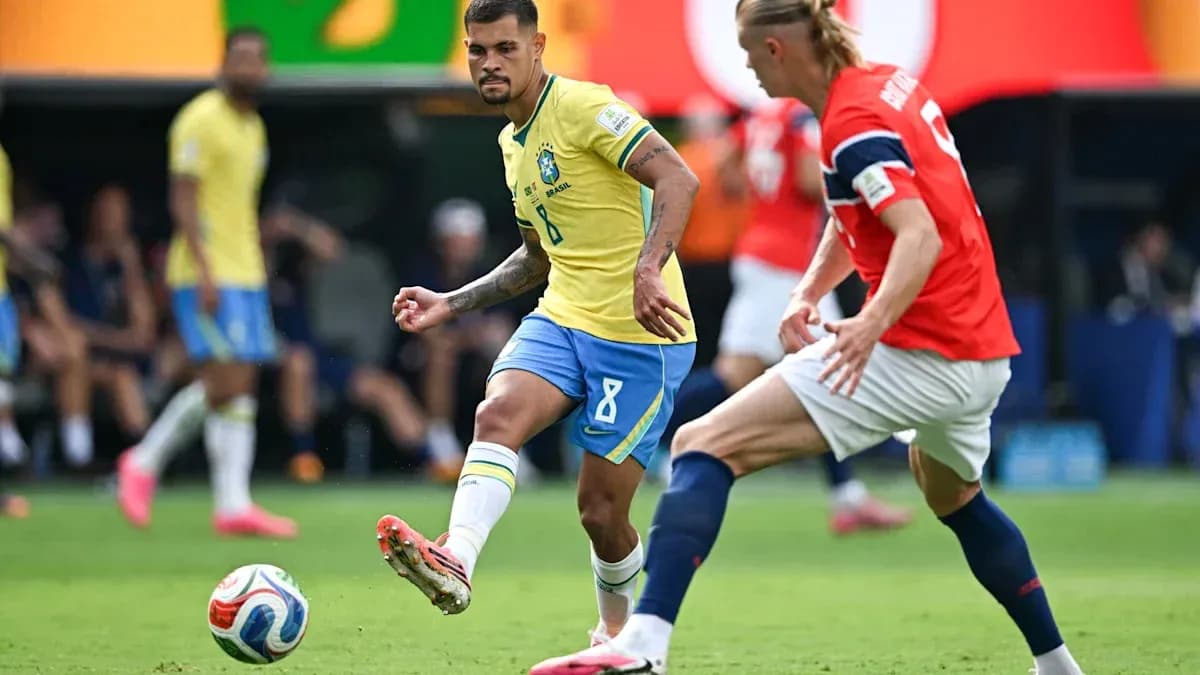
Four assists for Brazil. Only Michael Olise created more goals at the World Cup. Bruno Guimarães didn’t just keep Brazil ticking; he pushed them forward, threading passes and driving the ball into dangerous areas.
That form has carried him into a blockbuster move from Newcastle United to Arsenal, a $101 million swing that says everything about where Mikel Arteta wants to take his team. Guimarães brings hunger, leadership, and bite. He’ll raise the tempo in midfield and raise standards in the dressing room. Arsenal have signed a player in his prime who doesn’t just join a title race — he demands one.
2. Declan Rice – the hinge of a title defence
When Declan Rice isn’t fully fit, you feel it. Arsenal feel it. England feel it. He still managed a strong World Cup despite bouts of illness and injury, patrolling midfield, breaking up play, and setting the tone for both press and possession.
Back at Arsenal, his job is even clearer: protect the crown. Their game leans heavily on Rice’s engine and authority. He hunts the ball, then dictates what happens next. If Arsenal are to defend their title and go back-to-back, they need Rice at full throttle from August to May. His form isn’t a subplot; it’s the storyline.
1. Erling Haaland – the inevitable
Of course he’s here. Of course he’s top.
Erling Haaland scored seven goals at the World Cup and somehow still managed to grow his global profile. Norway only reached the quarterfinals, but every time he stepped onto the pitch, the cameras followed. Goals, celebrations, viral clips — he turned the tournament into his own stage.
Now he returns to Manchester City under Enzo Maresca, who wants his side to spring quickly and ruthlessly on the counter. That’s bad news for everyone else. City will create chances in space, and Haaland will be waiting, as always, on the shoulder of the last defender. Another 30-goal Premier League season is not a prediction; it feels like the baseline.
The World Cup reminded us who the stars are. The Premier League is about to show who can sustain that brilliance, week after punishing week.
Related News
Transfer Rumors: Haaland’s Two Options; Real Madrid Targets $100 Million Premier League Star
Manchester United Targets Premier League Forward to Strengthen Attack
Liverpool Eyes 17-Year-Old Mexican Midfielder Gilberto Mora for Summer Transfer
Summer 2026 Transfer Window: Manchester United and Tottenham Struggle with New Signings
Liverpool Maintain Interest in Real Madrid Midfielder Amid Transfer Challenges
Transfer Insider Warns Tottenham About Costly Sale of Will Lankshear