
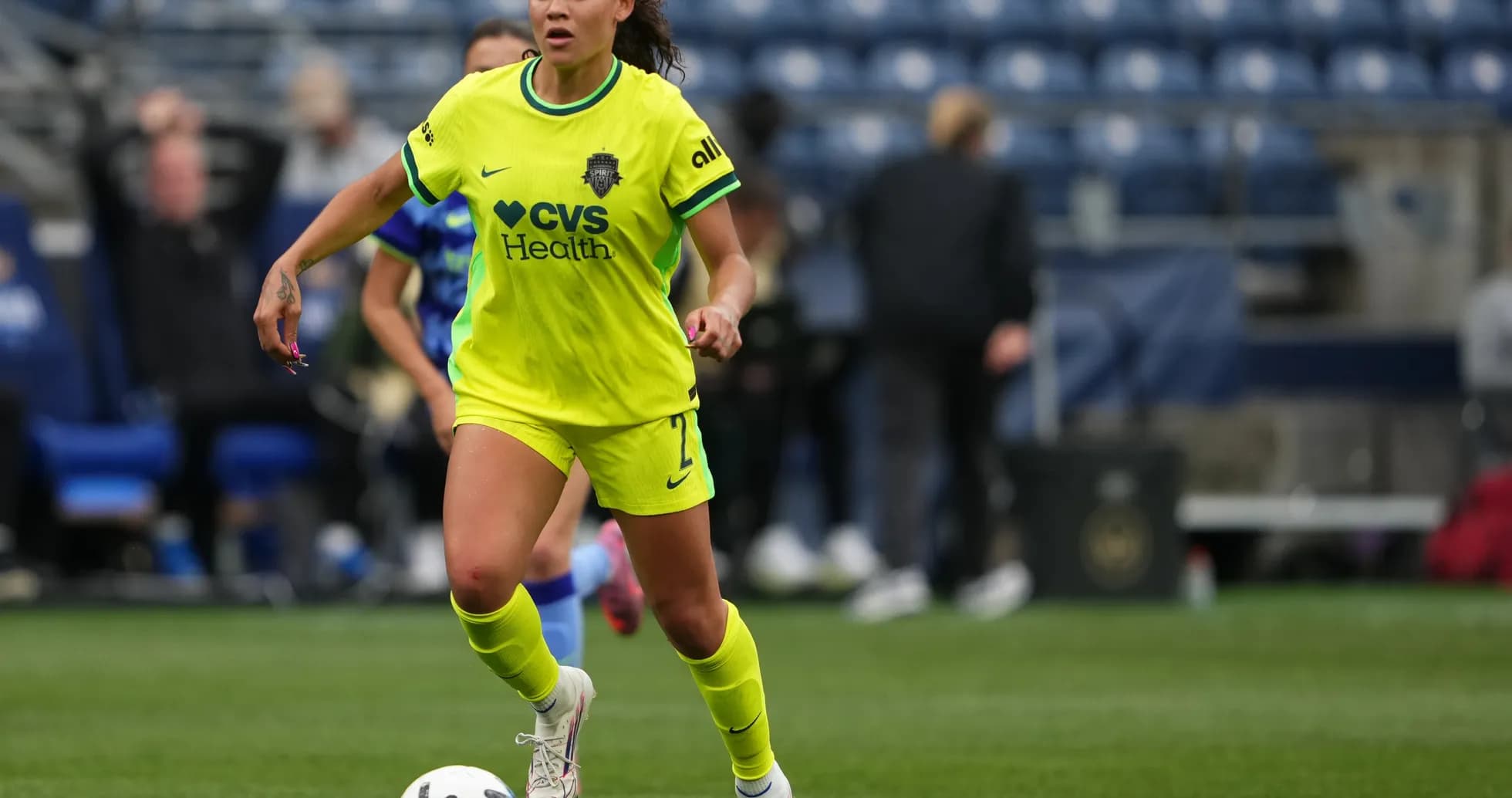
Washington Spirit vs Boston Legacy: Tactical Unmasking in NWSL
Audi Field had barely emptied when the numbers began to sting. Washington Spirit W, second in the NWSL Women standings with 43 points and a positive goal difference of 10 (33 scored, 23 conceded overall), had just been dismantled 3–0 at home by a Boston Legacy W side sitting 13th with 26 points and a goal difference of -9. On paper, this was supposed to be a routine confirmation of hierarchy. Instead, it felt like a tactical unmasking.
I. The Big Picture: A clash of identities
Heading into this game, Washington’s season had been defined by controlled aggression and consistency. Overall they had won 13 of 24 matches, drawing 4 and losing 7, with a balanced scoring profile: 1.4 goals scored per game in total, 1.3 at home and 1.5 on their travels. Defensively, they had allowed 1.0 goals per game overall, 1.1 at home and 0.8 away. Nine clean sheets and just six games without scoring underlined a side that usually found a way.
Boston arrived as the archetypal dangerous underdog. Thirteenth in the table, they had still managed 31 goals in total, at 1.3 per match overall (1.5 at home, 1.0 away), while conceding 40 (1.7 per game overall, 1.8 at home, 1.5 away). The raw numbers suggested fragility, but their recent form line of WWLLL hinted at volatility more than resignation.
The fixture itself — a Group Stage clash in the NWSL Women season — pitted Washington’s fluid 4-3-3 against Boston’s compact, workmanlike 4-4-2. It was a meeting of a playoff-chasing heavyweight and a side still stitching together a coherent identity. The scoreline suggested only one of those identities held firm.
II. Tactical Voids: Where plans unraveled
Adrían set Washington up in a bold 4-3-3: S. MacIver behind a back four of G. Carle, E. Morgan, T. McKeown and P. Metayer. The midfield trio of M. Bethi, Hal Hershfelt and M. Ngock was built for control and progression, tasked with feeding a front three of T. Rodman, S. Cantore and R. Kouassi.
On the other side, Boston’s 4-4-2 was disciplined rather than flamboyant. C. Murphy anchored a back line of N. Hernández, D. Davis, J. Carabalí and B. St‑Georges. Across midfield, B. Olivieri, A. Karich, Alba Caño and S. Schupansky offered a blend of bite and distribution, with S. Smith and A. Traoré leading the line.
The absence list offered no excuses — there was “No data” for missing or questionable players — so this was as close to full-strength as both sides could hope for. Yet the tactical void for Washington emerged not from who was missing, but from what was missing: compactness between the lines and protection in transition.
Washington’s season-long disciplinary pattern had already hinted at emotional spikes. Their yellow cards were clustered in the 31–45 and 76–90 minute windows, each accounting for 22.22% of their cautions, with a solitary red card appearing in extra time (91–105 minutes). Boston, by contrast, carried a reputation for combustible edges: yellow cards peaking at 20.51% between 76–90 minutes, and red cards spread across 31–45, 76–90 and 91–105. This was always going to be a game where control — tactical and emotional — mattered.
III. Key Matchups: Hunter vs Shield, and the battle for the engine room
The headline duel was always going to orbit T. Rodman. With 8 goals and 4 assists in the league, 56 shots (24 on target) and 23 key passes, she had been Washington’s primary offensive engine, averaging 6.98 in rating and playing 1,781 minutes across 24 appearances. Her role from the right side of the front line — officially listed as a midfielder but functionally a wide forward — was to stretch, isolate, and punish.
Boston’s shield against her came in layers. On paper, B. St‑Georges and J. Carabalí were the obvious defensive sentries. Carabalí had blocked 6 shots this season, while St‑Georges had 5 blocks and a reputation for uncompromising duels. Behind them, C. Murphy’s presence was a stabilizing force for a back line that had often been overexposed.
But the true defensive key lay slightly higher: Annie Karich and Alba Caño. Karich had amassed 46 tackles and 4 successful blocks, while Alba Caño added 48 tackles and 6 blocks, plus 20 interceptions. Together, they formed a screen that could deny Rodman and company the central pockets they normally exploit between the lines.
On the other side of the ball, Boston’s “hunter” was A. Traoré. Matching Rodman’s 8 goals but from fewer minutes, Traoré brought 44 shots (21 on target), 16 key passes and a 7.03 rating. She thrived on duels — 190 contested, 95 won — and had drawn 42 fouls, constantly forcing defenders into uncomfortable decisions. Crucially, she was clinical from the spot: Boston’s penalty record stood at 4 converted from 4, with 0 missed, and Traoré herself had scored 1 from 1 penalty.
Against a Washington defense that had conceded 13 goals at home across 12 matches — 1.1 per game at Audi Field — Traoré’s directness and Boston’s willingness to attack quickly through the channels became a decisive weapon. Washington’s back four, usually solid with 9 clean sheets overall, found themselves repeatedly dragged into open-field duels they could not fully control.
In midfield, Hal Hershfelt and M. Ngock were asked to wrestle control from a Boston unit that had quietly become one of the league’s most industrious. Alba Caño’s 833 passes at 78% accuracy and Karich’s 1,159 passes at 82% gave Boston a platform to bypass Washington’s first line of pressure and play into the feet of S. Smith, Traoré and the advancing wide midfielders.
IV. Statistical Prognosis: What this result tells us going forward
Following this result, the numbers take on a different shade for both sides.
For Washington, the loss is a warning flare. Their overall goal difference of 10 remains healthy, but the split between home and away performance is telling. At home, they had scored 15 and conceded 13 across 12 matches; on their travels, they had been sharper and tighter, with 18 scored and just 10 conceded. The 3–0 defeat at Audi Field fits an emerging pattern: at home, when their front line is stifled and they are forced to chase, their structure frays.
Their penalty profile deepens the concern. With 2 penalties awarded this season, they have converted only 1, missing the other — a 50.00% success rate that undercuts their margin for error in tight games. When they are not ruthless from the spot and their primary creator-finisher in Rodman is contained, their attacking output can flatten alarmingly.
Boston, conversely, can treat this as a blueprint. They remain a side with a negative goal difference of -9 (31 scored, 40 conceded), but their away resilience — 11 goals scored and 16 conceded in 11 matches — now has a signature performance attached. The 4-4-2, anchored by Karich and Alba Caño, supported by the defensive steel of Carabalí and St‑Georges, and ignited by Traoré’s movement, offers a clear identity.
Discipline will remain a tightrope for Boston. Their yellow-card spikes late in games and a red-card record spread across key periods suggest that their intensity can tip into recklessness. Yet here, that edge was channeled rather than wasted.
From a tactical and statistical lens, this match redefines the narrative arc for both clubs. Washington are still a playoff-caliber side, but one whose home aura has cracks and whose reliance on Rodman’s dynamism must be balanced by more varied routes to goal. Boston, still 13th, have discovered that when their engine room holds and their hunter is fed, they can not only survive against the league’s elite — they can dominate them on their own turf.
Related News
San Diego Wave W vs Kansas City W Predicted Lineups: Team News for NWSL Women
Orlando Pride W vs Portland Thorns W Prediction: Key Stats and Betting Tips
San Diego Wave W vs Kansas City W: Key NWSL Clash Preview
San Diego Wave W vs Kansas City W Prediction: Key Stats and Betting Tips
Portland Thorns and Chicago Red Stars Draw in NWSL Showdown
Chicago Red Stars W vs Washington Spirit W Stats and Head-to-Head Record