
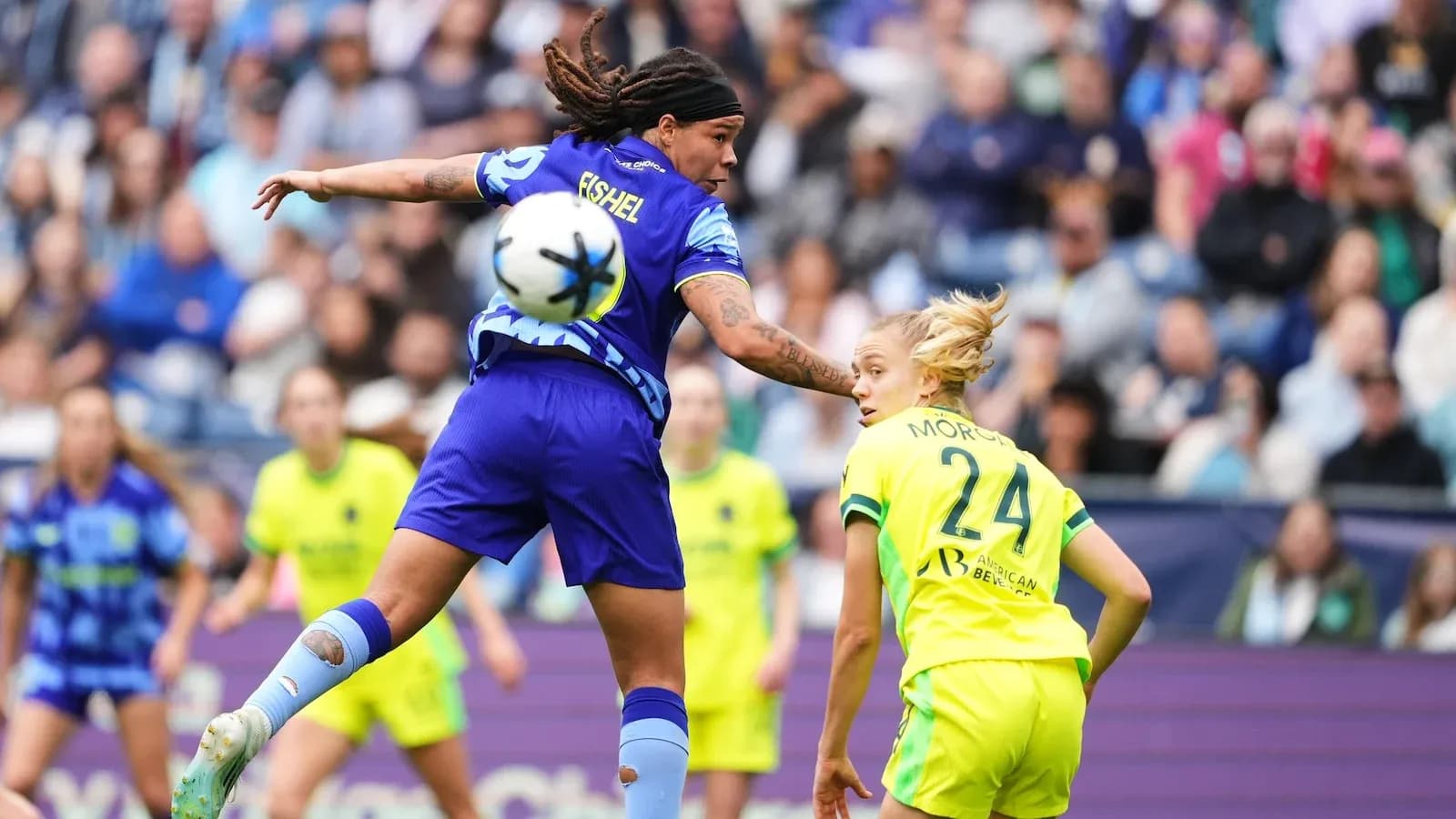
Utah Royals W Dominate Denver Summit W in NWSL Clash
Under the lights at America First Field, Utah Royals W’s 2–1 victory over Denver Summit W felt less like a routine group-stage assignment and more like a statement of intent from the league leaders. Following this result in the NWSL Women Group Stage, the contrast between a polished, system-driven Utah side and a still-forming Denver project was written clearly across the pitch.
I. The Big Picture – Utah’s structure vs Denver’s volatility
Utah arrived as the benchmark team in the league: 1st place, 23 points from 11 matches, and a goal difference of 8, built on 16 goals scored and just 8 conceded overall. At home they have been ruthless, winning 4 of 5, with 8 goals for and only 4 against. That defensive parsimony has been the spine of a run that now reads WWDWW in the standings and “LLDWWWWWDWW” across the season’s form line.
Denver Summit W, by contrast, sit 12th with 12 points from 10 matches, their overall goal difference of 3 (16 scored, 13 conceded) hinting at a side that is rarely outclassed but frequently on the edge. Their form line of LWWLL underlines that volatility: capable of surging, but just as capable of slipping.
The 2–1 scoreline mirrored the broader statistical identities. Utah, who average 1.5 goals per game overall and concede just 0.7, again found a way to edge a tight contest. Denver, averaging 1.6 goals for and 1.3 against overall, once more lived in that narrow band where one key moment can swing the entire night—and in Sandy, those moments tilted Utah’s way.
II. Tactical Voids and Discipline – Edges at the margins
Injuries and suspensions offered no obvious alibis; there was no recorded list of absentees, so both coaches essentially had their core groups available. The tactical voids, then, were structural rather than personnel-based.
Utah’s choice of a 4-2-3-1—used in 10 of their 11 league matches—again provided clarity. M. McGlynn anchored the back from goal, shielded by a back four of J. Thomsen, K. Del Fava, K. Riehl, and N. Rabano. In front, the double pivot of Ana Tejada Jimenez and N. Miura acted as the hinge between a secure block and a fluid line of three: C. Delzer, Minami Tanaka, and C. Lacasse supporting lone forward K. Palacios.
Denver, listed without a defined formation, played like a side still searching for its ideal structure. A. Smith in goal, a defensive trio or back line built around A. Oke, E. Gaetino, and K. Kurtz, and then a mixed band of workers and creators—D. Sheehan, N. Means, Y. Ryan, M. Kossler, and N. Flint—suggested flexibility, but also a lack of the automatic patterns Utah have developed.
Discipline loomed as a pre-match subplot. Utah’s season card profile shows a team that tends to collect yellows in the 46–75’ window—22.22% of their yellows between 46–60’ and 27.78% between 61–75’. Denver’s yellows spike between 46–60’ (44.44%) and then again late, with 22.22% between 76–90’ and another 22.22% between 91–105’. Add in the red-card history—Utah with a late red on their seasonal record (100.00% of their reds in 76–90’), Denver with a red between 16–30’—and this was always likely to be a match where game state and discipline intertwined.
On the individual level, Ana Tejada’s 3 yellows this season underlined her role as Utah’s line-break enforcer in midfield, while Denver’s axis of N. Flint and K. Kurtz, both on 3 yellows, spoke to a team that often defends on the edge, particularly through its central spine. That edge can be a weapon, but also a liability when chasing a result away from home.
III. Key Matchups – Hunter vs Shield, Engine Room battles
The “Hunter vs Shield” duel was embodied by C. Lacasse and the Utah defensive unit on one side, and Denver’s attacking core on the other.
Lacasse, Utah’s attacking reference point, entered the match with 3 goals and 3 assists in 11 appearances, plus 23 key passes and 9 shots (6 on target). She is not just a finisher but a conduit: 210 passes at 70% accuracy, 24 tackles, and even 1 blocked shot underline a two-way winger who presses and tracks as much as she creates. Against a Denver defense that concedes 1.3 goals per game overall and is particularly vulnerable in the 31–45’ and 76–90’ windows (25.00% of their goals against in each range), Lacasse’s timing between the lines was always going to be decisive—and Utah’s first-half and late pressure followed that script.
For Denver, the attacking threat was split between N. Flint and Y. Ryan. Flint’s 3 goals and 2 assists from midfield, backed by 12 shots and 243 passes at 79% accuracy, make her the Summit’s all-phase connector. Her 2 successful blocks and 7 interceptions underline how often she starts transitions herself. Ryan, with 2 goals, 3 assists, and 15 key passes from 219 total, is the more direct dribbler—23 attempts with 8 successful—and the player most likely to carry Denver into Utah’s defensive third.
Their challenge was to pierce a Utah back line that concedes only 0.8 goals per game at home and just 0.7 overall, with a notable pattern: 33.33% of goals conceded between 16–30’ and another 33.33% between 61–75’. For Denver, whose scoring peaks at 16–30’ (23.53%) and then spreads evenly from 31–75’, the statistical intersection was clear: hit Utah early in each half, before their structure tightens.
Instead, Denver found themselves dragged into Utah’s preferred rhythm. The Royals’ goals-for distribution—33.33% between 31–45’ and a combined 40.00% from 61–90’—aligned perfectly with the moments when Denver historically wobble. The 1–1 half-time scoreline hinted at Denver’s punch, but Utah’s capacity to sustain pressure into the final quarter of an hour ultimately told.
In the engine room, the duel between Utah’s double pivot and Denver’s central trio was relentless. Tejada, with 18 tackles, 2 blocks, and 11 interceptions this season, played as the disruptor, repeatedly stepping into passing lanes aimed at Ryan. Miura, more subtle but equally vital, knitted Utah’s build-up, giving the creative trio ahead of her the platform to play between lines. Denver’s Sheehan and Means worked tirelessly, but too often they were forced to turn and run towards their own goal, rather than dictating tempo.
IV. Statistical Prognosis – Why Utah’s edge should endure
Strip away the narrative and the numbers still point firmly towards Utah as the more sustainable project.
Heading into this game, Utah’s home profile—4 wins from 5, 8 goals scored and 4 conceded, 2 clean sheets, and no home match with more than 2 goals conceded—described a side that controls both territory and risk. Their under/over profile, with only 1 match over 2.5 goals out of 11, suggests that they win by suffocation rather than chaos.
Denver’s away record—2 wins, 2 draws, 3 losses, with 11 goals scored and 9 conceded on their travels—shows a team that can threaten but cannot consistently close the back door. Their goals-against distribution, with 50.00% of concessions clustered between 31–45’ and 76–90’, is exactly where title contenders like Utah apply the vice.
Overlay expected-goals logic onto these patterns and the prognosis for future meetings remains similar: Utah’s compact 4-2-3-1, driven by the creative axis of Lacasse and Tanaka (2 goals and 3 assists for the Japanese attacker), should continue to generate steady, repeatable chances while limiting high-quality looks at the other end. Denver’s reliance on individual surges from Flint and Ryan, combined with a defense that bends at predictable times, leaves them living on thin margins.
Following this result, the gap between 1st and 12th is not just about points; it is about tactical clarity. Utah Royals W know exactly who they are. Denver Summit W are still discovering it—and until that identity hardens, nights like this in Sandy will keep ending the same way.
Related News
Orlando Pride W vs Portland Thorns W: Playoff Showdown

San Diego Wave W vs Kansas City W Predicted Lineups: Team News for NWSL Women
Orlando Pride W vs Portland Thorns W Prediction: Key Stats and Betting Tips

San Diego Wave W vs Kansas City W: Key NWSL Clash Preview
San Diego Wave W vs Kansas City W Prediction: Key Stats and Betting Tips
Portland Thorns and Chicago Red Stars Draw in NWSL Showdown