
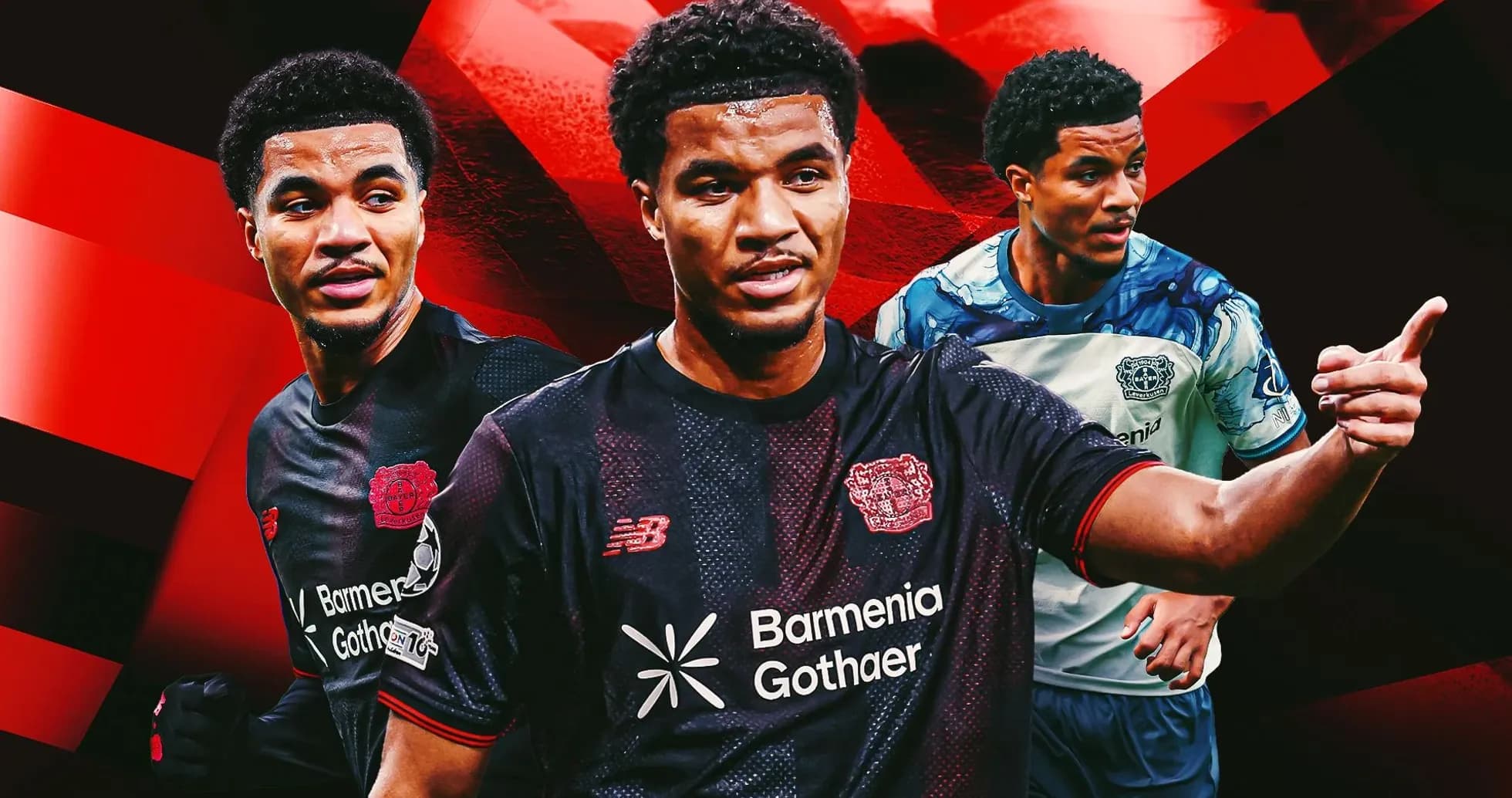
USMNT Core Faces Pivotal Month: Tillman, Aaronson, Robinson, Pepi
Malik Tillman just delivered the World Cup many in the U.S. hoped he had in him. Mauricio Pochettino tore up the old scouting report and built a new one. No longer a floaty, silky No.10 like he often was at PSV, Tillman became a modern No.8 – hunting the ball, driving it forward, pressing with intent.
The flair never vanished, it just sharpened. Two outrageous free-kicks stamped his tournament into USMNT folklore, the kind of moments that live in highlight packages for a decade.
Now comes the awkward part: club football.
The Bayer Leverkusen Tillman returns to is not the one he joined a year ago. Back then, they were Champions League regulars, still basking in the afterglow of ending Bayern Munich’s Bundesliga dominance in 2024. That glow has gone. A flat, joyless campaign dumped them into the Europa League and left the squad looking drained rather than defiant.
Tillman didn’t escape that malaise. Six goals and one assist across all competitions is a modest return for a player of his talent at a club of that size. He drifted more than he dominated.
So this season becomes a reset.
Carles Martínez Novell arrives with a reputation for doing smart work on a tight budget at Toulouse. Four years of overachievement in France have made him a coach on the rise, and Leverkusen feel like the right kind of step up: big expectations, but a squad that needs reshaping rather than tearing apart.
He wants progressive football. Vertical passing. Aggression without the ball. That suits Tillman.
Whether Martínez Novell sees him as a Pochettino-style No.8 or restores him as an old-school No.10, the American should have a lane to run in. There is room in this side for a midfielder who can break lines, press with purpose and still decide games from dead balls.
And there’s no softer landing than a home date with Elversberg, Bundesliga newcomers still finding their feet. For Tillman, it’s a chance to turn a strong summer into a new reality in Germany, rather than another “what if” chapter.
Aaronson’s Endless Engine, Lingering Question
Brenden Aaronson remains one of the most intriguing puzzles in the American pool. You get the same traits every week: relentless running, constant pressing, sharp movement, a willingness to do the ugly work. You also get the same nagging doubt: is this all leaving something on the table?
At 33 goals and 31 assists in 268 league matches, his numbers are respectable, not spectacular. For a player with his technical base and work rate, it feels like there should be more end product.
Yet he’s still standing.
He’s come through the turbulence at Leeds, the managerial churn, the tactical resets, and now has the trust of Daniel Farke. That in itself says plenty. This season, Aaronson looks less like a rotation option and more like a locked-in starter in a system that values his intensity.
His first league outing of the campaign underlined that. Stationed on the left in a 1-0 win over Nottingham Forest, he didn’t carve out a single chance, but he ran the game in other ways: seven defensive contributions, 14 sprints, six ball recoveries. Classic Aaronson – the winger who defends like a full-back and presses like a No.9.
The old question lingers, though: where is the cutting edge?
Harry Wilson’s arrival on the right gives Leeds another creative outlet and should ease some of the creative pressure on Aaronson, who is limited as a pure playmaker. But this team still needs more bite in the final third, especially when the opposition doesn’t gift them space.
Brentford will not. Thomas Frank’s side are disciplined, drilled, and brutally efficient at shutting down predictable attacks. On Sunday, Leeds will need someone to break the pattern, to do something unexpected.
Aaronson doesn’t have to become a 15-goal forward overnight. He does, however, need to start turning that ceaseless energy into more decisive moments. The shirt is his for now. The next few weeks will decide how long he keeps it.
Robinson, Chaos, and the Need for a Response
Alvaro Arbeloa’s first league game in charge of Fulham was pure chaos. A 3-2 defeat to Chelsea, yes, but not the sort of loss that sends a fanbase into despair. This was wild, open, attacking football, powered by a group of young, expressive players who look like they’ve been given permission to enjoy themselves.
For a coach who struggled to control the egos and politics of a Real Madrid dressing room, this might be the perfect environment. Less ego, more energy.
Antonee Robinson sits right in the middle of it.
Arbeloa wants his full-backs to live on the front foot, to push high, to help create overloads and fire passes through the lines. That’s Robinson’s natural game. His greatest strength has always been his ability to surge forward, combine, and turn defense into attack in a few long strides.
Against Chelsea, that side of his game was on show. He played more line-breaking passes than Fulham’s left winger, Cesar Palacios, a telling statistic in a system that wants the full-backs to act like auxiliary playmakers.
But there was a cost.
Cole Palmer put on a clinic on the other side of the ball. He dragged Robinson into uncomfortable spaces, beat him one-on-one, and controlled the tempo in Fulham’s defensive third. For all of Robinson’s ambition going forward, he couldn’t get close to Palmer often enough.
So now comes the demand for balance. Fulham don’t want to rein Robinson in, but they need him to tighten up. To pick his moments, to defend with more composure when the game opens up.
Sunderland arrive at a curious moment. The Black Cats somehow punched their way into Europe last season and now have to juggle domestic fixtures with a Europa League schedule that will stretch a relatively thin squad. They look like a side that could be vulnerable if forced into a high-tempo, transition-heavy game.
That’s the invitation for Robinson: same ambition, sharper defending. Fulham don’t just need the marauding full-back. They need the complete one.
Pepi’s Stalled Takeoff
Ricardo Pepi went to the World Cup expecting to fight Folarin Balogun for the starting No.9 role. He left it with a brutal stat line: zero goals, zero assists, roughly 200 minutes that never quite caught fire.
For a striker tipped to use the tournament as a launchpad, it felt like a missed flight.
His year hasn’t smoothed out much since. In January, he was reportedly close to a Premier League move. Then came a broken arm, a spell of recovery, and a return to PSV where he did what he usually does: score goals and wait for the next step.
That next step didn’t arrive this summer either. No big transfer, no leap to a top-five league. On paper, he’s still where he was. In reality, it feels like he’s been treading water.
PSV won’t complain.
Within their walls, Pepi is central. He is the main striker, the man expected to finish moves, to anchor a title defense and lead the line in the Champions League. The club’s ambitions are clear, and so is his role in meeting them.
He’s started this league campaign in decent form, with two goals in three games. Not spectacular, but steady. The sort of platform a striker can build a season on.
Utrecht at home is the next checkpoint. Another goal, another confident display, and the narrative begins to shift. From “stalled” to “ready.” From “what happened after the World Cup?” to “what comes next for PSV’s No.9?”
For Tillman, Aaronson, Robinson, and Pepi, the margins are thin. Each has the trust of a manager, a defined role, and a clear runway. The question now is simple: who turns that opportunity into a leap, and who risks watching the season pass them by?
Related News

Transfer Rumors: Haaland’s Two Options; Real Madrid Targets $100 Million Premier League Star
Manchester United Targets Premier League Forward to Strengthen Attack

Liverpool Eyes 17-Year-Old Mexican Midfielder Gilberto Mora for Summer Transfer
Summer 2026 Transfer Window: Manchester United and Tottenham Struggle with New Signings
Liverpool Maintain Interest in Real Madrid Midfielder Amid Transfer Challenges
Transfer Insider Warns Tottenham About Costly Sale of Will Lankshear