
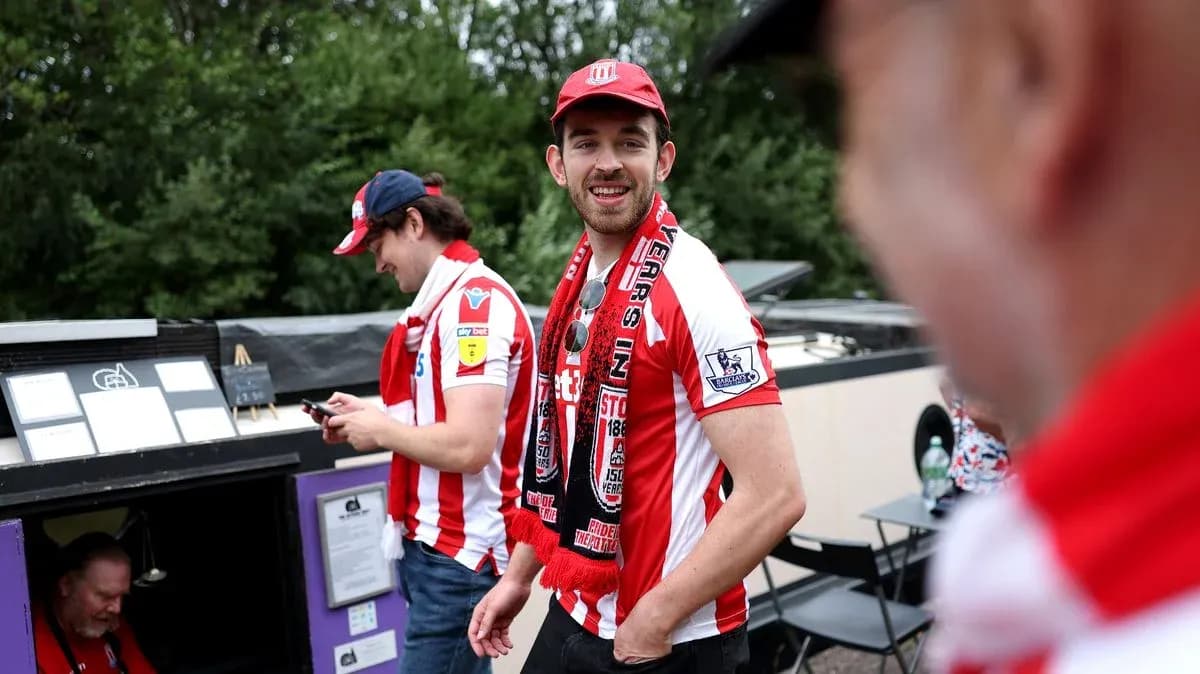
Tyler Martin's Stoke City Debut Marks a New Chapter
Tyler Martin’s name appeared on the Stoke City teamsheet with little fanfare, but it marked a significant step for the teenager and a subtle shift in the club’s planning.
The 18-year-old, who arrived from Liverpool to join the under-21s in February, has been working with the first team through pre-season and now earns a place on the bench as Milan Smit departs on loan to Darmstadt in Germany. One striker heads out to chase minutes abroad; another young forward edges into the senior picture.
Back when Martin signed, youth coach Sam Stockley did not hold back in his assessment. “He is dynamic and quick, has an eye for goal and is versatile in terms of his ability to play through the middle and in wide areas,” he said. Those are the qualities Stoke now hope to drip-feed into the first-team environment.
Stoke’s season, though, opens in a way that already feels slightly off the usual script. The club is so accustomed to beginning with a league fixture that any deviation stands out, even if history shows this is not exactly uncharted territory.
There was the League Cup tie against Blackpool in 2020 that kicked everything off, played in the eerie silence of empty stands. Go back further and the memories are far brighter: the Europa League adventure in 2011, when ties home and away against Hajduk Split came before a Premier League curtain raiser against Chelsea.
Roll the clock back again and you land in 1972, a year when Stoke’s calendar was stretched to absurdity. They had just emerged from a gruelling 70-game marathon in 1971/72 and still found room for one more: an FA Cup tie tacked on after that season’s final and just a week before the 1972/73 First Division campaign began.
On August 5, at St Andrew’s, Stoke faced Birmingham in an FA Cup third-place play-off, a curious relic of a short-lived experiment. They were there after losing a controversial semi-final to Arsenal four months earlier. Leeds had already lifted the cup at Wembley on May 6. This was the consolation prize.
A crowd of 25,841 turned up and were treated to a drab goalless draw that only came alive from 12 yards. What followed made history: the first penalty shoot-out in English domestic football.
Tony Waddington used the occasion to hand debuts to summer signings Geoff Hurst and Jimmy Robertson, who under normal rules would have been cup-tied. Robertson’s involvement carried its own twist; he had already been knocked out of that season’s competition in the fourth round by Birmingham while at Ipswich.
The laws of the shoot-out were a world away from today. Goalkeepers were forbidden from moving their feet before the ball was struck. John Farmer tested that limit, and the referee’s patience, and was booked for doing so twice. He still managed to save from Tommy Carroll, who then blazed his re-taken effort over the bar. Farmer denied Bobby Hope too, only for Hope to score with his second attempt.
That was enough for Waddington. He stormed onto the pitch to protest, but referee Vincent James stood firm, insisting he had warned the keeper more than once.
At the other end, Birmingham’s Paul Cooper turned gamesmanship into an art form. He swung his arms, leaned to one side and unsettled takers with his routine. It became a trademark as his career took him to Ipswich and Leicester, helping him keep out dozens of penalties. This time, it worked against Jimmy Greenhoff and Peter Dobing. Stoke, after all that effort, received a tankard for finishing fourth.
The FA had seen enough. That match effectively closed the book on a five-year trial of the third-place play-off in the FA Cup. Stoke moved on quickly too, responding in the best way possible: they won their first league game of the new season, at home to Crystal Palace, seven days later.
From bizarre play-offs to behind-closed-doors cup ties and now a teenage forward stepping into the frame, Stoke’s opening chapters rarely follow a straight line. The question now is whether Tyler Martin can turn this early glimpse into something more lasting as another long campaign begins.
Related News
Transfer Rumors: Haaland’s Two Options; Real Madrid Targets $100 Million Premier League Star

Manchester United Targets Premier League Forward to Strengthen Attack

Liverpool Eyes 17-Year-Old Mexican Midfielder Gilberto Mora for Summer Transfer
Summer 2026 Transfer Window: Manchester United and Tottenham Struggle with New Signings
Liverpool Maintain Interest in Real Madrid Midfielder Amid Transfer Challenges
Transfer Insider Warns Tottenham About Costly Sale of Will Lankshear