

Tottenham vs Leeds: Premier League Survival Showdown
Tottenham host Leeds at Tottenham Hotspur Stadium in a high‑pressure Premier League Round 36 fixture that is pivotal for the bottom half of the table: Tottenham sit 17th on 37 points with a -9 goal difference, still not fully clear of relegation danger, while Leeds are 14th on 43 points and can all but secure safety and potentially push towards mid‑table security with a positive result. With only three games left, the points swing here is season‑defining for Tottenham’s survival prospects and Leeds’ ability to avoid being dragged back into the scrap.
Head-to-Head Tactical Summary
On 4 October 2025 at Elland Road, Tottenham came from behind to win 2-1 after a 1-1 HT, underlining their capacity to turn a tight away game in their favour. On 28 May 2023, also at Elland Road, Tottenham produced a dominant 4-1 win after leading 1-0 at HT, exploiting Leeds’ defensive openness. Earlier that same Premier League campaign, on 12 November 2022 at Tottenham Hotspur Stadium, Tottenham edged a chaotic 4-3 home win, overturning a 2-1 HT deficit in a high‑variance attacking contest. Going further back, on 26 February 2022 at Elland Road, Tottenham controlled a 4-0 win, already 3-0 up at HT, showing their ability to punish Leeds in transition. The sequence starts with the 21 November 2021 meeting at Tottenham Hotspur Stadium, where Tottenham overturned a 1-0 HT deficit to win 2-1. Across these five Premier League games, Tottenham have five wins from five, consistently finding goals and repeatedly overturning Leeds leads, with the London fixtures (4-3 and 2-1) tending to be more open and momentum‑driven.
Global Season Picture
- League Phase Performance: In the league phase, Tottenham’s 17th place is built on 37 points from 35 games, with 45 goals for and 54 against, reflecting a vulnerable defence and only mid‑level scoring. Their home record is especially fragile: 2 wins, 5 draws, 10 losses, with 20 goals for and 30 against at Tottenham Hotspur Stadium. Leeds, in 14th, have 43 points from 35 games, scoring 47 and conceding 52 in the league phase. They are solid at Elland Road (8 wins, 5 draws, 5 losses, 28-21) but much weaker away, with 2 wins, 8 draws, 7 losses and a 19-31 goal record on the road.
- Season Metrics: In the league phase, Tottenham’s profile is that of a leaky side with intermittent attacking output: 45 goals scored at 1.3 per game and 54 conceded at 1.5 per game, with only 8 clean sheets and 7 games failed to score. Leeds mirror that balance: 47 goals scored (1.3 per game) and 52 conceded (1.5 per game), with 7 clean sheets and 11 games without a goal. Discipline-wise, Tottenham accumulate a broad spread of yellow cards, peaking between minutes 61-75 (23 yellows, 25.00%), suggesting late‑game stress and defensive scrambling. Leeds’ yellows also cluster in the 61-75 window (14, 23.73%), but they have been more controlled with reds (only one, in 46-60), whereas Tottenham have seen red in the 16-30, 31-45 and 91-105 ranges, hinting at emotional volatility in key phases.
- Form Trajectory: In the league phase, Tottenham’s recent form string “WWDLL” shows a short‑term uptick from a poor season base: two wins followed by a draw and two losses. It indicates a side still inconsistent, with momentum not yet stabilised. Leeds’ “WDWWD” points to a more robust upward curve: unbeaten in five, with three wins and two draws, they are trending positively and arriving with greater confidence and structural stability than their league position alone suggests.
Tactical Efficiency
In the league phase, Tottenham’s goal numbers (1.3 scored, 1.5 conceded per game) describe an imbalanced side whose attack is not strong enough to mask defensive issues. Their clean‑sheet count (8) versus 16 losses underlines low defensive efficiency: they often need multiple goals to take points. Leeds’ similar 1.3 scored and 1.5 conceded per game, combined with 13 draws and 10 wins, suggest a more resilient game‑state management: they grind out results even with a comparable goal difference.
Without explicit numeric Attack/Defense Index values from the comparison block, the season data imply that any model‑based index would rate both attacks around league average and both defences slightly below average, with Tottenham’s home defensive output (30 conceded in 17) likely dragging their defensive index down more sharply. Leeds’ away defence (31 conceded in 17) is also weak, but their higher draw rate away (8) indicates better containment and game‑management than Tottenham show at home.
Structurally, Tottenham’s frequent use of 4-2-3-1 and 4-3-3 (25 combined league games) leans towards a possession‑and‑press approach that has not translated into control of their own box (54 conceded). Leeds’ mix of 4-3-3 and three‑at‑the‑back variants (3-5-2, 3-4-2-1) across 27 games suggests tactical flexibility, often sacrificing some attacking volume away for better defensive coverage. In efficiency terms, Leeds convert their slightly better overall points tally (43 vs 37) from essentially the same goal profile, which any Attack/Defense Index would interpret as superior tactical and game‑state efficiency.
The Verdict: Seasonal Impact
This fixture is season‑critical for Tottenham. A win would lift them towards the low‑40s in points, likely creating a multi‑point buffer to the relegation zone with only two matches remaining, and could reframe their narrative from crisis to narrow escape, especially given their perfect recent head‑to‑head record against Leeds. A draw would be only partially acceptable: it edges them closer to safety but keeps them exposed to a late surge from teams below, particularly given their poor home record and inferior goal difference (-9). A defeat, however, would be structurally damaging: it would leave them on 37 points after 36 rounds, potentially inside or just above the bottom three and reliant on other results, with limited margin for error in the final two games.
For Leeds, a win at Tottenham Hotspur Stadium would likely consolidate mid‑table status, pushing them towards or beyond the mid‑40s in points and effectively removing relegation from the equation. It would also signal a break in the psychological pattern of repeated losses to Tottenham, reinforcing belief in their current positive form trajectory. A draw would still be a good outcome in context, preserving their unbeaten run and keeping them on course for safety through accumulation rather than risk. A loss would not immediately plunge them into crisis, but it would slow their momentum and could reopen the door to late‑season pressure if results elsewhere go against them.
Overall, the seasonal impact is asymmetric: for Tottenham this is a must‑manage survival fixture where anything less than a win keeps them in genuine danger; for Leeds it is an opportunity fixture, where a positive result can transform a nervous campaign into a stable mid‑table finish and validate their recent tactical and form improvements.
Related News

Tottenham vs Aston Villa Predicted Lineups: Team News for Premier League Clash

Brighton vs Arsenal: Premier League Clash Preview

Manchester City vs Sunderland: Premier League Clash Preview
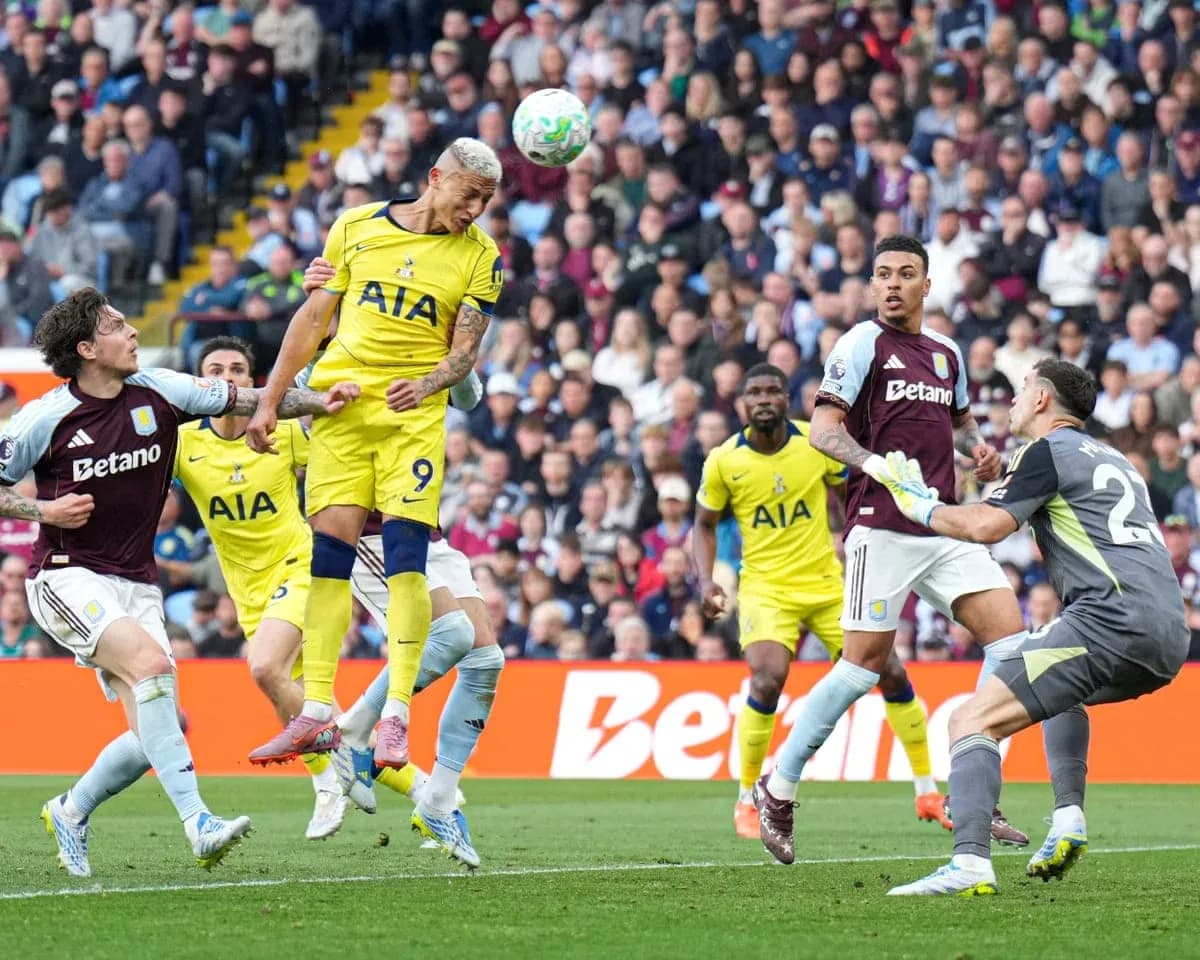
Tottenham vs Aston Villa: Early Relegation Battle

Brentford vs Chelsea Predicted Lineups: Team News and Match Insights

Brighton vs Arsenal Prediction: Key Stats and Betting Tips