
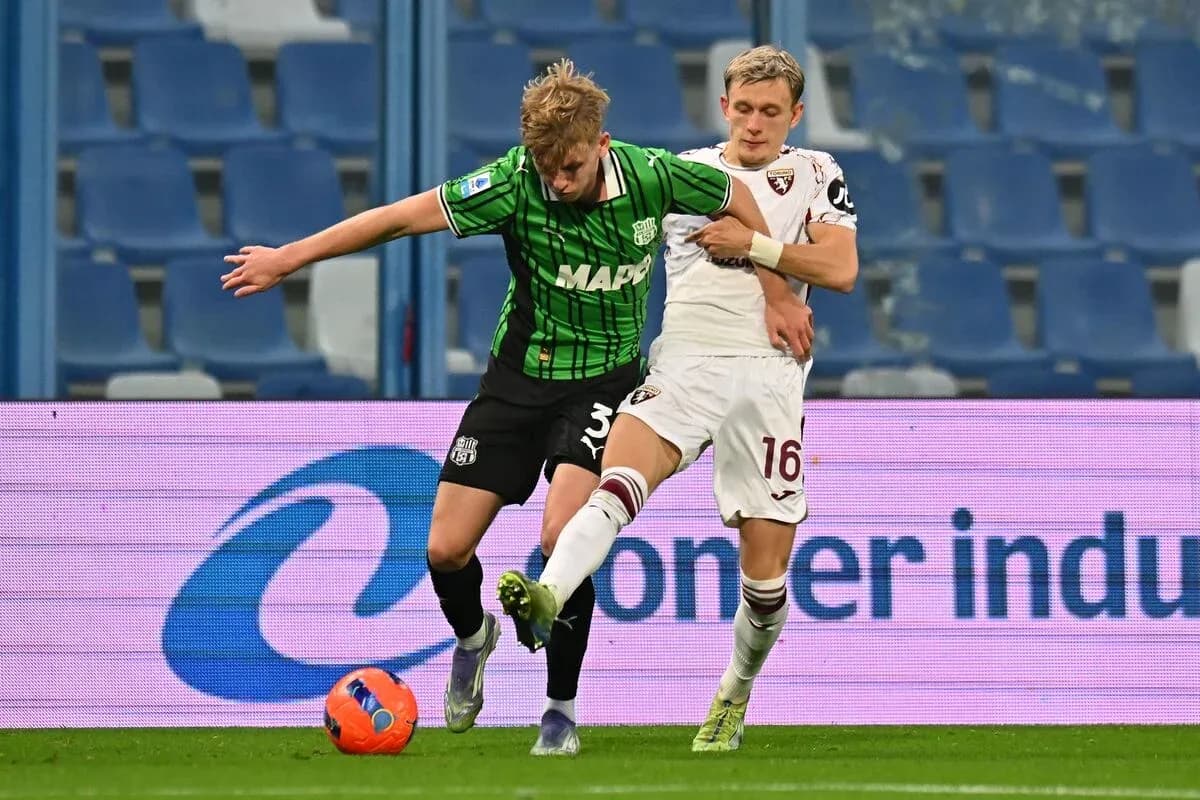
Torino vs Sassuolo: Tactical Insights from Serie A Clash
Under the lights of the Stadio Olimpico Grande Torino, this was billed as a meeting of mirror images in mid‑table Serie A – Torino’s rugged, often attritional football against Sassuolo’s more expansive 4‑3‑3. Following this result, a 2–1 home win, the league table confirms just how narrow the gap remains: Sassuolo sit 11th on 49 points with a goal difference of -2 (44 scored, 46 conceded), Torino 12th on 44 points with a goal difference of -18 (41 scored, 59 conceded) after 36 matches. The story of the evening, though, was less about positions and more about how Leonardo Colucci’s structural gamble outmanoeuvred Fabio Grosso’s familiar blueprint.
Colucci doubled down on Torino’s season-long identity, rolling out a 3‑4‑2‑1 that leaned into the club’s comfort in back-three systems. Across the campaign, they have used three‑at‑the‑back shapes in the vast majority of fixtures, and here the back line of L. Marianucci, S. Coco and E. Ebosse formed a compact, horizontally tight trio in front of A. Paleari. Torino’s broader seasonal numbers underline the logic: at home they average 1.4 goals for and 1.5 against, a profile that rewards control and set structure rather than chaos.
Grosso, by contrast, stayed loyal to Sassuolo’s 4‑3‑3 – the formation they have used in 34 of 36 league games. A back four of W. Coulibaly, S. Walukiewicz, T. Muharemovic and J. Doig supported a midfield triangle of L. Lipani, N. Matic and K. Thorstvedt behind a front three of C. Volpato, A. Pinamonti and A. Laurienté. On their travels Sassuolo average 1.2 goals for and 1.3 against, a slight positive tilt that usually comes from the interplay between Laurienté’s creativity and Pinamonti’s penalty‑box instincts.
The absentees shaped the tactical voids. Torino were without Z. Aboukhlal (muscle injury), F. Anjorin (hip injury) and A. Ismajli (muscle injury), trimming Colucci’s options for rotation in the attacking midfield and defensive lines. Yet the starting XI still carried enough variety: V. Lazaro and R. Obrador as wing‑backs, G. Gineitis and M. Prati as the central hinge, and a front triangle of N. Vlasic, A. Njie and the talismanic G. Simeone.
Sassuolo’s list of absences was longer and arguably more structurally disruptive. D. Boloca (muscle injury) and F. Cande (knee injury) removed depth and ball progression from the middle and left side. J. Idzes and E. Pieragnolo (both knee or foot issues) further reduced defensive flexibility, while A. Fadera was suspended due to yellow cards. Grosso still had high‑impact weapons like D. Berardi and M. Nzola on the bench, but the starting XI lacked some of the two‑way security that Boloca and Idzes might have provided.
Discipline was always going to be a subplot. Heading into this game, Torino’s yellow-card profile showed a steady escalation, with a late‑match spike: 18.84% of their yellows arrive between 76–90' and a further 21.74% between 91–105'. Sassuolo are even more volatile, with 28.75% of their yellows in the 76–90' window and 15.00% in 91–105'. That tendency for late‑game indiscipline framed a contest where the final quarter‑hour would be as much about emotional control as tactical structure. Torino’s only red in the league has come in the 46–60' band, while Sassuolo’s dismissals are scattered – 25.00% between 16–30', 50.00% between 46–60', and 25.00% between 76–90'. It is a team accustomed to walking the disciplinary tightrope.
Within that landscape, the “Hunter vs Shield” battle was clear. For Torino, G. Simeone entered as one of Serie A’s most efficient strikers this season: 11 goals in 30 appearances, from 56 shots with 28 on target. His game is direct and combative – 271 duels contested, 106 won – and he has drawn 38 fouls, a magnet for contact in and around the box. Sassuolo’s defensive “shield” is more collective than individual; on their travels they concede 1.3 goals per match, a figure that speaks to reasonable but not elite resistance. S. Walukiewicz and T. Muharemovic had to manage Simeone’s constant movement while tracking late runs from Vlasic and Njie.
On the other side, A. Pinamonti carried Sassuolo’s scoring burden with 8 league goals and 3 assists. His profile is more hybrid – 54 shots, 27 on target, plus 17 key passes – and he operates as a reference point who links play. Yet there is a crack in the armour: from the spot, he has missed 1 penalty and scored none, a psychological note in a tight away fixture. Torino’s overall defensive record (59 conceded, an average of 1.6 per game) suggests vulnerability, but their 12 clean sheets – 5 at home, 7 away – show they can lock games down when their structure holds.
The “Engine Room” duel revolved around M. Prati and G. Gineitis against N. Matic and K. Thorstvedt. Matic’s season numbers for Sassuolo are those of a deep‑lying metronome and destroyer in one: 1 goal, 1 assist, but 1,645 completed passes at 86% accuracy, 42 tackles, 10 successful blocks and 26 interceptions. Thorstvedt adds verticality – 4 goals, 4 assists, 30 key passes – and a fierce edge, with 8 yellow cards and 266 duels (140 won). His 13 blocked shots underline his willingness to protect his box. For Torino, Prati and Gineitis had to compress those central channels, preventing Matic from dictating tempo and Thorstvedt from arriving late into the area.
Out wide, the creative axis of A. Laurienté and D. Berardi posed a constant theoretical threat. Laurienté’s 9 assists and 6 goals from 36 appearances are backed by 52 key passes and 75 dribble attempts (27 successful). Berardi, even starting on the bench here, brings 8 goals, 4 assists, 32 key passes and 24 dribble attempts (10 successful). Between them they are Sassuolo’s primary chance‑creation engine. Torino’s wing‑backs Lazaro and Obrador, supported by the outside centre‑backs, were tasked with narrowing those channels, forcing Laurienté and Volpato inside into congestion.
From a statistical prognosis standpoint, this fixture always leaned towards a narrow, chance‑trading contest rather than a shoot‑out. Torino’s overall scoring average of 1.1 goals per match against Sassuolo’s 1.2, paired with respective concessions of 1.6 and 1.3, pointed to a game in the 2–3 goal band – exactly where it landed at 2–1. Torino’s perfect penalty record this season (5 scored from 5, 100.00% conversion, no misses) contrasted with Sassuolo’s more fragile spot‑kick story: 2 scored, but with Berardi having both scored and missed 1, and Pinamonti also missing 1. In a tight encounter, that marginal edge in dead‑ball reliability tilted the risk profile towards the hosts.
Following this result, the numbers tell of two sides whose identities were largely confirmed rather than rewritten. Torino, with 8 home wins from 18 and an attacking spearhead in Simeone, showed again that when their structure is intact, they can out‑punch technically gifted visitors. Sassuolo, for all their creative talent and a well‑drilled 4‑3‑3, were once more undone by fine margins – a reminder that in Serie A’s middle pack, the difference between control and regret is often one duel lost in midfield, one late card, or one penalty that refuses to go in.
Related News
Frosinone vs Como Prediction: Key Stats and Betting Tips
Fiorentina vs Napoli Prediction: Key Stats and Betting Tips
AS Roma vs Inter: Serie A Showdown on 19 September 2026

Inter’s Dominance in 5–3 Win Over Udinese
AS Roma vs Inter Prediction: Key Stats and Betting Tips
Lazio and AC Milan Battle to a 2–2 Draw: Early Serie A Insights