
Todd Boehly's Chelsea Tenure: From Showman to Footnote
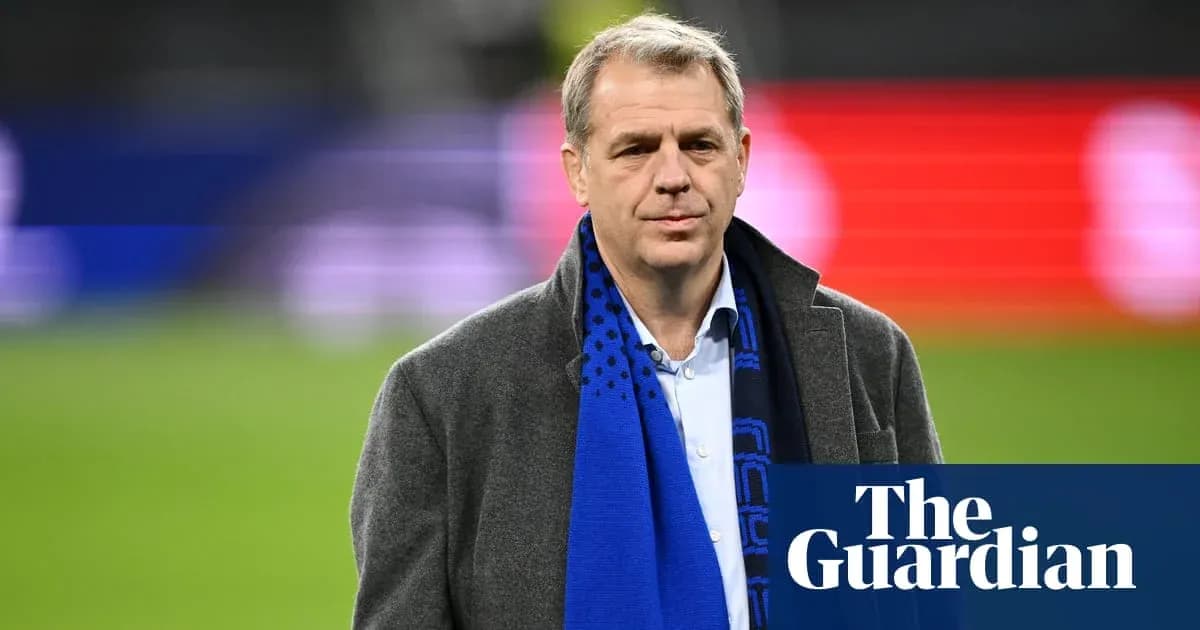
Todd Boehly arrived at Chelsea as the showman of a new era. He leaves as a footnote.
Four years on from fronting the £2.5bn BlueCo takeover from Roman Abramovich, the American has been bought out and is walking away from Stamford Bridge with fellow investor Mark Walter. The headlines will scream about an ownership shake-up. The reality is far more prosaic: the people who already ran Chelsea still run Chelsea.
Clearlake Capital, the US private equity giant founded by Behdad Eghbali and José E Feliciano, has simply made official what has been true for some time. It was the majority owner, the driving force, and the final word on strategy long before Wednesday night’s confirmation that it now has full control after acquiring Boehly and Walter’s stake.
Boehly, Walter and Swiss billionaire Hansjörg Wyss once held an equal share of a 38.5% minority slice. On paper, that sounded powerful. In practice, they drifted steadily towards irrelevance as Clearlake tightened its grip on the club’s direction.
Cracks in the consortium
This split has not come out of nowhere. Friction inside the ownership group surfaced two years ago, when tensions between Boehly and Clearlake spilled into public view. The relationship had soured. Boehly, frustrated, wanted a resolution.
Those close to him insisted he had investors lined up to fund a full takeover bid. Inside Clearlake, that claim drew eye-rolls rather than panic. Their counter-move was simple: explore buying him out. Another option floated from Clearlake’s side was blunter still – Boehly could step down as chair, accept a new governance structure, and settle into a largely ceremonial role.
No warmth there. But after the brief flare-up, nothing dramatic happened. A truce of sorts followed. Clearlake carried on, Eghbali’s influence grew, and Boehly’s presence faded.
Over the past year, as Chelsea’s post-Abramovich struggles deepened, supporters began to look past the easy target in the boardroom and focus their anger on the real power. Eghbali, often visible around the club, became a lightning rod, singled out with abusive chants. Feliciano, by contrast, operated in the shadows, even as he added a stake in the San Diego Padres to his portfolio.
The Boehly experiment
It was not always this way. In the early days, Boehly was the face and the voice of the new Chelsea. Clearlake stayed in the background while he grabbed the wheel.
When key football executives left in the wake of Abramovich’s departure, Boehly named himself interim sporting director. How hard could it be? As it turned out, very.
Agents liked him personally but questioned his grasp of the sport. Inside the market, there was a sense his inexperience could be used against him. The numbers bear that out: around £300m went on a scattergun collection of signings that never cohered into a team.
Raheem Sterling’s £325,000-a-week deal quickly became a warning sign of skewed wage structure and poor planning. The chaos only deepened when Thomas Tuchel was sacked early in the 2022-23 season and replaced by Graham Potter, a huge gamble at a volatile moment.
One of Boehly’s own explanations for another expensive move summed up the muddled thinking. He has said he pushed through the signing of Marc Cucurella from Brighton after hearing that Manchester City wanted the Spain left-back. Copying a rival’s shortlist is not a long-term recruitment strategy.
The missteps piled up. Boehly turned into a punchline – the billionaire who talked about a Premier League All-Star game at a business conference, who casually predicted Chelsea would beat Real Madrid 3-0 before a Champions League quarter-final in 2023. The result, and the reaction, made that bravado look naive.
Clearlake’s model takes over
The official line has always been that Boehly never intended to stay so hands-on, that he would step back once specialists were in place. On that front, at least, the club has changed dramatically since that wild first window.
Chelsea have gone from one interim sporting director to a sprawling structure, appointing five permanent figures – Paul Winstanley, Laurence Stewart, Sam Jewell, Joe Shields and Dave Fallows. The transfer strategy has shifted towards younger players on long, incentivised contracts, designed to spread costs and build future value.
Eghbali has been the architect of that vision. The ride has been anything but smooth. Under this ownership, Chelsea have reached the Champions League only once. Managers have rotated through the dugout with unsettling speed.
Inside Clearlake, the message is that lessons have finally been absorbed. Last summer’s window is cited as proof: more coherent business, fewer speculative punts, and the arrival of what they consider a serious head coach in Xabi Alonso, backed by established signings rather than another batch of raw projects.
Through all of that, Boehly moved to the fringes. The talk of buyouts quietened – until this summer.
The final break – and what comes next
The trigger, those close to the situation say, was financial pressure on Walter in the United States. He began liquidating assets, including his stake in the LA Lakers, and his share in Chelsea followed the same path.
Boehly and Walter are understood to have made a modest profit on their Chelsea investment. Jonathan Goldstein, a close ally of Boehly and another board member, has also departed. Wyss, though, has stayed linked, investing in a Clearlake vehicle rather than exiting completely.
For Chelsea’s day-to-day operations, the message from inside the club is blunt: nothing really changes. The same people run the same departments under the same ownership structure. The same strategic plan remains in place.
One area, though, could finally move. The stadium.
The long-running question over whether Chelsea stay at Stamford Bridge or move to a new home has hung over the club for years. The Guardian reported in September 2024 that the club were in talks about a potential move to Earls Court. Since then, the separate Earls Court Development Committee project, which has planning permission, has stalled.
Chelsea’s interest in the site has not gone away. At the same time, they have not abandoned the more complicated – and politically sensitive – option of redeveloping Stamford Bridge itself.
Whichever route they take, it will be Clearlake’s call, not Boehly’s. His role in shaping Chelsea’s future is over.
In a joint statement, Eghbali and Feliciano said Boehly “will always be a part of the Chelsea story and family”. Given how his reign played out – from transfer-market fireworks to swift marginalisation – that feels like a generous reading of a brief, chaotic chapter that the club now seems determined to leave behind.
Related News
Owen Elding's Long-Awaited Call-Up to Ireland's Squad
Nick Woltemade Shines in Juventus Victory Over NEC Nijmegen
Todd Boehly's Chelsea Tenure: From Showman to Footnote

Manchester City vs Sunderland: Maresca’s Winning Streak Continues

Bournemouth vs Liverpool: Goals and Tension on the South Coast
Alexander Isak's Journey at Liverpool: From Injury to Optimism