
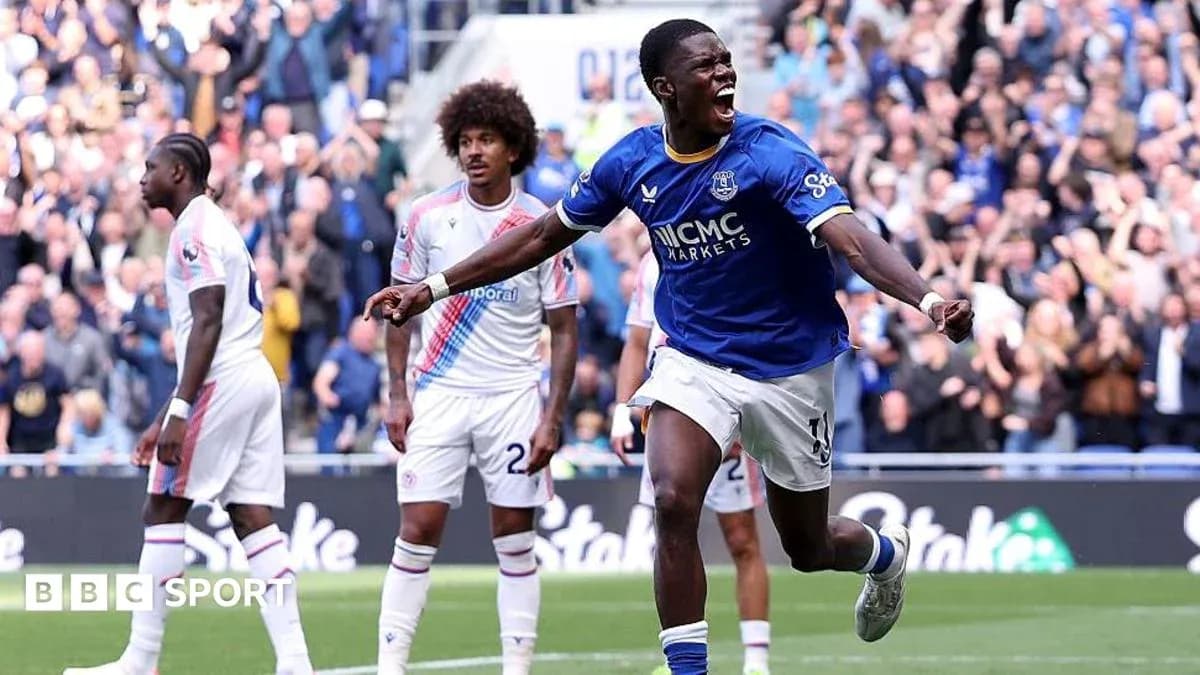
Thierno Barry Shines in Everton's Premier League Opener
Thierno Barry walked slowly, deliberately, towards the touchline as the board went up. Less than 15 minutes left, job done, name ringing around Hill Dickinson Stadium. The Everton fans rose again, one last ovation for the man who had settled their Premier League opener against Crystal Palace.
The stadium announcer confirmed it: Barry off, Beto on. The 23-year-old Frenchman paused, turned to the stands and soaked it in. This was not just applause for a winning goal. It was a release, a recognition that a year of struggle and scrutiny might finally be giving way to something more.
Earlier in the second half, Barry had delivered the moment that broke Palace. Iliman Ndiaye bent in a superb cross, and Barry attacked it, timing his run perfectly to meet the ball and guide his header home. Everton’s lead doubled, Palace’s resistance broken, the home end erupting as Barry wheeled away grinning.
The contrast with last winter could hardly be sharper. Back then, the £27m signing from Villarreal was trudging off pitches with his head down, mired in a 14-game goal drought and carrying the weight of expectation that comes with a big fee and a struggling side.
“Look, strikers will probably be judged on their goals, so he can walk away and be really happy with it,” David Moyes said afterwards. The Everton manager, never one to overlook the details, quickly pointed elsewhere too. “I thought it would be wrong not to mention the quality of the cross from Ndiaye. Thierno getting in the right spot was huge and scoring with a header was really big for us because it was an important time in the game.”
This is the version of Barry Everton thought they were buying. Not the finished product, but a centre-forward with the tools to grow into a leading figure for a club trying to haul itself into a new era.
When Barry arrived last summer, Everton were still shaking off years of turbulence. Managers had come and gone, each dragged into relegation battles. The club had been hit with a points deduction for breaching the Premier League’s Profit and Sustainability Rules. Talk of ambition always came with a caveat.
So when Moyes and his recruitment team went hunting for a striker, they knew the reality. No superstar, no guaranteed 20-goal machine. They would have to back potential, not polish. Barry, fresh from an 11-goal season in La Liga, fitted that profile.
Patience, though, has limits. By mid-season, some of the fanbase had started to question the project. One goal in 18 Premier League appearances is a thin return for a frontline signing, no matter the circumstances. The murmurs grew.
Then January arrived, and Barry’s season finally ignited. He began to score, to move with more certainty, to look like he belonged. By the end of his debut campaign he had eight league goals in 38 games. On paper, a modest tally. In context, far more encouraging.
Half of those goals came after Jack Grealish, Everton’s creative heartbeat, suffered a season-ending injury in January. With their chief supplier gone, Everton needed someone to carry more of the attacking load. Barry stepped forward just as some of his team-mates faded in the run-in, keeping the club’s European push alive.
The numbers backed up the eye test. Barry’s eight goals came from an expected goals figure of 8.1, almost exactly in line with the chances he received. His shot conversion rate of 21.1% put him just a fraction behind Erling Haaland’s 21.4%. Not bad company for a player still finding his way.
So when Moyes sat down in the bowels of Hill Dickinson Stadium after the Palace win, he resisted the temptation to turn this into a coronation. The performance pleased him; the flaws annoyed him.
There were moments that grated. Barry drifting needlessly into wide areas when Everton needed a focal point. Heavy touches when his team tried to spring forward on the counter. Breaks that died at his feet instead of sticking and sparking another attack.
Moyes has walked this road before. In his first spell at Goodison Park, he helped mould Wayne Rooney as a teenager into a phenomenon. He knows what a Premier League forward must become, and how far away a talented youngster can still be.
“I need his build-up play to be better,” he said. “I need him to be able to retain the ball for us so we can play into him more often. I want him to get in the right spaces, which he did today for the cross. He had a couple where the ball got played to him and he didn’t quite deal with it with his feet.
“Sometimes he is out linking up when he doesn’t need to be linking up. I think there is a lot to his game.”
The criticism came wrapped in something more important: belief. Moyes sees a player who has returned for this campaign with a different edge.
“I said last year that when you’re a young striker coming in, it’s not always easy. I think he’s come in with a really, really positive attitude this year. I think he’s come back with something that has stirred him up a little bit more, as if he’s got something to prove.”
That, in truth, is the crux of Everton’s season. Barry is not just another forward. He is a symbol of where the club now shop, how they must develop rather than simply buy success. The Frenchman’s journey from goal-shy newcomer to match-winner on opening day mirrors the club’s own attempt to move from survival mode to something more ambitious.
On Saturday, with the game in his hands and Palace fading, Barry showed he can be the difference. Now comes the real test: can he do it often enough to drag Everton into the future they keep talking about?
Related News
Transfer Rumors: Haaland’s Two Options; Real Madrid Targets $100 Million Premier League Star
Manchester United Targets Premier League Forward to Strengthen Attack

Liverpool Eyes 17-Year-Old Mexican Midfielder Gilberto Mora for Summer Transfer
Summer 2026 Transfer Window: Manchester United and Tottenham Struggle with New Signings
Liverpool Maintain Interest in Real Madrid Midfielder Amid Transfer Challenges
Transfer Insider Warns Tottenham About Costly Sale of Will Lankshear