
Ternana W's Resilient Victory Over AC Milan W in Serie A Women
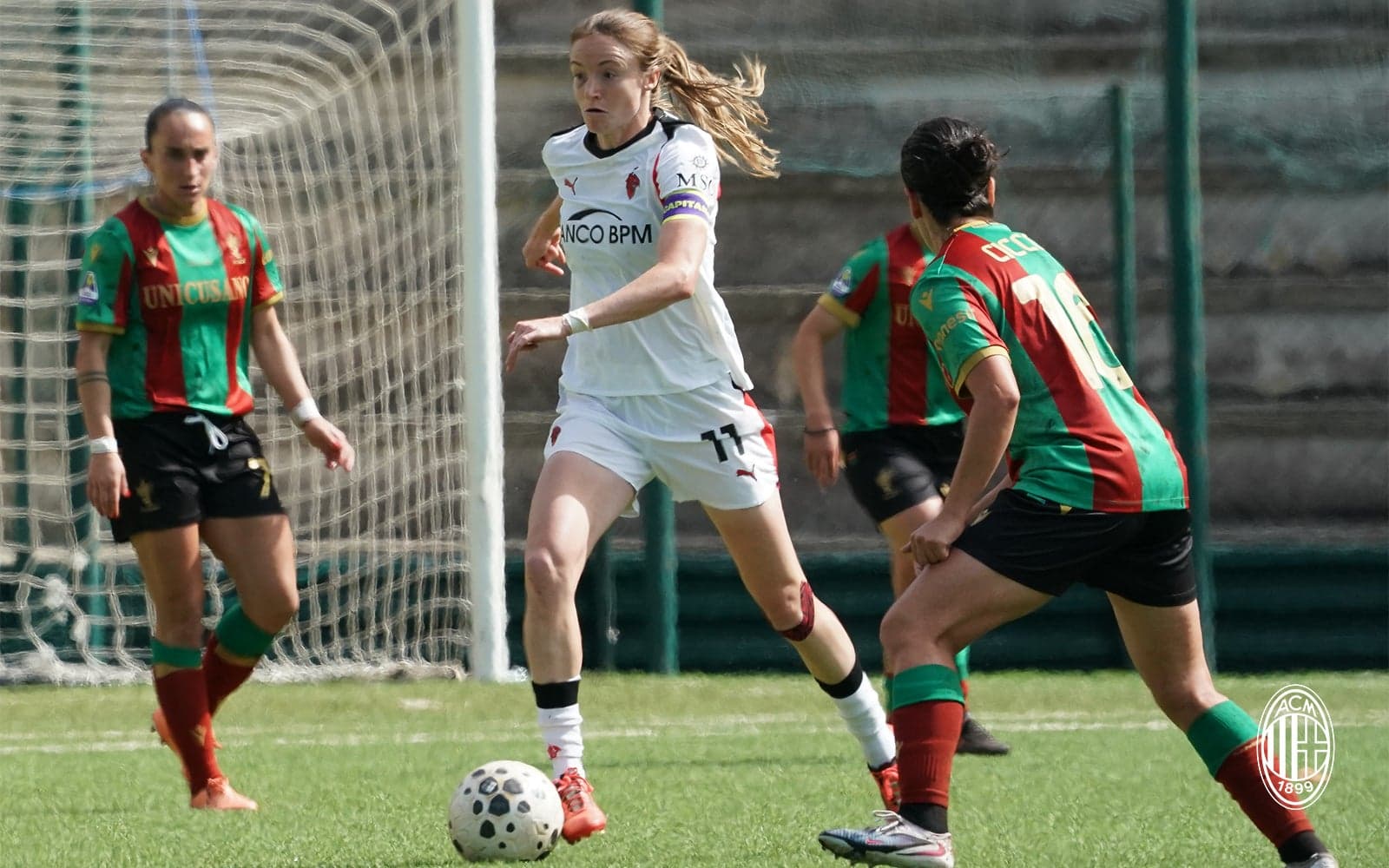
Under the grey May sky at Stadio Libero Liberati, Ternana W closed their Serie A Women campaign with the kind of statement win that can reshape a club’s self-image. Following this result, a 1–0 victory over AC Milan W, the league table still shows a gulf between 10th and 7th, but the 90 minutes in Terni told a more nuanced story of resilience, tactical clarity and emotional edge.
Across the season, Ternana W have lived on the margins. Overall they have taken 17 points from 22 matches, with a goal difference of -21 built from 19 goals scored and 40 conceded. At home, though, the picture has always been less bleak: 3 wins, 4 draws and 4 defeats, with 15 goals for and 17 against. They concede an average of 1.5 goals at home and score 1.4, numbers that speak to a side that rarely dies wondering in front of their own supporters.
AC Milan W arrived with a more polished résumé. Overall they sit on 32 points from 22 games, with a positive goal difference of 5 (31 scored, 26 conceded). On their travels they have been solid if not spectacular: 4 wins, 2 draws and 5 defeats, 13 goals for and 11 against, conceding an average of 1.0 away and scoring 1.2. On paper, Milan’s structure and defensive stability were meant to smother Ternana’s volatility.
Instead, Mauro Ardizzone’s selection hinted at a different script. With no formal formation listed, the names told the story: K. Schroffenegger in goal, a defensive line anchored by E. Pacioni, M. Massimino and L. Peruzzo, flanked and supported by the experienced S. Breitner. Ahead of them, the midfield blend of A. Regazzoli and C. Ciccotti suggested industry and balance, while M. Petrara and M. Porcarelli offered connective tissue to the front line. The presence of A. Gomes as a starter gave Ternana verticality and pressing bite.
On the bench, Ardizzone had levers to pull. V. Di Giammarino, one of the league’s most carded players with 4 yellows this season, brings an edge and intensity that can tilt the emotional temperature of a game. F. Quazzico, listed among the league’s red-carded defenders, was another reminder that Ternana’s defensive aggression always sits close to the disciplinary line. Creative change could come from P. Lazaro or the young L. Pastrenge, while H. Corrado and C. Vigliucci offered fresh legs in wide and central areas.
Suzanne Bakker’s Milan XI was more recognisably structured. S. Estevez started in goal, shielded by a back line including E. Koivisto and M. Keijzer. Keijzer’s season profile is telling: 23 tackles, 3 blocked shots and 10 interceptions underline a defender who steps forward rather than simply retreats. In midfield, V. Cernoia and M. Mascarello formed the technical and tactical core. Mascarello, who has accumulated 4 yellow cards this campaign, is Milan’s midfield metronome and enforcer in one, with 368 passes and 15 key passes underpinning her influence.
Ahead of them, C. Grimshaw’s presence as a starter was crucial. Among the league’s top assist providers with 2 assists and 11 key passes, she is the natural bridge between midfield and attack. Wide and forward roles were filled by M. Renzotti, E. Kamczyk and T. Kyvag, giving Milan mobility and depth of running rather than a single dominant focal point.
Bakker’s bench was rich in narrative. Park Soo-Jeong, one of Serie A Women’s leading providers with 4 assists and 14 key passes, offered a different creative profile: a wide attacker who can drift inside and dictate from pockets. C. Dompig, L. Gemmi and G. Arrigoni brought pace and unpredictability, while L. Giuliani and S. Babb provided goalkeeping insurance. Yet this depth, on the day, remained a promise more than a solution.
The disciplinary undertone of this fixture was always going to matter. Heading into this game, Ternana’s yellow-card distribution showed a clear late-game spike: 25.00% of their yellows came in the 76–90 minute window, with another 17.86% between 61–75. Milan mirrored that pattern, with 30.00% of their yellows also arriving in the final quarter-hour. Both sides, in other words, tend to live on the emotional edge just when legs are heaviest and decisions slowest. Milan’s red-card profile was particularly stark: their three reds this season are spread evenly across 46–60, 61–75 and 76–90, each accounting for 33.33%. This is a team that can unravel when chasing or protecting a result late on.
Key Matchups
Within that frame, the key matchups came into sharp focus.
In the “Hunter vs Shield” duel, Ternana’s attacking threat was personified less by a single starter than by the shadow of V. Pirone, the club’s leading scorer this season with 6 goals and 5 penalties converted from 6 attempts, despite 1 miss. Even without starting, her season numbers shape how opponents defend: 23 shots, 9 on target, 14 key passes and a relentless duel output (160 duels, 83 won). Milan’s response rested on Keijzer’s assertive defending and the collective away record of just 11 goals conceded on their travels. On this day, however, it was Ternana’s willingness to commit numbers forward at home that bent the balance, as they hit their season-long home scoring average of 1.4 almost on the nose by finding that single decisive goal.
In the “Engine Room”, the contest between C. Ciccotti and the Milan duo of Mascarello and Grimshaw shaped the tempo. Ciccotti’s brief in Ardizzone’s scheme is to anchor and release, allowing Petrara and Porcarelli to push higher. Mascarello’s 77% pass accuracy and 15 key passes make her the natural conductor, but she also carries a disciplinary risk with 15 fouls committed and 4 yellows. Grimshaw, with 263 passes at 79% accuracy and 81 duels contested, is Milan’s all-action midfielder. Yet the rhythm of the match suggested that Ternana’s collective pressing and territorial aggression, especially at home where they have failed to score only 3 times all season, prevented Milan’s engine from ever idling into its preferred tempo.
Statistically, Milan’s season-long xG profile (implied by 31 goals from 22 matches at 1.4 goals per game) usually points to a side that will create enough to score at least once, particularly against a defence that concedes 1.8 goals per game overall. Ternana, conversely, have often lived below parity: 0.9 goals scored per game overall against 1.8 conceded. But clean sheets have been a quiet strength – 5 in total, 3 of them at home. This match became the sixth, and perhaps the most symbolic.
Following this result, the story is not simply that the 10th-placed side beat the 7th. It is that Ternana W, with a fragile season behind them, leaned into their home identity: combative, emotional, willing to take cards late if it means protecting a lead. Schroffenegger’s calm presence, the grit of Pacioni and Massimino, the running of Gomes and the tactical tweaks available through Di Giammarino and Lazaro combined into a performance that finally aligned effort with outcome.
For Milan, this was a reminder that structural solidity and individual quality – from Mascarello’s passing range to Grimshaw’s box-to-box drive and Park Soo-Jeong’s creative spark off the bench – still need emotional control, especially in a league where their own red-card pattern shows how quickly games can tilt. Their away numbers remain respectable, but the fine margins of Serie A Women do not forgive off-days.
In the end, the Libero Liberati saw more than a 1–0. It witnessed a team with a -21 overall goal difference choose to defend high, attack bravely and live with the consequences. For Ternana W, this felt less like an isolated upset and more like a blueprint: at home, on the front foot, with a squad whose flaws are known but whose collective courage, on this afternoon, proved enough to bend the narrative.
Related News

Roma W Dominates Genoa W in Serie A Women's Season Finale
Ternana W's Resilient Victory Over AC Milan W in Serie A Women

Juventus Dominates Parma 3–1 in Serie A Women Clash
Napoli W vs Sassuolo W: A Tale of Two Contrasting Teams

Fiorentina W vs Lazio W: A Tactical Analysis of Serie A Women's Clash

Como W Shock Inter Milano W with 3–0 Victory