

Supra du Quebec Defeats Atlético Ottawa 2–0 in Tactical Showdown
On a cool evening at TD Place Stadium, the script belonged to the visitors. In a Canadian Premier League Group Stage contest that felt like a tactical stress test, Supra du Quebec walked out with a 2–0 away win over Atlético Ottawa, a result that sharpened the contrast between Ottawa’s strong home identity and Supra’s increasingly dangerous counter-punch on their travels.
Coming into the game, the table framed the clash as third against sixth. Atlético Ottawa had built their season on home authority: at home they had played 12, winning 7, drawing 3 and losing just 2, with 21 goals scored and 15 conceded. On their travels, Supra du Quebec were far more volatile but quietly threatening: away they had played 11, with 4 wins, 2 draws and 5 defeats, scoring 20 and conceding 21. Overall, Ottawa’s goal difference stood at -5 (34 scored, 39 conceded), while Supra’s was -7 (31 scored, 38 conceded) before this result. It looked like a classic clash of a home heavyweight against an away side that could either implode or explode.
Team Lineups
Atlético Ottawa lined up in a 4-2-3-1 under Gustavo Leal, a shape that has become one of their go-to structures this season. C. Kalongo started in goal behind a back four of Joaquim Coulanges, Sergei Kozlovskiy, Loïc Cloutier and Rony Mbomio. The double pivot of D. Gutiérrez and T. Arnaud was tasked with both screening and serving the attacking trio of G. Antinoro, B. Tabla and E. García, with N. Fleuriau Chateau leading the line.
Supra du Quebec answered with an assertive 4-3-3. J. Milli anchored the side in goal, protected by a back line of D. Abzi, M. Chretien, C. Auguste and Z. Brault-Guillard. In midfield, A. Sissoko, Alessandro Biello and S. Rea formed a technically secure and combative trio. Ahead of them, a front line of N. Santos, I. Conde and L. Kwemi offered pace, movement and, crucially, end product.
Tactical Analysis
The tactical voids in this contest were less about absentees and more about structural risk. Ottawa’s season-long profile already hinted at fragility under pressure. Overall they had conceded 39 goals across 23 matches, an average of 1.7 per game, and even at home they allowed 1.3 goals on average despite their strong record. Their disciplinary pattern told another story: 34.00% of their yellow cards arrived between 76–90 minutes, and a further 18.00% between 91–105, a clear sign of late-game strain.
Supra, for their part, carried their own volatility. Overall they conceded 38 goals in 22 matches, also 1.7 per game, and on their travels allowed 1.9 goals per match. But their away attack was potent, averaging 1.8 goals per game away compared to just 1.0 at home. They were a side built to hurt opponents in transition, even if it meant living on the edge defensively.
The “Hunter vs Shield” duel was always going to revolve around L. Kwemi and Ottawa’s back line. Kwemi arrived as one of the league’s leading forwards: 6 goals in 20 appearances, with 28 shots and 16 on target, and 2 penalties scored from 2 attempts. He is not just a finisher but a volume runner, engaging in 126 duels and attempting 59 dribbles, succeeding 28 times. Against him, Ottawa deployed a youthful central pairing in Kozlovskiy and Cloutier, supported by Coulanges and Mbomio.
Kozlovskiy, who has already picked up 6 yellow cards this season, is an aggressive defender who had blocked 1 shot and made 4 tackles and 2 interceptions in league play. Coulanges, meanwhile, has become one of Ottawa’s most reliable all-phase contributors: 322 passes at 84% accuracy, 17 tackles, 2 blocks and 7 interceptions, plus 2 assists from midfield and full-back roles. Yet both are part of a unit that, overall, concedes 2.2 goals per game on their travels and 1.3 at home, a sign that the structure around them can be stretched.
Supra’s shield against Ottawa’s creative core was the “engine room” of Biello, Sissoko and Rea. Biello, who has already seen red once this season, is a metronome with bite: 548 passes at 92% accuracy, 27 tackles and 23 interceptions. Sissoko adds vertical coverage and duels, with 16 tackles and 8 interceptions, while Rea is the side’s primary connector between lines, with 512 passes, 37 key passes and 3 assists, plus 2 goals. This trio was always likely to test Ottawa’s double pivot.
For Ottawa, the creative burden fell on B. Tabla, E. García, G. Antinoro and the emerging threat of N. Fleuriau Chateau. Tabla’s season has been one of constant involvement: 5 goals, 1 assist, 19 shots (13 on target), 10 key passes and 30 attempted dribbles, half of them successful. García adds 3 goals, 8 key passes and 18 tackles, a two-way winger who can both carry and recover. Antinoro, despite a red card on his disciplinary record, has been a ball-progressor with 389 passes at 86% accuracy and 14 key passes, while Fleuriau Chateau offers direct threat with 3 goals, 2 assists and 14 shots in just 458 minutes.
Yet Ottawa’s season-long relationship with risk was underscored by their penalty record: in total this campaign they had been awarded 4 penalties, scoring 2 and missing 2. A 50.00% conversion rate from the spot is symptomatic of a side that has struggled to turn opportunities into guaranteed value.
Supra, by contrast, were ruthlessly efficient from 12 yards: 4 penalties taken, 4 scored, 0 missed. In a tight, cagey away game, that kind of precision can be the difference between a draw and a decisive win.
Disciplinary Patterns
Discipline was another undercurrent. Supra’s back line is combative to the point of danger. D. Abzi leads the league’s yellow card charts with 9 bookings and 1 yellow-red, while C. Auguste has 7 yellows. M. Chretien, too, walks the disciplinary tightrope with 5 yellows and 1 yellow-red. Supra’s yellow-card distribution spikes at 31–45 and 76–90 minutes (20.00% in each window), and they have even seen red late, with 1 red between 76–90 and 4 between 91–105. It is a side that lives on the edge, particularly as games open up.
And yet, in Ottawa, that edge was managed rather than indulged. Supra’s 4-3-3 held its shape, the full-backs Abzi and Brault-Guillard were aggressive but measured, and the midfield screen of Biello and Sissoko limited the spaces Tabla and García love to exploit between lines. Rea, drifting between pockets, connected transitions and relieved pressure, while the front three stretched Ottawa’s back four horizontally.
The late-game patterns that have so often hurt Ottawa came back to haunt them. Their high concentration of yellow cards in the final quarter of matches speaks to physical and mental fatigue. Against a Supra side whose away attack averages 1.8 goals per game and whose penalty takers are flawless, any lapse was likely to be punished. Supra’s 2–0 scoreline at full time reflected not just clinical finishing but a game plan built to exploit Ottawa’s structural and psychological soft spots.
From a statistical prognosis perspective, the result feels like the logical extension of the underlying numbers. Ottawa remain formidable at TD Place, but their overall concession rate of 1.7 goals per game and their late-game disciplinary spikes make them vulnerable to a well-organised, transition-heavy opponent. Supra, despite an overall goal difference of -7 before the match, are precisely that opponent away from home: flawed, but dangerous, and increasingly comfortable in the role of away disruptor.
Following this result, the story of both squads sharpens. Ottawa’s creative core remains potent, but their margin for error is thin, especially with a penalty record that has seen 2 misses in 4 attempts and a midfield that sometimes loses control in the final 15 minutes. Supra, buoyed by the contributions of Kwemi, Rea, Biello and a hardened back line, look every inch a side whose league position undersells their capacity to dictate the terms of a game on hostile ground.
Related News

Vancouver FC vs York United: Predicted Lineups and Team News
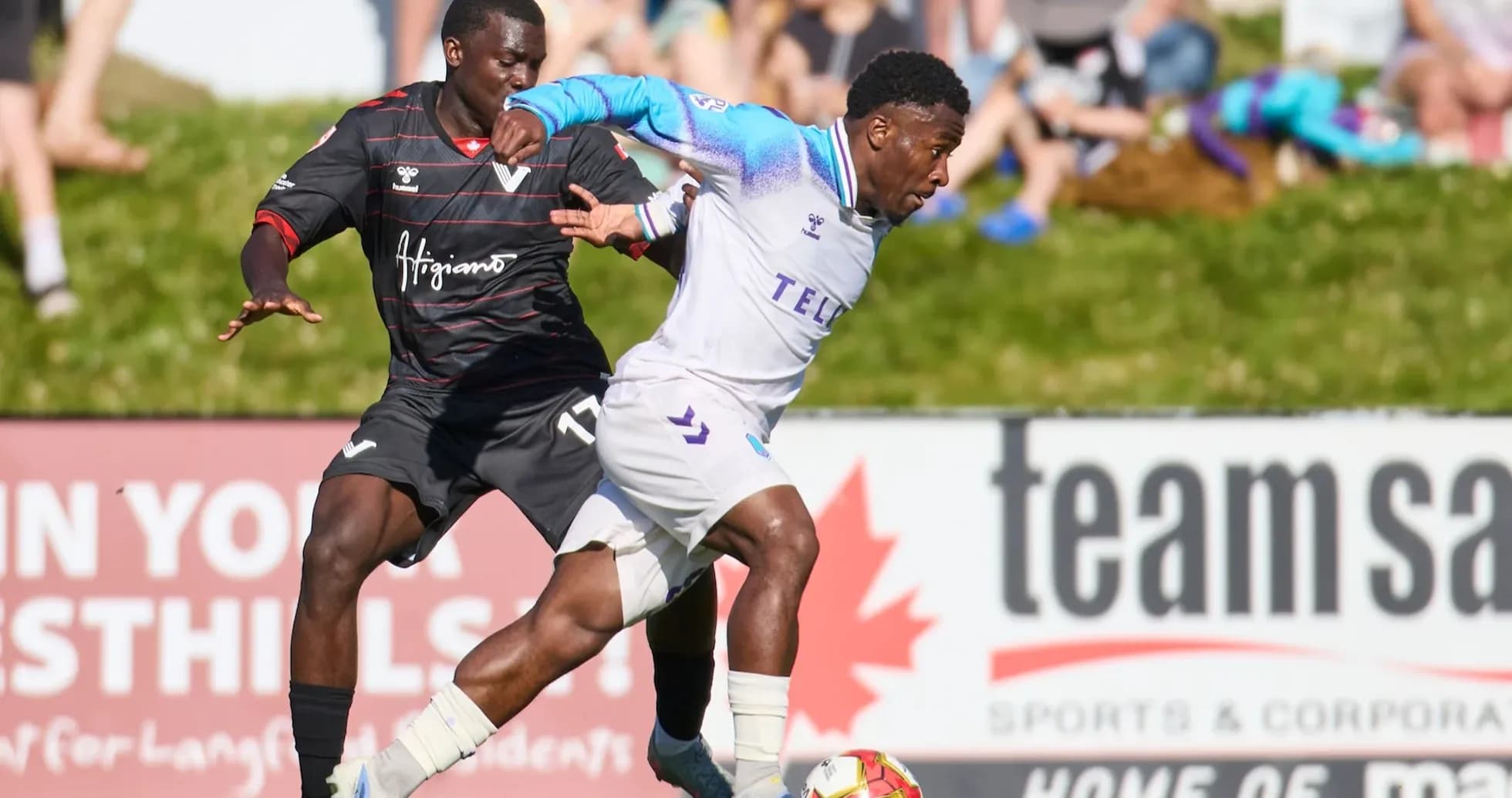
Pacific FC vs Vancouver FC: Tactical Stalemate in Canadian Premier League Clash

Vancouver FC vs Forge: Head-to-Head Record and Match Stats

Cavalry FC and Forge Battle to 1–1 Draw in Tactical Chess Match

HFX Wanderers FC vs Atlético Ottawa: Head-to-Head Stats and Insights

Vancouver FC vs York United: Canadian Premier League Clash