
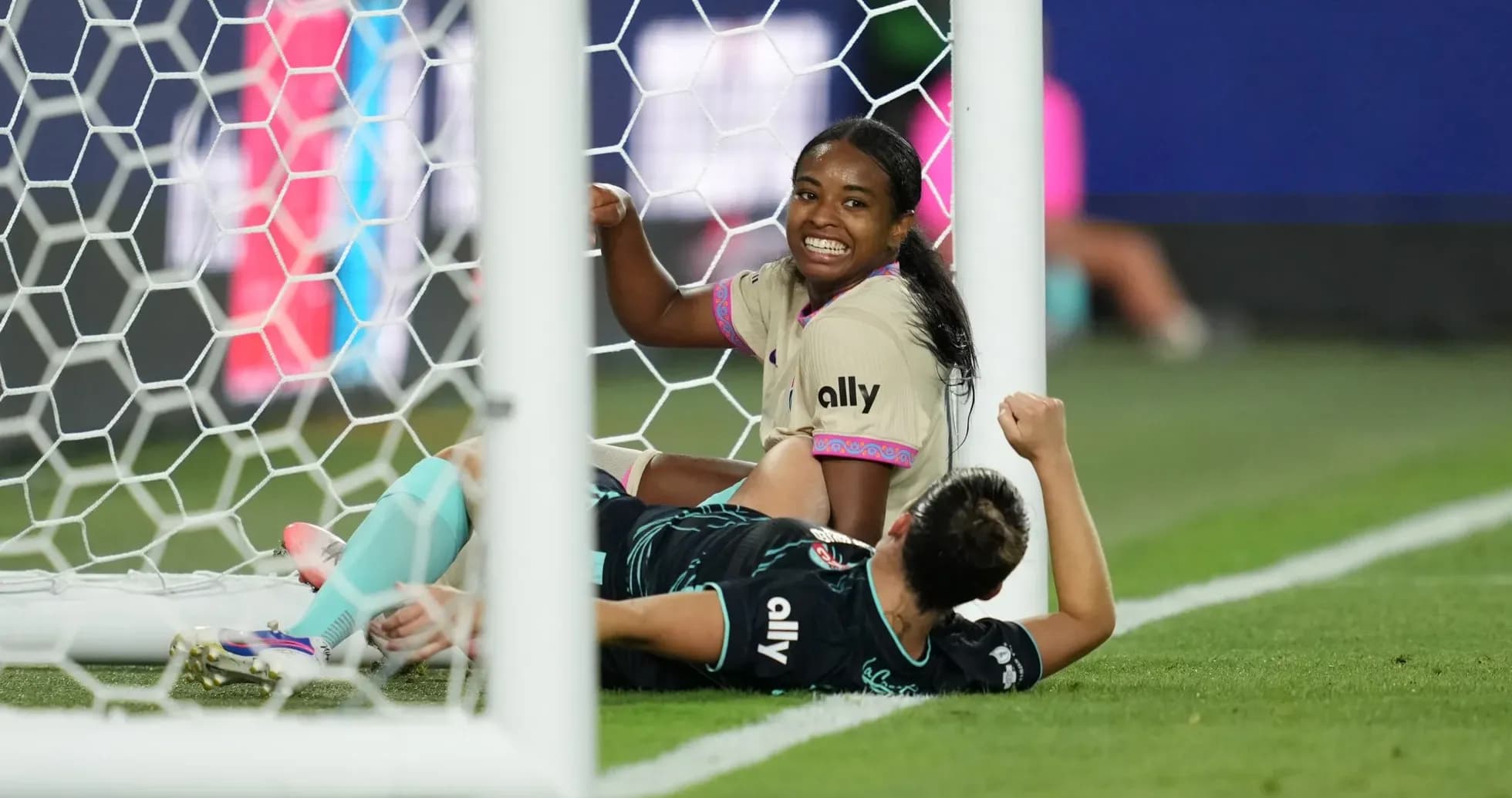
Seattle Reign FC W Edges San Diego Wave W 1–0 in NWSL Showdown
Under the lights at Lumen Field, Seattle Reign FC W edged San Diego Wave W 1–0, a tight Group Stage contest that felt every bit like a playoff rehearsal between two sides already embedded in the NWSL Women’s top eight. Coming in, Seattle sat 8th with 34 points from 22 matches, San Diego 5th with 39 from 23, both on a path toward the Quarter-finals. The margins in the table were fine; on the pitch, they were even finer.
I. The Big Picture – Structure and Seasonal DNA
Both coaches leaned into familiarity, mirroring each other with a 4-2-3-1 that framed this as a battle of midfields and half-spaces rather than a wide-open track meet.
Seattle, under Laura Harvey, stayed true to their season-long identity: compact at home, pragmatic in possession, and content to win by small increments. At home this campaign they had played 11, winning 6, drawing 2 and losing 3, scoring 12 and conceding only 9. That home defensive record – an average of 0.8 goals conceded at home – has underpinned a modest but effective +3 home goal difference, and it was the platform again here. Overall, their goal difference of +1 (27 scored, 26 conceded) reflects a side that lives on the edge but rarely collapses.
San Diego arrived as one of the league’s more dangerous attacking units. Across the season they had 32 goals in total from 23 matches, averaging 1.4 goals per game both at home and on their travels. Away, they had been particularly efficient: 11 played, 6 wins, 2 draws, 3 defeats, with 15 scored and only 12 conceded, an away goal difference of +3. Their overall goal difference of +6 (32 for, 26 against) framed them as the more expansive side, a team that tends to tilt matches into their attacking rhythm.
Yet on this night, Seattle’s 1–0 lead at half-time – preserved through to full-time – showed why home control often trumps away firepower when the tactical screws are tightened.
II. Tactical Voids and Discipline – Edges at the Margins
With no explicit absentees listed, both managers appeared to have near full decks, and their selections reflected that. For Seattle, the spine was clear: C. Dickey in goal behind a back four of R. Brown, P. McClernon, J. Bugg and S. Huerta, with A. James-Turner and S. Meza anchoring the double pivot. Ahead of them, the creative and pressing trio of M. Mercado, S. Menti and M. Dahlien supported lone forward M. Fishel.
San Diego’s structure mirrored it: S. Panos in goal; a back line of A. D. Van Zanten, K. Wesley, K. McNabb and P. Morroni; a central duo of K. Dali and K. Ascanio; and an advanced line of M. Barcenas, L. E. Godfrey and T. Byars behind Ludmila.
Discipline has been a season-long storyline for both sides. Seattle’s yellow card profile shows a clear spike between 46–60 minutes, where 30.00% of their cautions arrive, and a late-game uptick between 76–90 minutes (16.67%). San Diego, by contrast, spread their yellows more evenly, but with notable aggression from 61–75 minutes (20.83%) and a continued edge into stoppage (another 16.67% between 91–105). That underlying data hinted at a second half where tempers and tactical fouls might shape the tempo.
Crucially, penalty history hung over both teams. Seattle had earned 3 penalties this campaign, scoring 2 and missing 1, so they cannot claim perfection from the spot. San Diego’s record is even starker: 2 penalties taken, none scored, with 2 missed and a 100.00% miss rate. In a one-goal match, the psychological weight of those numbers loomed over every box entry, even if no spot-kick came.
III. Key Matchups – Hunter vs Shield, Engine Room vs Enforcer
The headline duel was always going to be the “Hunter vs Shield” dynamic between San Diego’s attacking threats and Seattle’s home defensive block.
For the Wave, T. Byars arrived as one of the league’s most efficient finishers: 9 total goals and 2 assists in 18 appearances, from only 18 shots in total with 15 on target. Her 7.05 average rating and capacity to impact games both as a starter and substitute (10 times off the bench) made her the primary hunter in Jonas Eidevall’s system. Add the creative punch of Dudinha (5 goals and 4 assists in the league) and the vision of Luisa Agudelo (5 goals, 3 assists, and 28 key passes) from deeper areas, and San Diego’s offensive ceiling is obvious – even if those two did not start this particular fixture.
Seattle’s shield was collective rather than star-driven. At home they had kept 6 clean sheets in 11 matches, a remarkable 54.5% rate, and failed to score 4 times, underscoring their comfort in tight, low-event games. The back four of Brown, McClernon, Bugg and Huerta, protected by James-Turner and Meza, formed a narrow, vertically compact block designed to funnel San Diego’s attacks away from central zones where Byars thrives.
In the “Engine Room” matchup, the duel between playmakers and enforcers defined the flow. For Seattle, M. Mercado is the heartbeat: 7 total goals this season from midfield, with 31 shots and 11 key passes. She is not just a finisher but a territorial weapon, engaging in 178 duels and winning 72, plus 17 tackles and 3 blocked shots. Her presence in the No. 10 band, supported by the passing security of players like A. James-Turner and the work of S. Menti and M. Dahlien, allowed Seattle to launch counters and hold territory just high enough to keep Fishel connected.
On the other side, K. Dali orchestrated for San Diego. With 39 key passes and 943 completed passes at 85% accuracy, she is the metronome who turns possession into chances. Her partnership with Agudelo in the wider season context – 544 passes, 28 key passes and 82% accuracy – has been central to the Wave’s 1.4 total goals per game. But here, with Seattle’s double pivot screening intelligently, Dali’s passing lanes into Byars and Ludmila were often forced wide or backwards.
Out wide, the battle between Seattle’s full-backs and San Diego’s attacking flanks was intense. P. Morroni, one of the league’s most combative defenders with 6 yellow cards and 53 tackles, pushed high to support progression, but that aggression is a double-edged sword. Seattle repeatedly looked to exploit the space she left behind, especially with Mercado and Dahlien drifting into those vacated channels.
IV. Statistical Prognosis and Tactical Verdict
From a season-long statistical lens, San Diego’s attack against Seattle’s home defence looked like a clash of strengths. The Wave’s late-game scoring profile is particularly striking: 32.26% of their goals come between 76–90 minutes, a genuine late surge. Seattle, however, concede relatively few overall and have shown strong game management at home, with only 9 goals conceded in 11 matches and 8 total clean sheets across the season.
Overlaying San Diego’s attacking peaks with their defensive vulnerabilities reveals the critical intersection. They concede 29.63% of their goals between 16–30 minutes and 18.52% between both 31–45 and 61–75, while scoring heavily late. In this match, Seattle’s first-half breakthrough fit neatly into that early-window fragility, punishing the Wave before their famed late surge could be decisive. Once ahead, Seattle’s comfort in low-scoring contests and their ability to close out games at home suffocated San Diego’s comeback route.
Given the underlying numbers, an expected goals model would likely have tilted slightly toward San Diego on raw attacking potential over a neutral season – 1.4 total goals per game and a positive overall goal difference of +6 versus Seattle’s narrower +1. But context matters. At Lumen Field, with Seattle conceding an average of just 0.8 goals at home and thriving in one-goal margins, the tactical balance shifts.
This 1–0 outcome feels like the logical expression of that balance: Seattle leveraging their home defensive solidity and disciplined structure, San Diego failing to translate their late-game scoring trends and creative midfield into clear, high-value chances. In a league where both sides are tracking toward the Quarter-finals, this match reads as a statement that in knockout-style football, Seattle’s compact, penalty-aware, and control-first identity can blunt even one of the NWSL Women’s most dangerous attacks.
Related News

Orlando Pride W vs Portland Thorns W: Playoff Showdown

San Diego Wave W vs Kansas City W Predicted Lineups: Team News for NWSL Women

Orlando Pride W vs Portland Thorns W Prediction: Key Stats and Betting Tips

San Diego Wave W vs Kansas City W: Key NWSL Clash Preview

San Diego Wave W vs Kansas City W Prediction: Key Stats and Betting Tips

Portland Thorns and Chicago Red Stars Draw in NWSL Showdown