
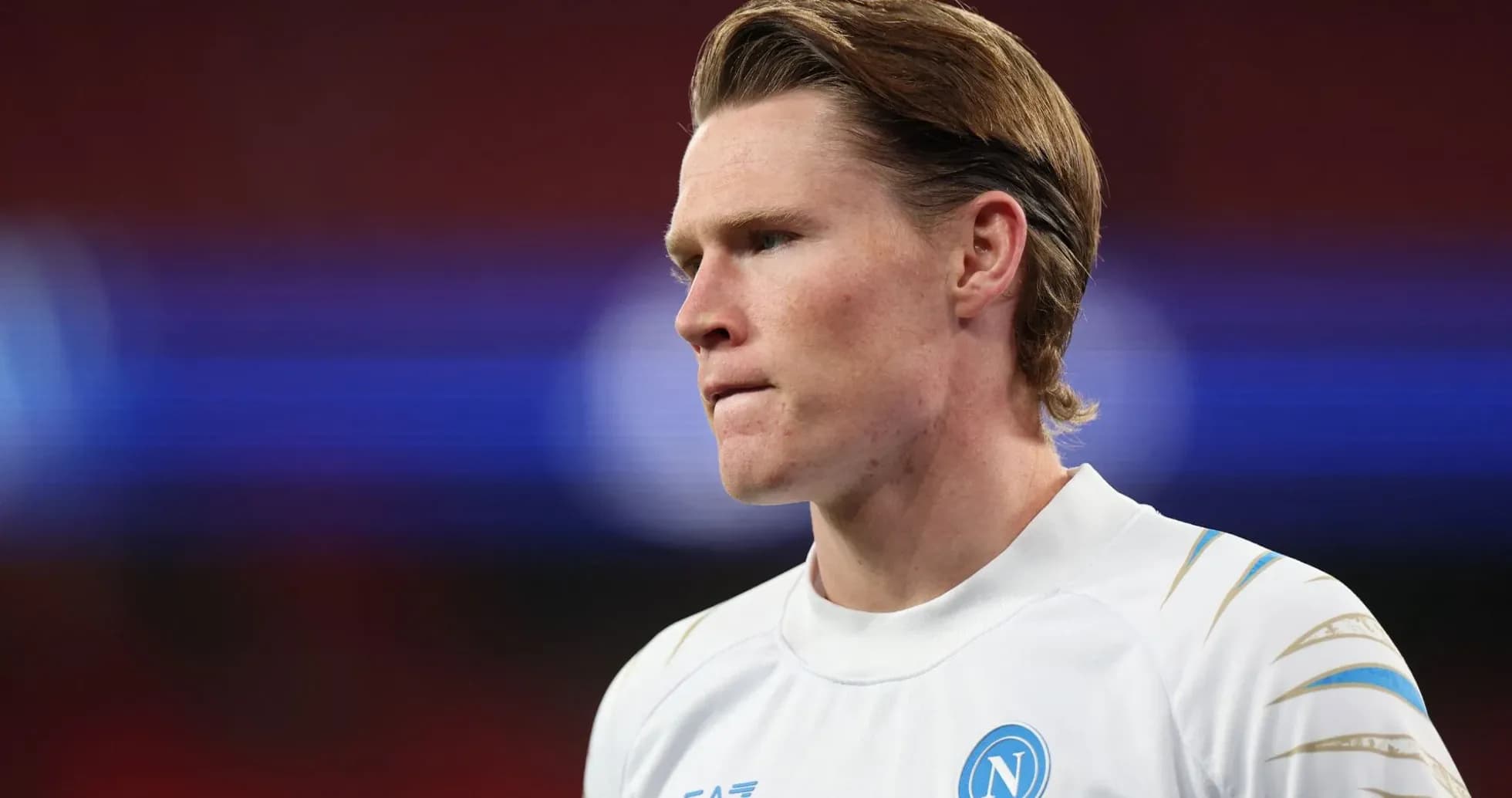
Scott McTominay's Transformation at Napoli: From Doubts to Stardom
Scott McTominay left Old Trafford for £26 million with a suitcase full of doubts trailing behind him. A loyal servant, yes. A guaranteed starter, no. After 255 appearances for Manchester United, the academy graduate walked away from the only club he had ever known, his role still argued over and his ceiling still questioned.
At United, managers boxed him in. The 29-year-old, who first emerged under Jose Mourinho, spent most of his time patrolling deep, sitting in front of the back four, plugging gaps and shuffling the ball on. His natural urge to break lines and arrive in the box got smothered by instruction and system. The debate followed him: useful squad man or genuine game-changer?
Naples has answered that.
Freed in a No.10 role at Stadio Diego Armando Maradona, McTominay has ripped up the old scouting reports. Buccaneering suits him. So does responsibility. He has scored 27 goals across two seasons, driven Napoli to a league title, collected a division MVP award and even muscled his way into the Ballon d’Or conversation. The “limited” holding midfielder has become the man teams game-plan for.
No surprise, then, that Manchester United still get flak for letting him go. A home-grown player, in his prime, flourishing elsewhere while the club searches for identity and goals from midfield. At the same time, speculation has swirled around McTominay’s own next move. Exit talk has bubbled for a couple of windows, yet reports now point towards fresh terms in Naples that would tie him down until 2030.
So is British football done with him? Former Scotland defender Colin Hendry is not convinced.
Speaking to GOAL in association with Estafa.info, Hendry laid out the obvious temptation for Premier League clubs. “Seeing what he's done for Napoli a couple of years back, such a massive influence on them and what they achieved, then there's going to be somebody in England probably thinking, ‘you know what, we wouldn't mind bringing that here because he has got that winning mentality’,” he said.
He did not question the ambition of England’s elite, but he did underline how rare that edge can be. “And I'm not saying that the top six, top eight clubs don't have a winning mentality, but over the years, it’s not easy to find. So Scott, he was going to be a big player for us in the World Cup and the World Cup didn't work I don't think for him as it didn’t for a lot of Scottish players.”
That World Cup still stings in Scotland. McTominay had been central to the journey there, not just present for it. He helped fire the national team to their first tournament since 1998, his stunning overhead kick against Denmark in qualifying instantly woven into Tartan folklore. Yet on North American soil, he and his team-mates faltered. Another group-stage exit, another sense of what might have been.
Hendry did not hide his frustration. “I was disappointed with Scotland in the World Cup, if I'm being honest. Then again, I suppose a lot of people would say that we were disappointing in 1998.”
The contrast lay off the pitch. The Tartan Army, once again, refused to let the story be only about results. “The one shining light about the World Cup in 2026 was the Tartan Army. They've now got history in America that's totally untouched,” Hendry said. The tales keep growing. “I've even seen some of the fans that are local to me, North East Tartan Army from Peterhead, they're back out in Boston in October - they're going back, they've got the boat and everything organised, it’s remarkable.”
On the field, the narrative turned early. A 1-0 defeat to Haiti in the opener left Scotland on the back foot and the mood flat. “I think everybody was completely disappointed after 1-0 against Haiti. The initial game really set us up - I mean, really, really set us up,” Hendry admitted.
Then came Morocco and a start that could have broken them. “In a strange fashion as well, us going down 1-0 within 70 seconds against Morocco actually worked in our favour a little bit because they had their noses in front and we had to then react,” he said. Scotland at least stayed alive. “The good thing is that they didn't score a second or a third goal, but we had to actually react to that and had a practically whole game to do that.”
Fine margins crept in. Hendry pointed to a flashpoint involving John McGinn in the box. “Could we have had a penalty on John McGinn? I think so. I think generally if that's a free-kick outside the box, which it would have been given as a free-kick outside the box, it's obviously a penalty if it's in the box and it wasn't given.”
The verdict on the campaign, though, remained harsh. “But I think on the whole, we were disappointing,” Hendry said, before looping back to the ghosts of France ’98. “But then again, as I said, people going back to 1998, it was disappointing in the end because we ended up getting gubbed by Morocco in the final game, which was a disappointment as well.”
Amid all of that, McTominay sits at a crossroads that many in Scotland and England will watch closely. A title-winning, MVP No.10 in Naples, a symbol of what Scotland can be when everything clicks, and a reminder to Manchester United of what they let walk away.
Does he stay in the south of Italy and build a legacy there, or does the Premier League try to drag that winning mentality back home?
Related News
Transfer Rumors: Haaland’s Two Options; Real Madrid Targets $100 Million Premier League Star
Manchester United Targets Premier League Forward to Strengthen Attack

Liverpool Eyes 17-Year-Old Mexican Midfielder Gilberto Mora for Summer Transfer
Summer 2026 Transfer Window: Manchester United and Tottenham Struggle with New Signings
Liverpool Maintain Interest in Real Madrid Midfielder Amid Transfer Challenges
Transfer Insider Warns Tottenham About Costly Sale of Will Lankshear