
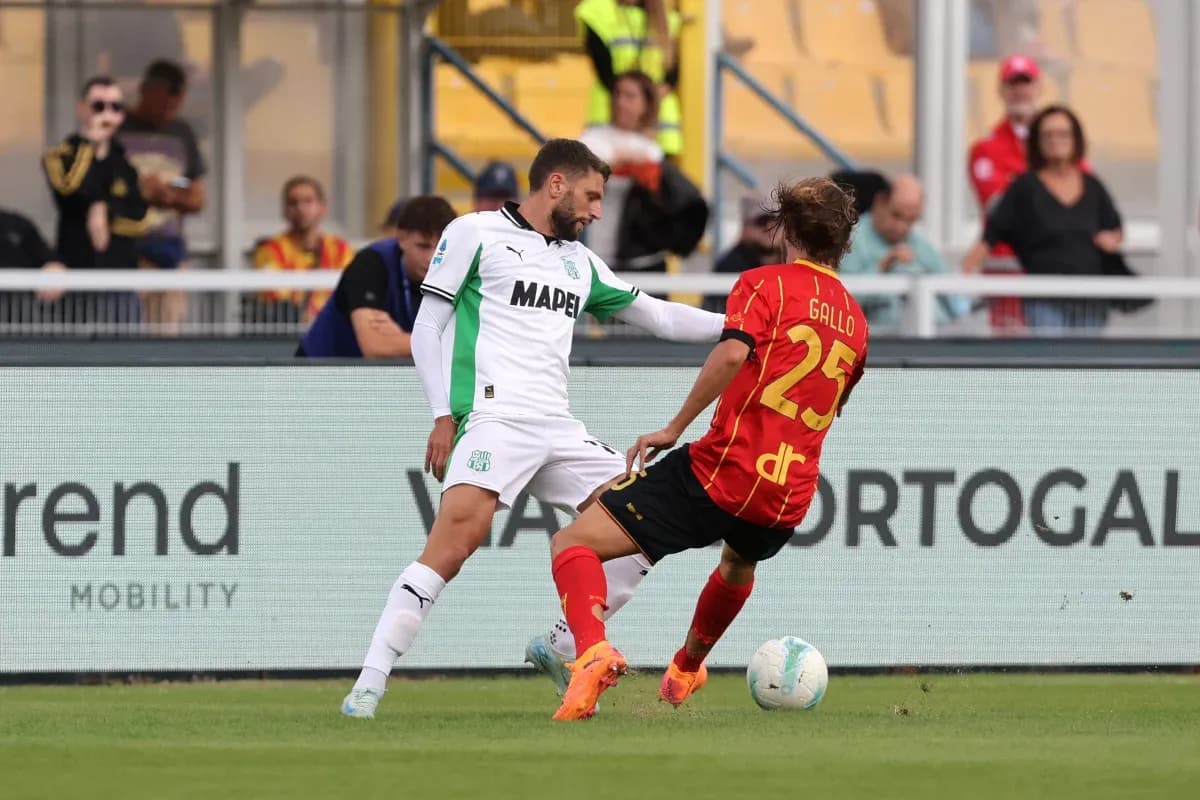
Sassuolo vs Lecce: Key Relegation Battle in Serie A
Sassuolo vs Lecce at MAPEI Stadium - Città del Tricolore comes in the penultimate Serie A round in 2026 with very different pressures: Sassuolo sit 11th on 49 points, safely mid-table, while Lecce are 17th on 32 points and still looking over their shoulder. In the league phase, this is a high-stakes relegation battle for Lecce, who need points to stay clear of the drop, and a chance for Sassuolo to lock in a secure top-half finish and prize money leverage for 2027.
Head-to-Head Tactical Summary
The recent meetings show a finely balanced but low-scoring matchup. On 18 October 2025 in Serie A at Stadio Via del Mare, Lecce and Sassuolo drew 0-0, with a 0-0 HT scoreline, underlining how cagey this fixture can become. In the Coppa Italia 2nd Round on 24 September 2024, again in Lecce, Sassuolo won 2-0 after leading 1-0 at HT, showing their ability to manage knockout pressure away from home.
In the 2023 Serie A league phase, the sides split the initiative: on 21 April 2024 at MAPEI Stadium - Città del Tricolore, Lecce beat Sassuolo 3-0 after going 2-0 up by HT, a clear example of Lecce exploiting transition moments against an exposed Sassuolo back line. Earlier that cycle, on 6 October 2023 in Lecce, the match finished 1-1; Sassuolo led 1-0 at HT but could not close the game out, pointing to late-game management issues. Going back to 25 February 2023 in Lecce, Sassuolo edged a 1-0 win after a 0-0 HT, another tight, attritional contest. Overall, the pattern is of controlled, low-margin games where the first goal heavily shapes the outcome.
Global Season Picture
- League Phase Performance: In the league phase, Sassuolo are 11th with 49 points from 36 games, scoring 44 and conceding 46 (goal difference -2). Lecce are 17th with 32 points from 36 games, with 24 goals for and 48 against (goal difference -24). Sassuolo’s mid-table profile contrasts with Lecce’s relegation-threatened, low-scoring, heavily outscored campaign.
- Season Metrics: In the league phase, Sassuolo’s statistical profile is that of a balanced but vulnerable side: 44 goals for and 46 against over 36 matches, averaging 1.2 goals scored and 1.3 conceded per game, with 8 clean sheets and 11 matches without scoring, and a clear preference for a 4-3-3 structure (34 uses). Their card profile is back-loaded, with a high share of yellow cards in the 76–90 minute window (23 yellows, 28.75%), suggesting increased defensive strain late on. Lecce, in the league phase, are more conservative and blunt in attack: 24 goals for and 48 against, averaging 0.7 scored and 1.3 conceded per game, with 9 clean sheets but 19 matches without scoring, indicating a very low-output attack. Their formations (mainly 4-2-3-1 and 4-3-3) reflect a safety-first approach, while their yellow cards also spike late (18 yellows from 76–90, 28.57%), consistent with late defensive pressure and survival tackling.
- Form Trajectory: In the league phase, Sassuolo’s recent form string “LWDWL” shows inconsistency: one win in the last three, with defeats bookending the sequence. They remain capable of winning but lack sustained momentum. Lecce’s “LWDDL” indicates only one win in the last five, followed by a draw-draw-loss run that has stalled their escape bid. The trajectory suggests Sassuolo arrive with slightly more stability, while Lecce are trending downwards at a critical moment.
Tactical Efficiency
In the league phase, Sassuolo’s attacking efficiency is moderate: 44 goals from 36 matches (1.2 per game) with their biggest wins at 3-0 and 0-3, pointing to occasional bursts of high output but not a consistently “clinical” attack. Defensively, conceding 46 (1.3 per game) with some heavy defeats (notably 0-5 at home) signals a unit that can be exposed when stretched. Lecce’s attack is clearly low-yield: 24 goals in 36 matches (0.7 per game), with a maximum of 2 goals in a single league match and 19 games without scoring, which points to a low-conversion, low-chance side. Defensively, 48 conceded (1.3 per game) is similar in volume to Sassuolo, but combined with their weak attack it creates a much narrower margin for error.
Without explicit numeric attack/defense indices from the comparison block, the implied efficiency gap is straightforward: Sassuolo convert possession and structure into roughly 70% more goals than Lecce (1.2 vs 0.7 per game) while conceding at the same rate (1.3 per game each). That means Sassuolo’s “net” attacking value is the differentiator. The head-to-head record reinforces this: Sassuolo have produced a 2-0 away win and a 1-0 away win in the last three years, while Lecce’s standout 3-0 win in Reggio Emilia shows that when Lecce do break through early, they can punish an open Sassuolo side. Over a season lens, though, Sassuolo’s higher scoring baseline gives them a more sustainable offensive index, whereas Lecce’s profile is that of a defensively average but attacking-light team that depends on set pieces and isolated chances rather than sustained pressure.
The Verdict: Seasonal Impact
In the league phase, this fixture is season-defining for Lecce and strategically important, but not existential, for Sassuolo. A Sassuolo win would likely cement a comfortable mid-table finish around the top 10, validating their 4-3-3 attacking approach and giving them room to plan 2027 around incremental upgrades rather than structural change. It would also push Lecce closer to the relegation line, increasing the pressure on their final matchday and potentially forcing a more aggressive, higher-risk approach in that last game, which does not suit a side averaging only 0.7 goals per match.
For Lecce, avoiding defeat is critical. A draw would at least keep them on track to survive, preserving a narrow points cushion and allowing them to approach the final round with their usual compact, risk-managed style. A win in Reggio Emilia, however, would be transformative: it would likely secure safety, validate their capacity to execute a low-block and transition plan against a more expansive opponent, and buy the club time to address their attacking limitations in 2027 from a Serie A platform rather than rebuilding in Serie B. Given Sassuolo’s mid-table status and Lecce’s precarious 17th place, the seasonal impact is clear: this match is primarily a relegation inflection point for Lecce, while for Sassuolo it is an opportunity to turn a statistically balanced but inconsistent campaign into a clearly positive one in the final league table.
Related News

AC Milan vs Lecce Prediction: Key Stats, Lineups, and Betting Tips

Juventus vs Atalanta Prediction: Key Stats and Betting Tips

AS Roma vs Inter Predicted Lineups: Team News for Serie A Clash
Frosinone vs Como Prediction: Key Stats and Betting Tips

Fiorentina vs Napoli Prediction: Key Stats and Betting Tips

AS Roma vs Inter: Serie A Showdown on 19 September 2026