
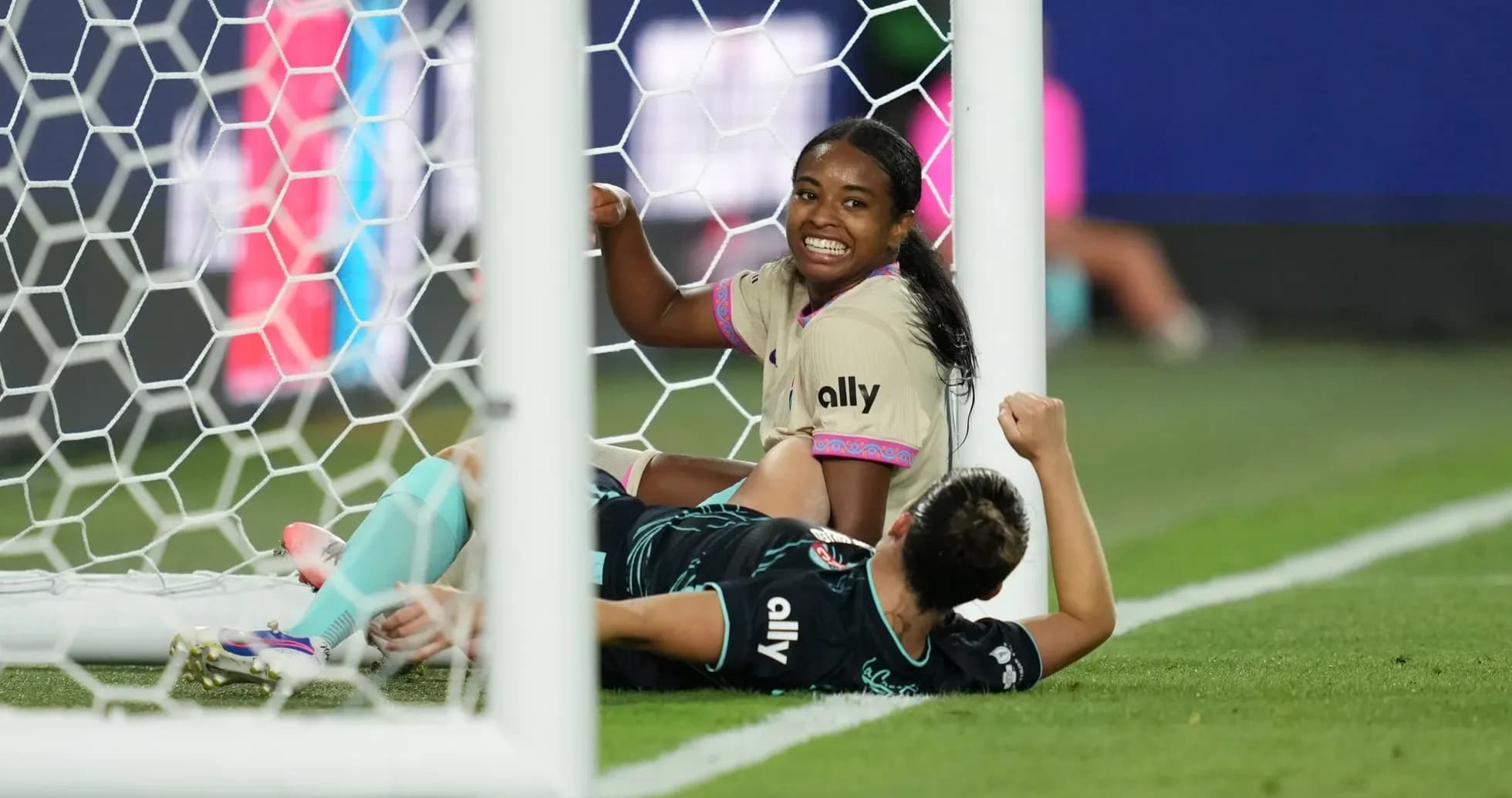
San Diego Wave Dominates Kansas City W with 2-0 Victory
Snapdragon Stadium has become a fortress of ambition this season, and San Diego Wave W’s 2–0 home win over Kansas City W felt like a statement from a side that already sits second in the NWSL Women table. In a Group Stage meeting framed by contrasting home and away identities, the Wave leaned into their controlled aggression, while Kansas City’s road frailties once again undercut the talent on their teamsheet.
Heading into this game, San Diego’s seasonal profile was clear: 14 wins from 25 overall, with a strong home spine. At home they had played 14, winning 8, drawing 1 and losing 5, scoring 21 and conceding 15. That gives a home scoring average of 1.5 goals and 1.1 conceded, a platform for a genuine play-off push. Their overall goal difference of 9 (36 scored, 27 conceded) matches their standing as a side that rarely blows teams away, but grinds them down.
Kansas City arrived in San Diego as a paradox. Overall they had 11 wins, 5 draws and 9 defeats from 25, with 39 scored and 36 conceded for a goal difference of 3. At home they are almost untouchable – 8 wins and 4 draws from 12, scoring 28 and conceding 12 – but on their travels the picture is starkly different: 3 wins, 1 draw and 9 defeats from 13 away matches, with only 11 away goals and 24 conceded. An away scoring average of 0.8 against 1.8 conceded paints the portrait of a side that struggles to translate its attacking fluency to hostile environments.
Tactically, this match-up was fascinating before a ball was kicked. Jonas Eidevall rolled out a 4-1-4-1 for San Diego, a slight departure from their more frequent 4-3-3 and 4-2-3-1 shapes this season. Sandra Paños anchored the back, shielded by a back four of A. D. Van Zanten, K. Wesley, K. McNabb and Perle Morroni. In front of them, K. Ascanio sat as the single pivot, freeing a line of four creative and industrious midfielders – Melanie Barcenas, Kenza Dali, Luisa Agudelo and Gia Corley – to support lone forward T. Byars.
Eidevall’s choice of a single holding midfielder was a direct response to Kansas City’s central strength. The visitors lined up in their trusted 4-2-3-1, the formation they have used in 19 matches this season. Lorena started in goal, behind a back four of L. Rouse, E. Ball, K. Sharples and I. Rodriguez. In midfield, the double pivot of L. LaBonta and V. DiBernardo sat beneath a dangerous trio of M. Cooper, Debinha and T. Chawinga, with H. Hopkins leading the line.
The “Hunter vs Shield” duel was always going to revolve around T. Chawinga. With 10 total goals and 2 assists this season, she is one of the league’s most ruthless finishers, averaging 25 shots with 16 on target. Her duel with San Diego’s defensive line – particularly Van Zanten and Morroni – was central to Kansas City’s hopes. Van Zanten’s season numbers (63 tackles, 6 blocks, 34 interceptions) underline a defender who thrives in front-foot defending, while Morroni adds 60 tackles, 4 blocked shots and 25 interceptions from the opposite flank.
In midfield, the “Engine Room” battle pitted creativity against control. For San Diego, Dali’s 1 goal, 3 assists and 1,051 completed passes at 85% accuracy make her the metronome, while Agudelo brings both work rate and end product – 5 goals, 3 assists, 597 passes and 27 tackles. On the Kansas City side, Croix Bethune’s league-leading 10 assists (with 4 goals and 630 passes at 70% accuracy) and M. Cooper’s 5 goals and 4 assists form a dual-creator axis that usually drives their attacking surges. Even though Bethune did not appear in the starting XI here, her season profile remains the template for how Kansas City want to play between the lines.
Yet the numbers also hinted at the fragility beneath Kansas City’s attacking bravado. Their goal-timing data shows a pronounced offensive surge between 46–60 minutes, when they score 30.77% of their goals, but defensively they are most vulnerable early and just before half-time: 19.44% of goals conceded come in the first 15 minutes, and 22.22% between 31–45. Against a San Diego side that averages 1.5 goals at home and has failed to score in only 5 home games, that early vulnerability was always going to be tested.
Discipline and penalty records added another layer of tension. San Diego’s season-long yellow-card distribution spikes late, with 23.08% of their cautions arriving between 76–90 minutes, a sign of a team that pushes the physical edge as matches stretch. Van Zanten already has a red card this season, while Morroni’s 6 yellows mark her as a repeat offender in duels. Kansas City’s own late-game discipline is suspect: 23.81% of their yellows and their only red card fall in the 76–90 window, with Rouse the standout red-card holder. The risk of a chaotic finale was baked into the matchup.
From the spot, both teams carried scars. San Diego had taken 2 penalties this season and missed both, a 0% conversion rate that forces them to rely on open-play efficiency. Luisa Agudelo’s individual record includes 1 missed penalty, a psychological note whenever she steps over a dead ball. Kansas City had 3 penalties overall, scoring 1 and missing 2, for a 33.33% success rate. With both sides far from clinical from 12 yards, the tactical emphasis was always going to be on constructing high-quality chances rather than hoping for spot-kick salvation.
In the end, San Diego’s structure and home confidence told. The 4-1-4-1 gave them numerical superiority around Kansas City’s double pivot, with Dali and Agudelo repeatedly finding pockets, while Barcenas and Corley stretched the visitors’ full-backs. Byars, already with 9 total goals this season, continued to embody the “super-threat” profile: mobile enough to drag centre-backs wide, ruthless enough to punish any lapse.
For Kansas City, the story remained familiar: a side built to dominate at home, but too brittle away. Their away average of 0.8 goals scored and 1.8 conceded once again aligned with the pattern of a team that cannot consistently impose its attacking identity on the road, even with Chawinga and Cooper in the XI.
Following this result, the statistical prognosis for both clubs sharpens. San Diego look every inch a play-off quarter-final contender, their balanced goal difference and flexible tactical shapes giving them multiple ways to win. Kansas City, still in the play-off picture, must solve their travel sickness – tightening their early-game defending and finding ways to unlock Chawinga and Cooper away from home – if they are to turn individual brilliance into a deep post-season run.
Related News
Racing Louisville W vs San Diego Wave W Stats: Head-to-Head Record
Portland Thorns W Triumphs 4-1 Over Orlando Pride W
Chicago Red Stars W vs Washington Spirit W Predicted Lineups
Chicago Red Stars W vs Washington Spirit W: NWSL Women Clash
Chicago Red Stars W vs Washington Spirit W Prediction: Key Stats and Betting Tips

Orlando Pride W vs Portland Thorns W Predicted Lineups and Team News