

Roma W Defeats Sassuolo W 3-0: A Clash of Seasons
Stadio Enzo Ricci felt like a crossroads for two very different seasons. On one side, Sassuolo W, ninth in Serie A Women with 17 points from 21 matches, carrying the weight of a -17 goal difference and a form line that reads like a struggle (“DLWLDLDLWLLLWLLLDLWDL”). On the other, Roma W, the league’s standard-bearer, top of the table on 52 points, with just one defeat in 21 and a goal difference of +23.
Following this result, the scoreboard told a blunt story: Sassuolo W 0–3 Roma W. It was a scoreline that neatly echoed the wider campaign. At home this season, Sassuolo have managed only 3 goals in 11 matches, averaging 0.3 per game, while conceding 15 at 1.4 per match. Roma, by contrast, have been ruthless on their travels: 21 away goals in 11 outings, an average of 1.9, and only 11 conceded (1.0 per game). The league’s most complete side met one of its most goal-shy attacks, and the pattern held.
I. The Big Picture: Styles Colliding
Sassuolo’s season-long identity has been one of defensive toil and attacking scarcity. Overall, they have scored 16 and conceded 33 in 21 matches, an average of 0.8 goals for and 1.6 against. Their best wins — 1-0 at home and 0-3 away — show they can grind or counter, but those are isolated peaks in a landscape of narrow margins and frequent blanks. They have failed to score in 10 league games overall, including 8 of 11 at home.
Roma’s DNA is the inverse: 42 goals scored and only 19 conceded overall, averaging 2.0 for and 0.9 against. They have never failed to score this campaign, home or away, and have already stacked up 11 clean sheets (5 at home, 6 away). Their biggest away defeat, 5-2, feels like an aberration against a season of control and composure.
At Enzo Ricci, the tactical script was almost pre-written: Sassuolo trying to compress space and survive, Roma trusting their structure and quality to break the game open.
II. Tactical Voids and Discipline
There were no listed absences in the data, so both coaches, Salvatore Colantuono and Luca Rossettini, could lean on their core groups. Yet the season-long disciplinary trends subtly shaped the tone.
Sassuolo are late-reactors in terms of cards: 26.09% of their yellows arrive between 76-90 minutes, with another 21.74% in both the 46-60 and 61-75 windows. This suggests a side that often ends up chasing, fouling to halt transitions or simply tiring under pressure. Roma’s yellow-card curve is more evenly distributed, with notable spikes at 16-30 minutes and 46-60 (both 21.05%), hinting at a team that presses with aggression early in each half to set territorial dominance.
There were no red-card incidents in this particular match, but Roma carry a season memory of a dismissal in the 16-30 range, and Sassuolo have Davina Philtjens as a disciplinary focal point: 5 yellows in 13 appearances, and often forced into last-ditch defending. Even without her on the teamsheet here, that profile reflects a back line used to operating on the edge.
III. Key Matchups: Hunter vs Shield, Engine Room Battles
The “Hunter vs Shield” narrative revolved around Roma’s multi-headed attack against a Sassuolo defence that has been stretched all year. Roma’s away record — 9 wins, 1 draw, 1 loss, with a biggest away win of 0-3 — mapped almost perfectly onto the eventual 0-3 scoreline. Their forwards and wide players thrive when they can pin opponents deep and circulate the ball until gaps appear.
Sassuolo’s main offensive hope was always going to be Lana Clelland. With 4 league goals, 1 assist, and a 7.19 average rating, she is their most efficient threat: 21 shots, 13 on target, and 11 key passes from 127 total. She is also combative, winning 25 of 57 duels and drawing 11 fouls. But Clelland can only be decisive if Sassuolo can move the block up the pitch; at home, with just 3 goals in 11 matches, that platform has rarely existed.
In the “Engine Room,” Roma’s superiority was even more pronounced. Manuela Giugliano is both a top scorer (8 goals, 3 penalties scored from 3) and a top creator (2 assists, 22 key passes from 432 total). Her 7.62 rating underlines how she orchestrates tempo, switching play and threading passes between the lines. Behind and around her, Giulia Dragoni and Évelyne Viens add different textures: Dragoni’s 3 assists and 15 key passes, coupled with 13 tackles and 6 interceptions, embody a two-way midfielder; Viens stretches defences with 21 shots, 12 on target, and 17 key passes of her own.
Sassuolo’s counterbalance in that zone comes from workers rather than stars. Elena Dhont is emblematic: 3 assists, 16 key passes, 90 duels contested with 44 won, 12 tackles and 7 interceptions. She is a pressing trigger and transition outlet rather than a pure finisher (0 goals). Against Roma’s technical core, her task was less about creation and more about survival: closing Giugliano’s angles, disrupting Dragoni’s rhythm, and offering an escape route when Sassuolo finally won the ball.
IV. Statistical Prognosis and xG Lens
Even without explicit xG numbers, the season data allows a clear Expected Goals-style reading. Roma’s attack, averaging 2.0 goals per game overall and 1.9 on their travels, faced a defence that concedes 1.6 on average and 1.4 at home. On the other side, Sassuolo’s attack — 0.8 goals per game overall and a meagre 0.3 at home — went up against a Roma back line shipping only 0.9 per game.
Projecting from those trends, a Roma win with a multi-goal margin and a strong chance of a clean sheet was always the logical outcome. Roma’s 11 clean sheets, combined with Sassuolo’s 10 games without scoring, tilted the probability sharply towards a shutout. A 0-2 or 0-3 away victory sat squarely within the most likely band of results.
Following this result, the 0-3 final score feels less like a twist and more like a confirmation. Roma’s season-long Expected Goals profile — high volume, consistent conversion, and minimal defensive concessions — translated seamlessly onto the Enzo Ricci pitch. Sassuolo, with their blunt home attack and reactive card pattern, were once again pinned back, forced into late challenges and long spells without the ball.
In narrative terms, this was the league leaders playing to type: structurally sound, technically superior, and relentless over 90 minutes. Sassuolo, for all their grit and the flashes of quality from figures like Clelland and Dhont, remain a side living on the margins, where every chance must be taken and every defensive rotation perfect. Against Roma W, that margin for error was simply too thin.
Related News

Roma W Dominates Genoa W in Serie A Women's Season Finale
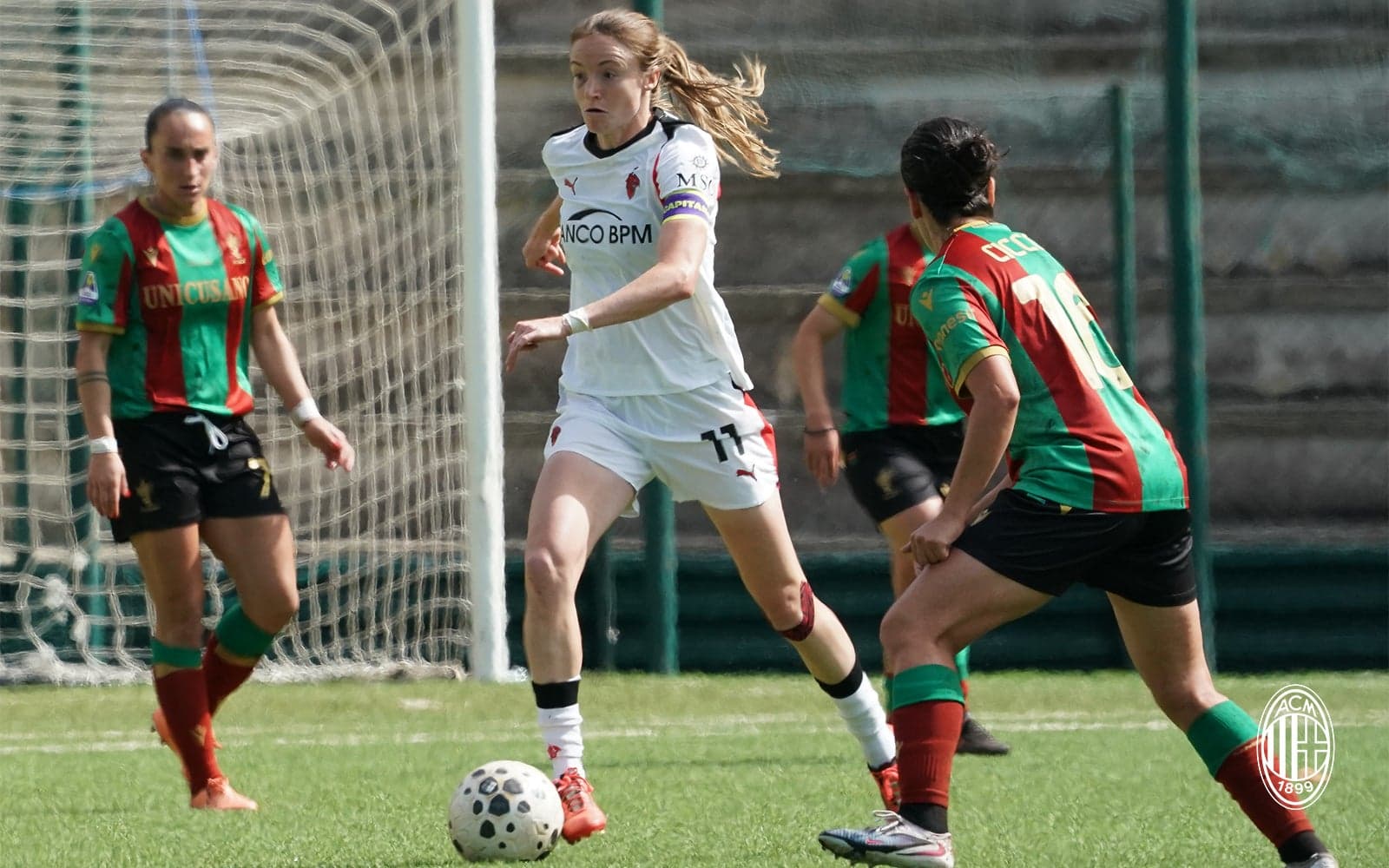
Ternana W's Resilient Victory Over AC Milan W in Serie A Women
Juventus Dominates Parma 3–1 in Serie A Women Clash
Napoli W vs Sassuolo W: A Tale of Two Contrasting Teams

Fiorentina W vs Lazio W: A Tactical Analysis of Serie A Women's Clash

Como W Shock Inter Milano W with 3–0 Victory