
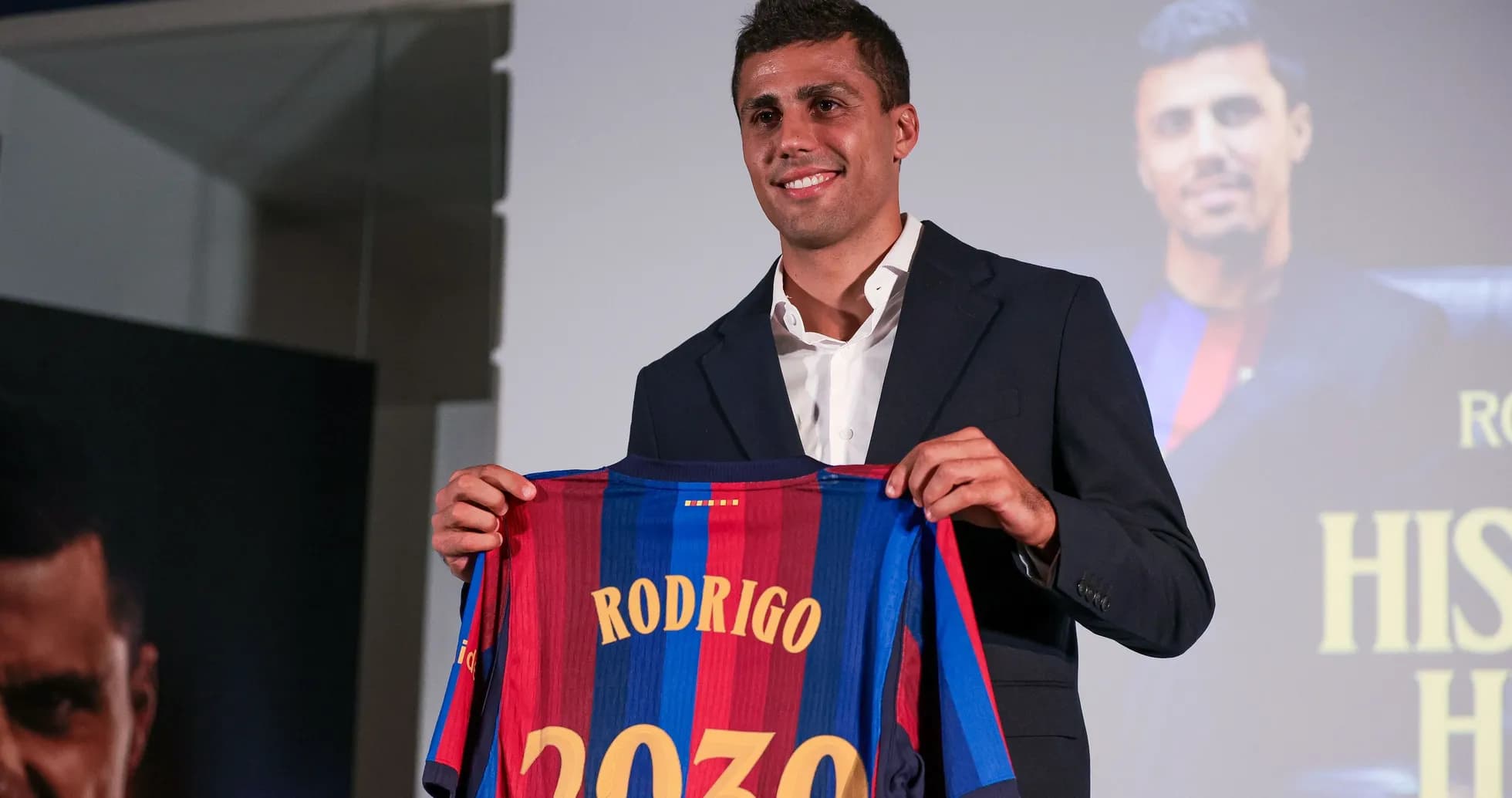
Rodri's Transfer: Barcelona vs Real Madrid Battle for Midfield Dominance
In a summer ruled by one name in midfield, the battle for Rodri has laid bare the contrasting realities of Spain’s two giants.
Real Madrid tried to crash Barcelona’s move for the Manchester City star, but their opening offer barely got them through the door. As reported by El Chiringuito TV, Los Blancos came in with a proposal that some around the deal considered almost insulting, with figures suggesting it did not even reach €40m.
Florentino Pérez wanted the 30-year-old back in Madrid. Badly. Yet the money on the table never matched the status of the 2024 Ballon d'Or winner or the influence he wielded in Spain’s recent international triumphs. Madrid eventually pushed their bid up to around €45m, but that was as far as they were prepared to go.
At Manchester City, where Rodri collected 13 major trophies and became the reference point of Pep Guardiola’s side, that number did not come close. Age, medals, leadership, even his recent return from an anterior cruciate ligament injury – none of it convinced City that such a fee reflected his true value.
While Madrid weighed the risk, Barcelona moved with conviction.
Barcelona go all in for Flick’s cornerstone
Hansi Flick made it clear from the outset: Rodri was the pillar he wanted to build around. With Frenkie de Jong sidelined and a young midfield core still learning the game’s darker arts, Barça needed a veteran who could anchor the team and dictate the tempo.
So the Blaugrana hierarchy stepped up. Barcelona agreed a €60m guaranteed package with City, plus a potential €11m in performance-related add-ons. It was the kind of decisive, front-foot move that has too often been missing from the club’s recent transfer windows.
The deal does more than just add a world-class midfielder. By tying Rodri down until 2030, Barcelona have installed a long-term leader at the heart of Flick’s project, a Spanish international who understands La Liga’s rhythms and the demands of a club that expects to dominate the ball and the narrative.
For a fanbase still measuring every midfielder against the shadows of Xavi and Sergio Busquets, this is as close to a like-for-like replacement in authority and presence as the modern game allows.
“It was a hard decision”
At his official presentation, Rodri did not dance around the story. He openly admitted that the Santiago Bernabéu had been a real option before he chose Barcelona.
"I would like to say that I am very happy to be here. It is a special day, an important new chapter in my career. It was a hard decision," he said. "First because of leaving City, they gave me everything and I was tremendously happy and I will always be grateful. I thank them for facilitating my exit."
The words cut through the noise. Real Madrid were in the race. They made an effort. But when it came down to it, the sporting project at Barcelona convinced him more. Once he knew he was leaving Manchester, the Spotify Camp Nou became his priority.
Madrid offered history and familiarity. Barcelona offered a central role in a new era.
Ready to start, and to lead
Any lingering doubts about his physical condition have been quickly addressed. Rodri clarified that a recent back operation was only an outpatient procedure, not a long-term concern, and insisted he is ready to start immediately.
Barcelona plan to waste no time integrating him into the first-team structure. Flick wants his new general on the pitch, setting standards, organising the press, and giving structure to a side rich in talent but still searching for a commanding voice in the middle.
That first taste of home will come soon. Rodri’s debut in front of the Barça crowd is scheduled for the Joan Gamper Trophy, with Barcelona facing Egyptian side Al Ahly. It is a friendly in name only for the new signing: a live audition in front of a fanbase desperate to see their new midfield leader take control before the La Liga season truly begins.
Madrid tested the waters. Barcelona changed the tide. Now the question is simple: has the balance of power in Spain’s midfield just shifted for the rest of the decade?
Related News
Transfer Rumors: Haaland’s Two Options; Real Madrid Targets $100 Million Premier League Star
Manchester United Targets Premier League Forward to Strengthen Attack
Liverpool Eyes 17-Year-Old Mexican Midfielder Gilberto Mora for Summer Transfer
Summer 2026 Transfer Window: Manchester United and Tottenham Struggle with New Signings
Liverpool Maintain Interest in Real Madrid Midfielder Amid Transfer Challenges
Transfer Insider Warns Tottenham About Costly Sale of Will Lankshear