
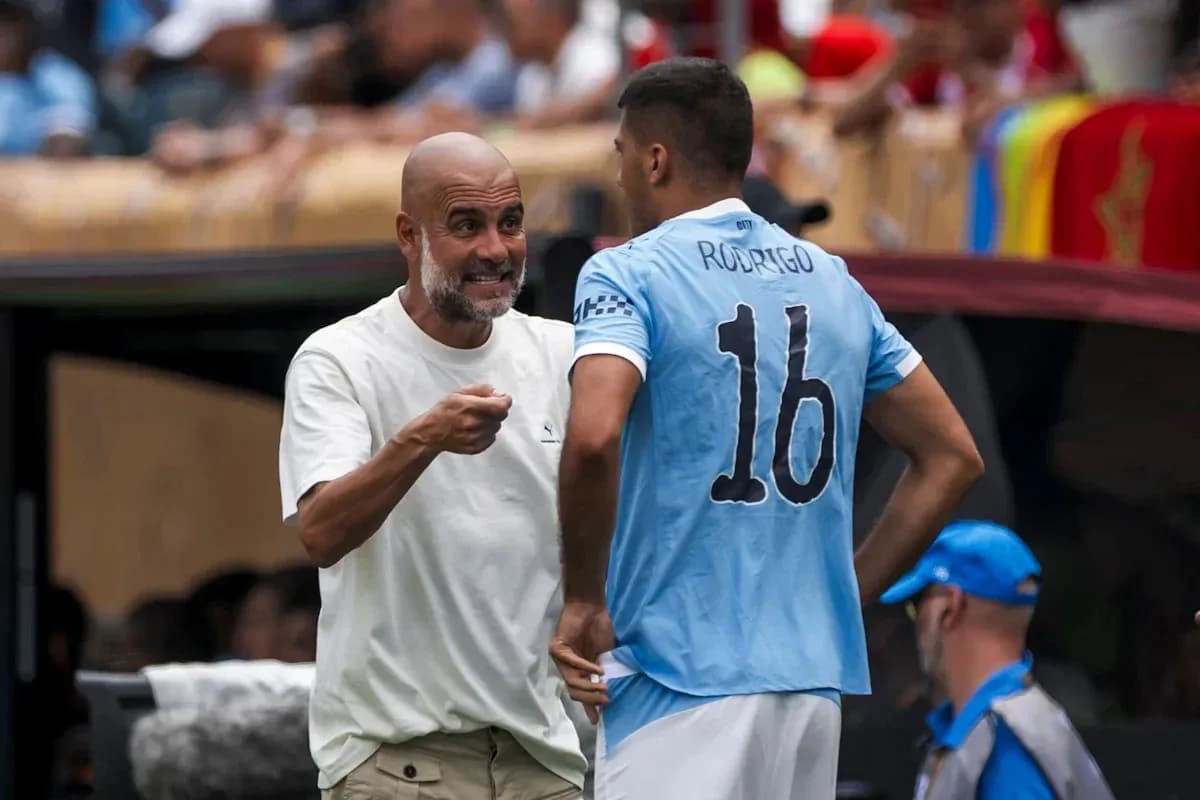
Rodri's Transfer to Barcelona: A Game-Changer for La Liga
Rodri to Barcelona already feels bigger than a standard summer move. It is a statement, a fault line in the rivalry, and a reminder that the sport’s true power still lies in the choices of its smartest players.
According to MUNDO DEPORTIVO, the Spain midfielder seriously considered both Barcelona and Real Madrid before committing to the Camp Nou. He did not dress it up as romance or nostalgia. This was a calculated decision at the end of a turbulent break, with two superclubs pulling at him while Manchester City tried to hold their ground.
He talked about needing to see the “full picture”. Not just the badge, not just the salary. The sporting pathway. Where he felt more excitement. Where he believed he could win more and grow more.
In 2024, that sounds almost radical.
Why Barcelona won the argument
Rodri’s explanation cuts through the usual transfer noise. No talk of branding, no choreographed drama. Just football. Barcelona, led by Deco and Hansi Flick, convinced him that their project offered the clearest plan and the sharpest vision for his role.
That is where big transfers are really decided now. In the detail of how a coach speaks about a player’s position. In the clarity of how a club explains the next three years, not just the unveiling ceremony. Rodri heard both pitches. Barcelona’s hit slightly harder.
He framed the move as a pull, not a push. This was not an escape from City, not a snub driven by bitterness or fatigue. It was attraction. That nuance matters. It gives the transfer a different weight: Barcelona did not just catch a break, they won a head‑to‑head with their greatest rival.
He also brushed away the off-field theories and speculation that swirled around Madrid’s interest. No appetite for theatre, no feeding the circus. His focus, he said, stayed on football, on Spain, on his own path. That is the voice of someone who has lived long enough at the top to understand the value of distance from the noise.
His final reflection on England, that football there is largely kept to football, hinted at something else. A player forged in the Premier League’s relentlessness now chasing a different kind of pressure, a different intensity, a different kind of spotlight.
Respect for Madrid, edge for La Liga
Turning down Real Madrid still means something. Rodri did not try to pretend otherwise. He spoke with clear respect for the club and for how they handled the chase. No cheap shots, no revisionism.
His words about José Mourinho, who tried to persuade him to choose Madrid, underlined that tone.
“Bueno, no creo que sea lo suyo desvelar una conversación privada, pero evidentemente expresó sus ganas de que fuera y de lo que podía aportar al equipo. El trato fue muy bueno. Cuando tomé la decisión también le llamé para agradecer el interés y el trato. Me parece un grandísimo entrenador, ya lo ha demostrado allá donde ha ido en sus grandes etapas y el Real Madrid va a ser un duro rival para esta Liga."
Diplomatic, yes, but not empty. He made the call after deciding. He said thank you. He closed the loop properly. In a landscape where courtesy is usually the first casualty of elite football, that stands out.
For Madrid, the feeling will be frustration rather than humiliation. They went hard, they argued their case, they behaved impeccably. They still lost. And that, for Barcelona, is where the satisfaction really lies: Rodri knew exactly what the alternative looked like. He still picked the other side of the clásico divide.
If he hits his usual level, this decision could tilt the season. Barcelona have secured control, intelligence and steel at the heart of their midfield, and they have done it by edging out the club that have dominated the European market for years. That is more than a signing. It is a message about pull, planning and the enduring magnetism of the Barcelona name.
The Manchester City vacuum
Look at it from Manchester. For City supporters, this story lands with a knot in the stomach.
On one side, pride. Rodri is being spoken about as the midfielder both Barcelona and Real Madrid wanted most. That says everything about his status. At City he became the calm in chaos, the organiser with the ball, the balance point in a team that constantly lives on the edge of risk.
On the other side, the familiar irritation. The sense that when Europe’s old giants come calling, they act as if City players are simply passing through on their way to “proper” royalty. Rodri did not become this version of himself in Spain. He became it in Manchester. In the Premier League. Under the heaviest expectations and the brightest lights.
If he has gone, most City fans would probably wish him well. They understand what he gave them. But the emotional reaction quickly gives way to a colder question.
- Who controls games for City now?
- Who dictates tempo when matches fray?
- Who brings that absolute certainty when everything around him looks ragged?
That is the real legacy of Rodri at City. He leaves more than a gap on the team sheet. He leaves a void in authority.
Barcelona have stepped into that space. Madrid have watched him walk past their door. La Liga has just gained another fault line in its title race. Now the question hangs over three giants at once: who adapts fastest to the choice Rodri has made?
Related News
David Gray's Hibernian Tenure Ends After Six Games
Juventus vs NEC Nijmegen: Spalletti's Focus on Mentality
Cristiano Ronaldo's Future at Al-Nassr in Question After AFC Champions League Defeat
Mikel Merino's Leadership Shines in Carabao Cup Match
Celtic Supporter Arrested for Alleged Assault on Frankie Kent
Teenage Revolution: The Premier League's Rising Stars