
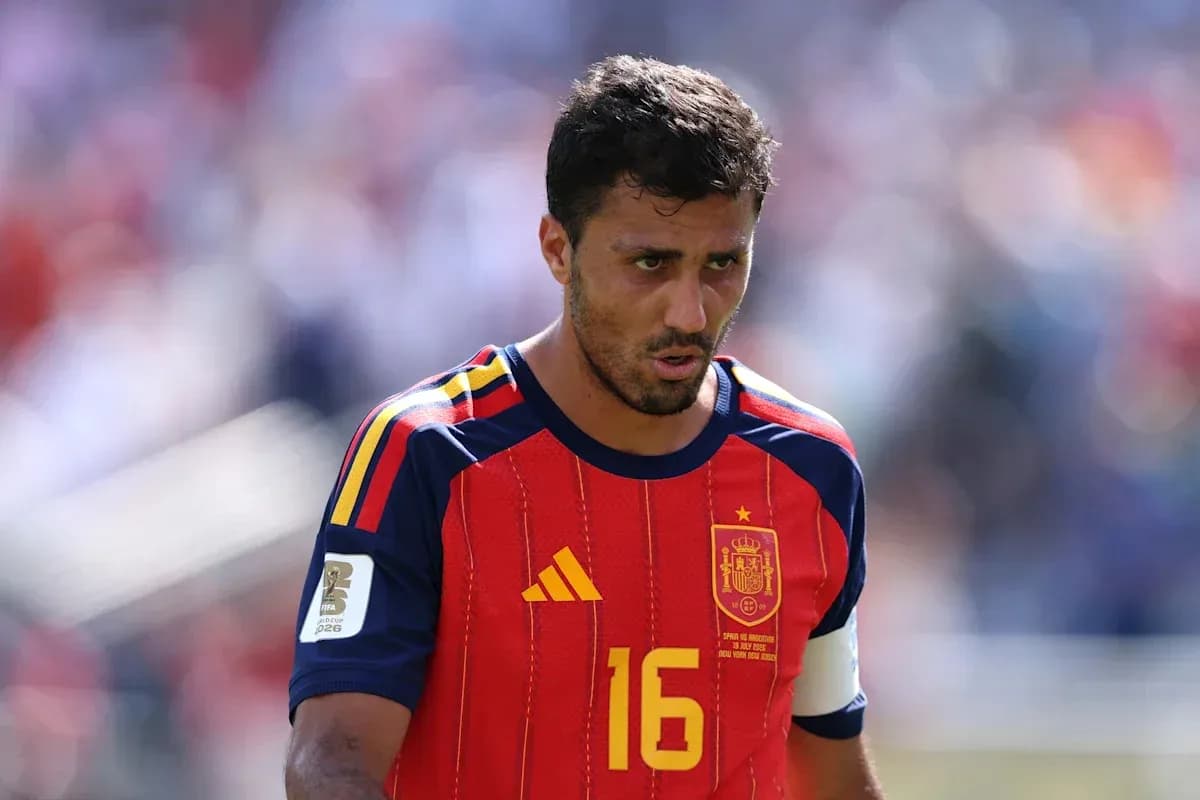
Rodri on Choosing Barcelona Over Real Madrid: A Tough Decision
Real Madrid thought they had him. All summer, the message from the Bernabeu was the same: Rodri was theirs to lose. They pushed hard, led the race for weeks and behaved, in the player’s own words, “exemplarily”.
And then he signed for Barcelona.
Speaking to MD, the midfielder finally unpacked the decision that sent a jolt through Spanish football and shifted power in one of the game’s fiercest rivalries.
“It was not an easy decision at all,” he admitted. “Saying no to Madrid is not easy.”
A summer with no rest
Rodri’s summer was supposed to be simple. A short break, some time away, then a new chapter. Instead, it became a tug-of-war between two giants.
“The first thing I have to say is that I would have liked it to have been two or three weeks of quiet vacation and they were not at all,” he said. “Many things had to be analysed, and such an important decision had to be made with two of the best clubs in the world.”
The pressure built around him. Two of the sport’s superpowers, both with clear plans, both offering him a central role. But when the noise died down, he insists the choice came from one place only.
“In the end I made a decision on the sporting level,” Rodri explained. “So it gave me a little more desire and to understand where I could win and grow more as a player.”
That line cuts to the heart of it. Not money. Not politics. A football decision.
Deco and Hansi tip the balance
For all of Real Madrid’s effort, Barcelona’s sporting project won the argument. Rodri did not hide who swung it.
“In the end, Deco and Hansi convinced me,” he said.
The presence of sporting director Deco and head coach Hansi Flick, with a defined idea of how and where Rodri would fit, proved decisive. Madrid’s pitch was strong; Barcelona’s was stronger.
Respect for Mourinho and Madrid
At the Bernabeu, Jose Mourinho had made his stance clear. He wanted Rodri, and he told him so directly.
“I don't think it's his thing to reveal a private conversation,” Rodri said, careful not to betray details. “But he obviously expressed his desire for me to join, and he told me what I could bring to the team. The treatment was very good.”
When the decision was finally made, Rodri did not simply let the club find out through intermediaries. He picked up the phone.
“When I made the decision, I also called him to thank him for his interest and treatment,” he revealed. “I think he's a great coach, he's already shown it wherever he's gone in his great stages and Real Madrid are going to be a tough opponent for this league.”
No bitterness, no swipe at Madrid, just a clear acknowledgement of the respect shown and the level of the rival he has chosen to face.
Ballon d’Or boycott “not a factor”
There was another layer to the summer drama: Real Madrid’s decision to boycott his 2024 Ballon d'Or victory. It could have added fuel to the rivalry, an easy narrative thread suggesting resentment or wounded pride.
Rodri shut that down. He made it very clear that the boycott played no part in his thinking over the move.
His choice, he insists, was about football. About growth. About where he believes he can win more and evolve as a player.
Now comes the real test. He turned down Madrid. He joined Barcelona. The next chapters will be written on the pitch, in a league where the club he rejected will be “a tough opponent” and every Clásico will feel like a verdict on that summer call.
Related News
David Gray's Hibernian Tenure Ends After Six Games
Juventus vs NEC Nijmegen: Spalletti's Focus on Mentality
Cristiano Ronaldo's Future at Al-Nassr in Question After AFC Champions League Defeat
Mikel Merino's Leadership Shines in Carabao Cup Match
Celtic Supporter Arrested for Alleged Assault on Frankie Kent
Teenage Revolution: The Premier League's Rising Stars