
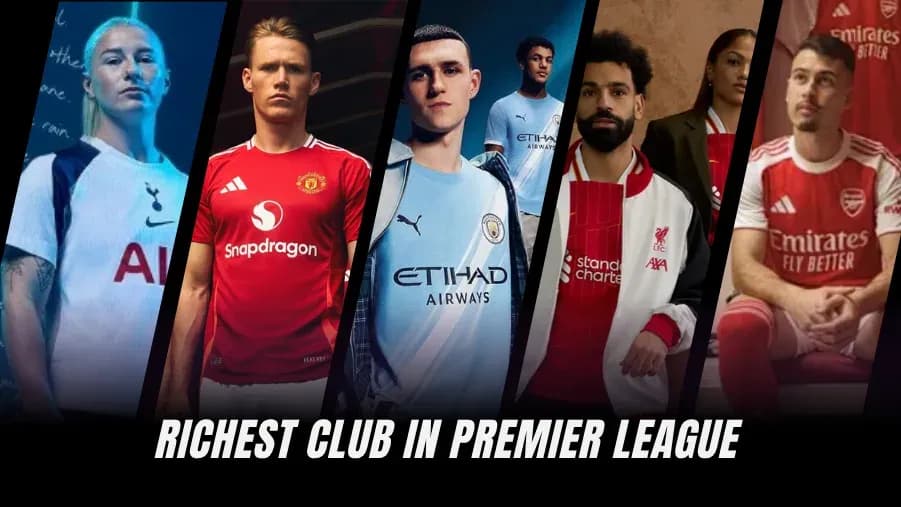
Top 10 Wealthiest Premier League Clubs in 2026
Football today is not just a sport but a significant financial enterprise. Premier League clubs earn massive sums from broadcasting rights, sponsorship deals, and matchday earnings. At the forefront of wealth in 2026 stands Liverpool FC, closely followed by Manchester City and Arsenal FC. This ranking factors in club valuation, yearly revenue, and ownership strength. The surge in finances owes to vast global fanbases, savvy management, and strong investors, turning these clubs into commercial powerhouses beyond the pitch.
These teams have transformed into commercial hubs, generating income from brand collaborations, matchdays, and broadcasting. This article reviews the richest Premier League clubs by examining their valuations, revenues, and majority owners. Reliable data, including Deloitte’s reports, provide the foundation for this overview. Clubs like Manchester United, Manchester City, and Liverpool lead the pack financially.
Ranking of the Richest Premier League Clubs
Brighton has impressed with consistent Premier League performance, showcasing a smart approach to spending and long-term planning. They focus on acquiring undervalued players like Alexis Mac Allister and Moises Caicedo, developing them, then selling at a profit. Despite a smaller fanbase compared to peers, they’ve maximized resources effectively. Their philosophy on and off the pitch underpins their financial rise.
- Total Revenue: £279.28M
- Valuation: £655M
- Matchday Revenue: £72M
- Main Sponsor: American Express
Following their 2023 UEFA Europa Conference League victory, West Ham has seen a financial boost paired with rising popularity. Forbes valued them at $1.1 billion in mid-2024, translating to £882 million in 2025. The London Stadium yields substantial matchday income, while their academy lowers player acquisition costs. From a modest 2007 valuation of $195 million, the club's ascent into financial prominence is remarkable.
- Total Revenue: £322.92M
- Valuation: £882M
- Matchday Revenue: £127.9M
- Main Sponsor: Umbro
Newcastle’s transformation began after the Public Investment Fund of Saudi Arabia took ownership in late 2021, paying around £305 million. Once mid-table, they now feature among the Premier League’s richest clubs. Revenue nearly doubled thanks to lucrative sponsorships, upgraded facilities, and squad investment. Their first trophy in 70 years—the 2025 EFL Cup—symbolizes their recent rise.
- Total Revenue: £466.13M
- Valuation: £820M
- Matchday Revenue: £120.9M
- Main Sponsor: Sela
Birmingham-based Aston Villa has steadily grown financially and sportingly under new ownership by Wes Edens and Naseef Sawiris. Their UEFA Europa League return bolstered income streams. Investments in infrastructure and a strategic recruitment policy have paid off, with upgrades to Villa Park contributing to increased matchday revenues and financial stability.
- Total Revenue: £526.73M
- Valuation: £625M
- Matchday Revenue: £106M
- Main Sponsor: Betano
Post-Roman Abramovich, Chelsea remains a financial heavyweight under Todd Boehly and Clearlake Capital’s ownership. Despite managerial changes and fluctuating form, they continue investing heavily in players and commercial growth. Merchandise sales, global following, and major brand deals support a solid revenue base as they aim for sustainable expansion.
- Total Revenue: £683.40M
- Valuation: £2.4B
- Matchday Revenue: £388M
- Main Sponsor: Infinite Athlete
Tottenham leverages its state-of-the-art stadium and brand deals to climb the financial rankings. ENIC Group owns most of the club, with Daniel Levy and the Joe Lewis family trust holding stakes. Their multi-purpose stadium hosts NFL games and concerts, boosting revenues significantly. Winning the Europa League last season capped a positive financial trajectory.
- Total Revenue: £786.94M
- Valuation: £2.6B
- Matchday Revenue: £464M
- Main Sponsor: AIA
One of the world’s most supported clubs, Manchester United boasts unmatched commercial reach, thanks to sponsorships like Adidas and TeamViewer, alongside vast matchday income at Old Trafford. Despite recent struggles on the field and financial losses, their massive fanbase and global partnerships keep them near the top financially. Ongoing investments in squad and stadium hope to restore former glory.
- Total Revenue: £927.81M
- Valuation: £5.2B
- Matchday Revenue: £936M
- Main Sponsor: Snapdragon
Arsenal has risen through smart decisions and strong performances under Mikel Arteta. Their Champions League return and solid league campaigns have boosted revenue. Emirates Stadium’s capacity supports hefty matchday earnings. Prudent transfer policies combined with a loyal global fanbase ensure Arsenal remains one of the richest football clubs.
- Total Revenue: £960.57M
- Valuation: £2.5B
- Matchday Revenue: £513M
- Main Sponsor: Fly Emirates
Dominating on and off the pitch, Manchester City tops revenue charts behind their Abu Dhabi United Group backing. A decade of success under Pep Guardiola has driven broadcasting and sponsorship revenues sky high. Their consistent investment in youth and transfers keeps them competitive, while strategic sales help maintain financial health.
- Total Revenue: £969.93M
- Valuation: £4.1B
- Matchday Revenue: £390M
- Main Sponsor: Etihad Airways
Liverpool has experienced a huge financial rise since Jurgen Klopp and Fenway Sports Group arrived. Triumphs like the 2019 Champions League and 2020 Premier League titles pushed them into elite status. Their global fanbase fuels merchandise and commercial income. Smart transfer dealings complement their trophy haul, sustaining their place as the richest Premier League club.
- Total Revenue: £978.12M
- Valuation: £4.2B
- Matchday Revenue: £627M
- Main Sponsor: Standard Chartered
How We Ranked These Clubs
The list reflects more than just ticket sales or merchandise figures. Three main criteria shaped these rankings:
- Total Annual Revenue: Covers matchday income, sponsorships, merchandise, and digital content, drawn from official financial statements.
- Club Valuation: Represents market value including brand strength, assets, stadium, and global support.
- Majority Stakeholder: Influences club investment capacity, infrastructure growth, and overall revenue potential.
Related News

Top 10 Assist Leaders in Europe’s Big Five Leagues for 2026-27 Season: Gordon, Gakpo Shine
Top 10 Soccer Players in the World Right Now
Top 30 Players in Europe's Leading Leagues for 2026/27 Season Based on Stats

Top 10 Football Leagues in the World Right Now

Top 10 Football Managers with the Most Trophies in History
Top 30 Most Valuable Football Clubs Worldwide