
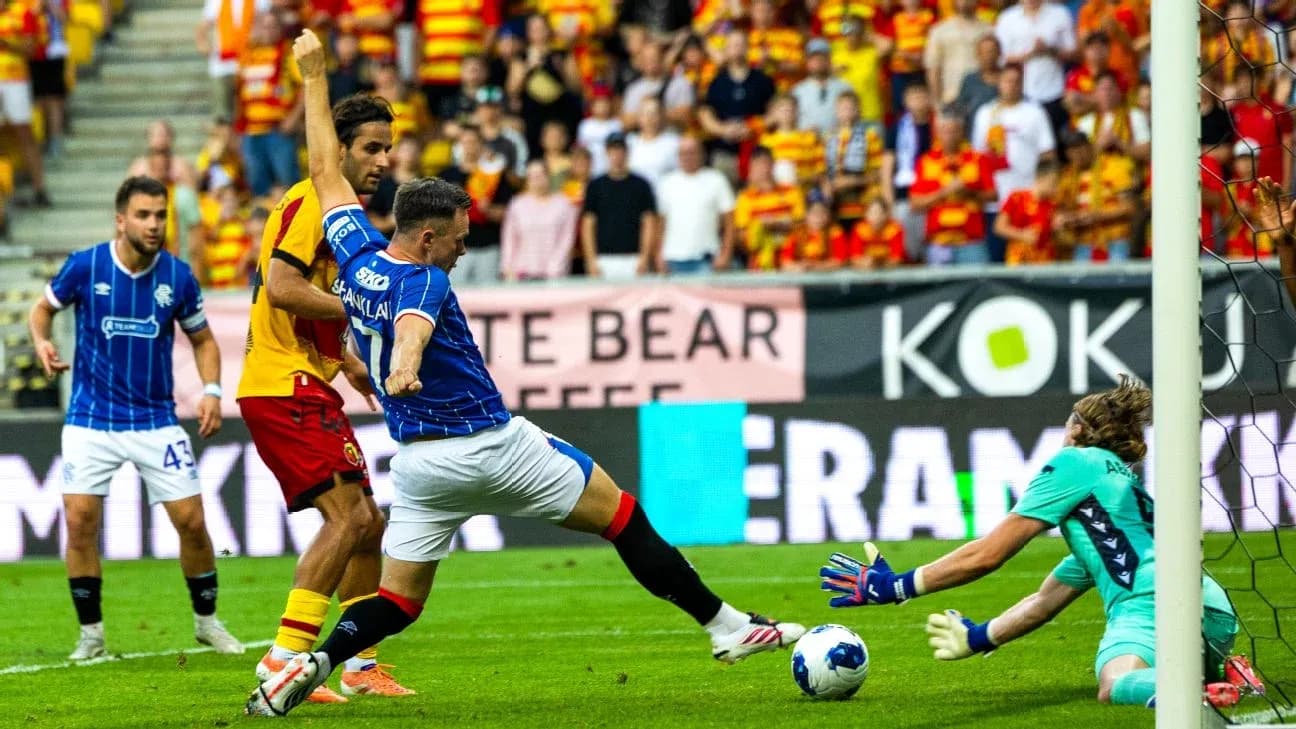
Rangers vs Jagiellonia: UEFA Europa League Predictions
Rangers host Jagiellonia at Ibrox Stadium in the UEFA Europa League 3rd Qualifying Round second leg with the tie finely poised after a 2-1 win for the Polish side in Bialystok on 6 August 2026. Rangers must overturn a one-goal deficit, while Jagiellonia know that even a draw will be enough to progress, adding a clear tactical edge to this return fixture.
From a pure prediction-model perspective, the API strongly leans towards the visitors avoiding defeat. The prediction block gives Rangers just a 0% chance of victory, with the draw and Jagiellonia wins each rated at 50%. The recommended advice is explicit: “Double chance : draw or Jagiellonia”, and the winner field flags Jagiellonia with the comment “Win or draw”. That is a very aggressive stance against the home side in a high-pressure European night at Ibrox.
Recent form in this Europa League campaign, although based on a single competitive match each, backs that modelling. Rangers’ league form string is “L”, coming from the 2-1 away defeat in the first leg. In that game window, their Europa League record shows 1 goal scored and 2 conceded, averaging 1.0 for and 2.0 against per match. They have yet to keep a clean sheet and have already allowed early goals: the goals against distribution shows one conceded in the 0–15 minute range and another in 16–30, underlining a vulnerability at the start of halves.
Jagiellonia’s Europa League form is the mirror image: “W” from that same first leg. Their competition stats show 2 goals scored and 1 conceded, averaging 2.0 for and 1.0 against per match. They also struck early, with one goal in the 0–15 and another in the 16–30 interval, suggesting they can start on the front foot even away from home. Defensively, they were breached only once in that match, also in the opening 15 minutes, but then managed the game out effectively.
The comparison indices underline a clear edge for the visitors in this tiny but relevant sample. The overall comparison total is 33.0 for Rangers against 67.0 for Jagiellonia. Form is rated 0 versus 100, while both attack and defense are 33 versus 67 in favour of Jagiellonia. The head-to-head comparison also reads 0 versus 100, entirely driven by that 2-1 first-leg victory at Chorten Arena, where Jagiellonia were at home and Rangers the away side.
However, the betting markets tell a very different story. Across major bookmakers, Rangers are heavy favourites on the night. Home odds range from 1.50 to 1.59, implying an approximate win probability of around 63–67%. Draw prices sit between 3.66 and 4.31 (about 23–27%), while Jagiellonia are out at 4.84–5.87 (roughly 17–21%). In other words, bookmakers expect Rangers to win the match more often than not, even if qualification remains a separate question.
This sets up a clear clash between model and market. The model essentially prices Rangers at no realistic chance of victory and strongly endorses a Jagiellonia double chance, whereas the bookmakers see Rangers as strong favourites to at least win the 90 minutes at home.
For bettors, the safest way to stay aligned with the official prediction data is to follow the advice block rather than the market sentiment. The recommended angle is Jagiellonia on double chance (draw or away win), which is supported by:
- Prediction probabilities: 50% draw, 50% Jagiellonia, 0% Rangers.
- Comparison indices strongly favouring the away side across form, attack, defense, and total.
- The actual head-to-head result so far in this tie: Jagiellonia 2–1 Rangers on 6 August 2026.
Given the need to base the forecast strictly on the official prediction and odds analysis, the betting verdict is:
Rangers may be priced as favourites by the bookmakers, but the model-driven play is to oppose the home win. The primary recommended bet is Double chance: draw or Jagiellonia. If looking for a match outcome lean within that, the prediction data treats a draw and an away win as equally likely, so a cautious approach would be to prioritise the double chance rather than picking a single result.
Related News
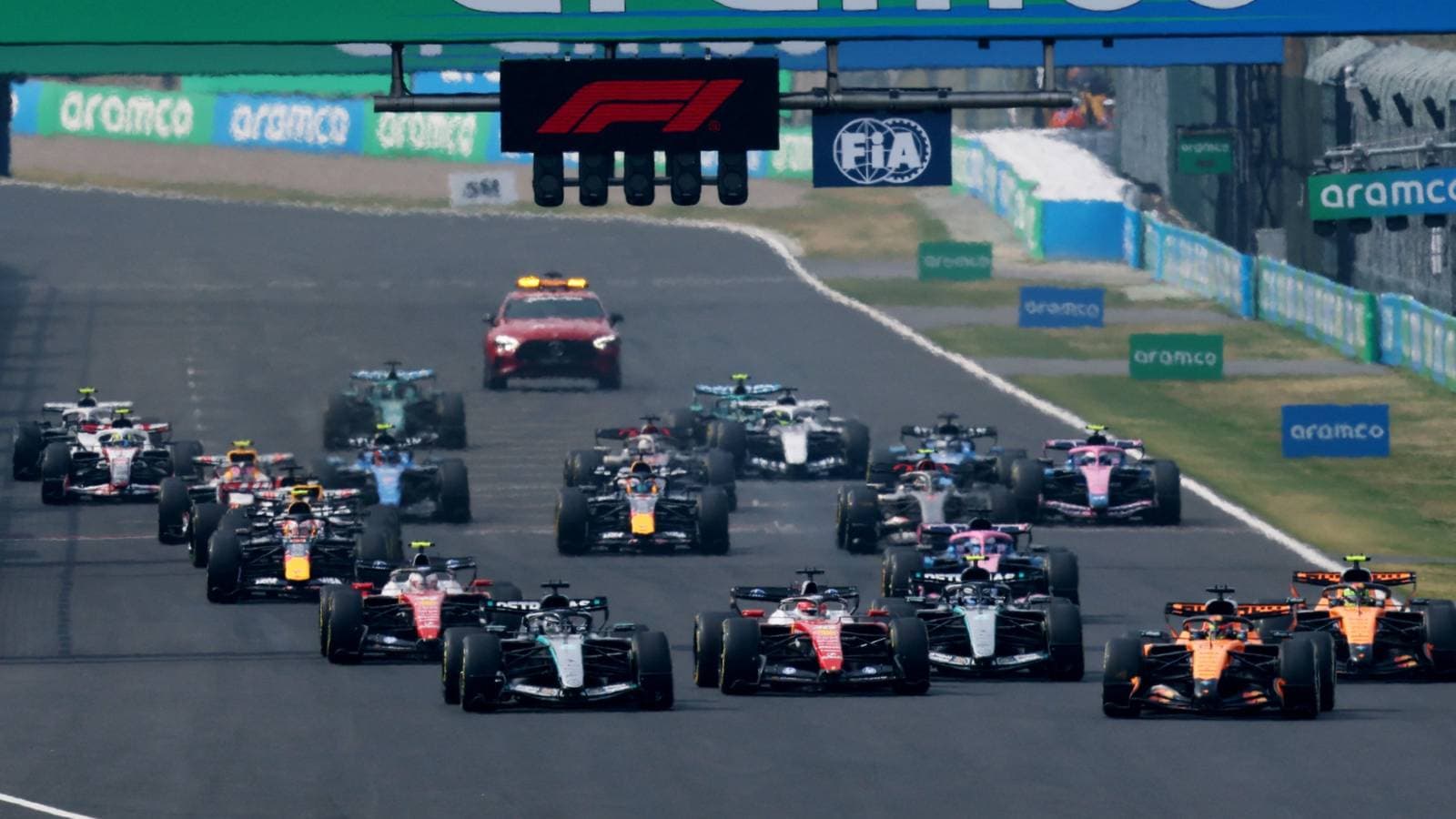
AI Forecasts 2026 Formula 1 Drivers' Championship Standings
France vs Belgium: Nations League Preview, Predictions, and Lineups
Italy vs. Türkiye: Nations League Preview, Predictions, and Lineups

Nations League Preview: Turkiye vs. Italy - Line-ups and TV Info

Australia vs Brazil Preview: Predictions, Lineups, and Betting Tips for the Friendly Match

Vincenzo Montella Predicts Kenan Yildiz Will Become a Global Football Star Despite Injury Setback