
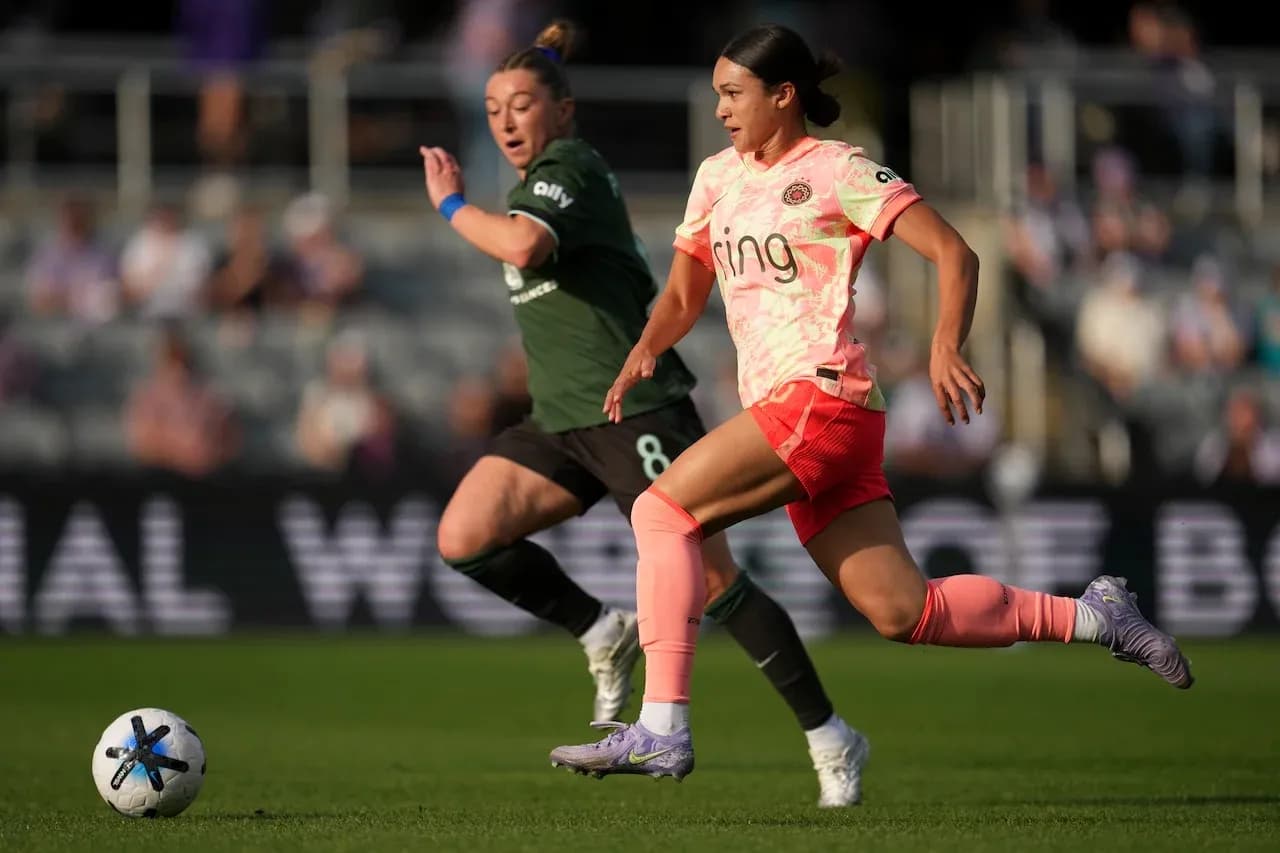
Racing Louisville W Upsets Portland Thorns W in 3–1 Victory
Under the lights at Lynn Family Stadium, this Group Stage meeting in the 2026 NWSL Women season felt like a mismatch on paper: bottom‑placed Racing Louisville W against league leaders Portland Thorns W. Yet following this result, a 3–1 home win after a 1–1 half-time scoreline, it looked more like a statement of identity from Beverly Yanez’s side than an upset.
I. The Big Picture – Two 4‑2‑3‑1s, two very different stories
Both teams lined up in a mirrored 4‑2‑3‑1, but the tactical DNA each brought into the night could not have been more different.
Heading into this game, Racing Louisville W sat 14th with 7 points, a goal difference of -2 (13 goals for, 15 against overall). At home they had been a different animal: unbeaten with 2 wins and 1 draw from 3, scoring 8 and conceding 5. Their attacking output at Lynn Family Stadium – 2.7 goals per home game – already hinted that the league table was hiding a dangerous host.
Portland Thorns W arrived as the benchmark. Heading into this game, they were 1st on 19 points, with a goal difference of +6 (15 for, 9 against overall). On their travels, they had taken 3 wins, 1 draw and 2 defeats from 6, scoring 9 and conceding 9 – not invincible away, but balanced and ruthless in key moments.
The 3–1 full‑time scoreline flipped the expected narrative. Portland’s usually disciplined defensive structure, which overall had allowed just 1.0 goal per match, was pulled apart by Racing’s aggression between the lines and the intelligence of their attacking midfield trio.
II. Tactical Voids – Where the game tilted
Yanez’s 4‑2‑3‑1 was built on a solid back four and a hard‑working double pivot. Jordyn Bloomer anchored the side from goal, with Quincy McMahon and Courtney Petersen offering width from full-back, while Lauren Milliet and Arin Wright held the central defensive line. In front of them, Taylor Flint and Katie O’Kane formed a screening pair tasked with both protecting the back four and initiating transitions.
The real edge came higher up. The line of three – Makenna Morris, Kayla Fischer and Ella Hase – worked as a rotating carousel behind central forward Sarah Weber. Fischer, already one of Racing’s creative leaders with 2 assists in total this campaign, operated as the connective tissue: drifting into half-spaces, drawing fouls, and offering progressive carries. Hase and Morris alternated between tucking inside and stretching the width, giving Weber the support she needed to threaten centrally.
On the other side, Robert Vilahamn’s Thorns matched the 4‑2‑3‑1 shape, but key roles told a different story. Mackenzie Arnold sat behind a back four of Reyna Reyes, Sam Hiatt, Carolyn Calzada and Mary Alice Vignola. The double pivot of Jessie Fleming and Cassandra Bogere was meant to stabilize possession and launch the attacking band of three: Pietra Tordin, Olivia Moultrie and Reilyn Turner behind forward Sophia Wilson.
The void for Portland emerged in the pivot zone. Bogere, a fierce ball-winner with 22 tackles overall this season, has also carried a heavy disciplinary load: 1 yellow and 1 yellow‑red card in league play. That aggression, normally an asset, became a liability against Racing’s fluid No.10 spaces. Fleming was often left trying to cover too much ground, and the Thorns’ structure between the lines frayed.
III. Key Matchups – Hunter vs Shield, Engine Room vs Enforcer
Hunter vs Shield
For Racing, Weber has been a quietly efficient finisher this season with 3 total league goals and 1 assist. Her movement between centre-backs and into the channels asked constant questions of a Portland defence that, overall, had conceded only 9 goals before this match and kept 5 clean sheets (3 at home, 2 away). In Louisville, Weber’s timing and link play exposed the one weakness in that shield: when the Thorns’ back line is forced to defend facing its own goal, their usually compact block can be stretched.
Portland’s attacking threat, meanwhile, is headlined by Reilyn Turner and Olivia Moultrie. Turner came into the fixture with 4 goals in total this campaign, thriving on quick combinations and late box entries from midfield. Moultrie, also on 4 total goals and the league’s leading creator with 4 total assists, is the system’s metronome: 285 total passes at 77% accuracy and 22 key passes overall tell the story of a player who dictates tempo and final-third incision. Against Racing, though, the central corridors she usually manipulates were clogged by Flint and O’Kane, who used their physicality and positional discipline to deny her clean receiving angles.
Engine Room – Playmaker vs Enforcer
In the midfield battleground, the contrast was stark. For Racing, O’Kane and Flint formed the enforcer axis, while Fischer played the advanced connector. O’Kane’s season profile – 192 total passes at 71% accuracy, 15 tackles and 5 successful dribbles – reflects a two-way midfielder who can both break and build attacks. Flint added height, duels and a vertical passing threat.
Portland’s engine room revolved around Fleming and Bogere. Fleming’s composure on the ball is well known, but it was Bogere’s edge that defined the matchup. Her 12 fouls committed in league play and high tackle volume make her a natural disruptor, yet Racing turned that aggression against her. By rotating Weber, Fischer and Hase into her zone, they forced late decisions and drew contact, breaking Portland’s rhythm.
IV. Statistical Prognosis – A result that fits the numbers more than the table
Strip away the league positions and the result begins to align with the underlying patterns. Racing Louisville W at home average 2.7 goals for and 1.7 against; Portland Thorns W away average 1.5 goals for and 1.5 against. A high‑scoring contest tilted slightly toward the hosts was always in play.
Racing’s season-long lack of clean sheets (0 overall) meant conceding at least once was almost a given, which the 1–1 half‑time scoreline reflected. But their attacking volume at Lynn Family Stadium, combined with Weber’s finishing and Fischer’s creativity, suggested they could out‑punch even the league leaders on the night.
For Portland, their overall xG profile – implied by 15 goals from 9 matches and a strong shot volume from Turner, Moultrie and Tordin – typically compensates for any defensive wobble. Yet when their away defensive average of 1.5 goals conceded meets a home side scoring 2.7, the margin for error narrows. One mismanaged midfield zone, one off‑night in duels, and the balance tips.
Following this result, the narrative shifts. Racing Louisville W look less like a team trapped at the bottom and more like a home‑field specialist with a volatile but potent attacking identity. Portland Thorns W remain title contenders, but this match underlines a clear tactical warning: against aggressive 4‑2‑3‑1s that overload the half‑spaces, their double pivot and back four can be dragged into places where even their league‑best talents struggle to hold the line.
Related News
Orlando Pride W vs Portland Thorns W: Playoff Showdown
San Diego Wave W vs Kansas City W Predicted Lineups: Team News for NWSL Women
Orlando Pride W vs Portland Thorns W Prediction: Key Stats and Betting Tips
San Diego Wave W vs Kansas City W: Key NWSL Clash Preview
San Diego Wave W vs Kansas City W Prediction: Key Stats and Betting Tips
Portland Thorns and Chicago Red Stars Draw in NWSL Showdown