
Premier League Insights: Hull's Blueprint and Chelsea's Chaos
The Premier League has barely cleared its throat and already the season is sorting itself out. Some clubs look like they’ve stumbled onto a plan. Others are throwing money at a problem that isn’t really about players at all.
Right now, Hull, Chelsea and James McAtee look like they’ve cracked something. Spurs and Liverpool? Their issues run deeper than any one shiny new signing.
Hull’s throwback blueprint
Hull were meant to be Derby County 2007/08 with better PR. Another promoted side whose results would be quietly measured against that infamous 11-point horror show before they slipped back to the Championship with a shrug.
Instead, they’ve walked into the Premier League and won their first two games. Only the fourth promoted side ever to do it. Two of the previous three stayed up. The third? Hull themselves in 2016/17, which does rather kill the omen, but it still matters.
They’re already more than halfway to that old Derby benchmark with 36 games to play, and they’ve done it with a plan that looks almost unfashionable in its simplicity: structure, organisation, teamwork, repetition.
Sergej Jakirovic has gone old-school. A solid keeper. Three big, combative centre-halves in a back five. A stubborn midfield screen. Width on both sides. Then he’s sprinkled in some attacking upgrades still to fully arrive before the deadline.
They don’t dominate. They don’t pretend to. They stay in games, they cling on in the right areas, and then they pounce on the break or from set pieces. It’s not romantic. It’s just smart. And for a club everyone had already half-relegated, it’s a jolt.
Chelsea’s chaos is fun – and fragile
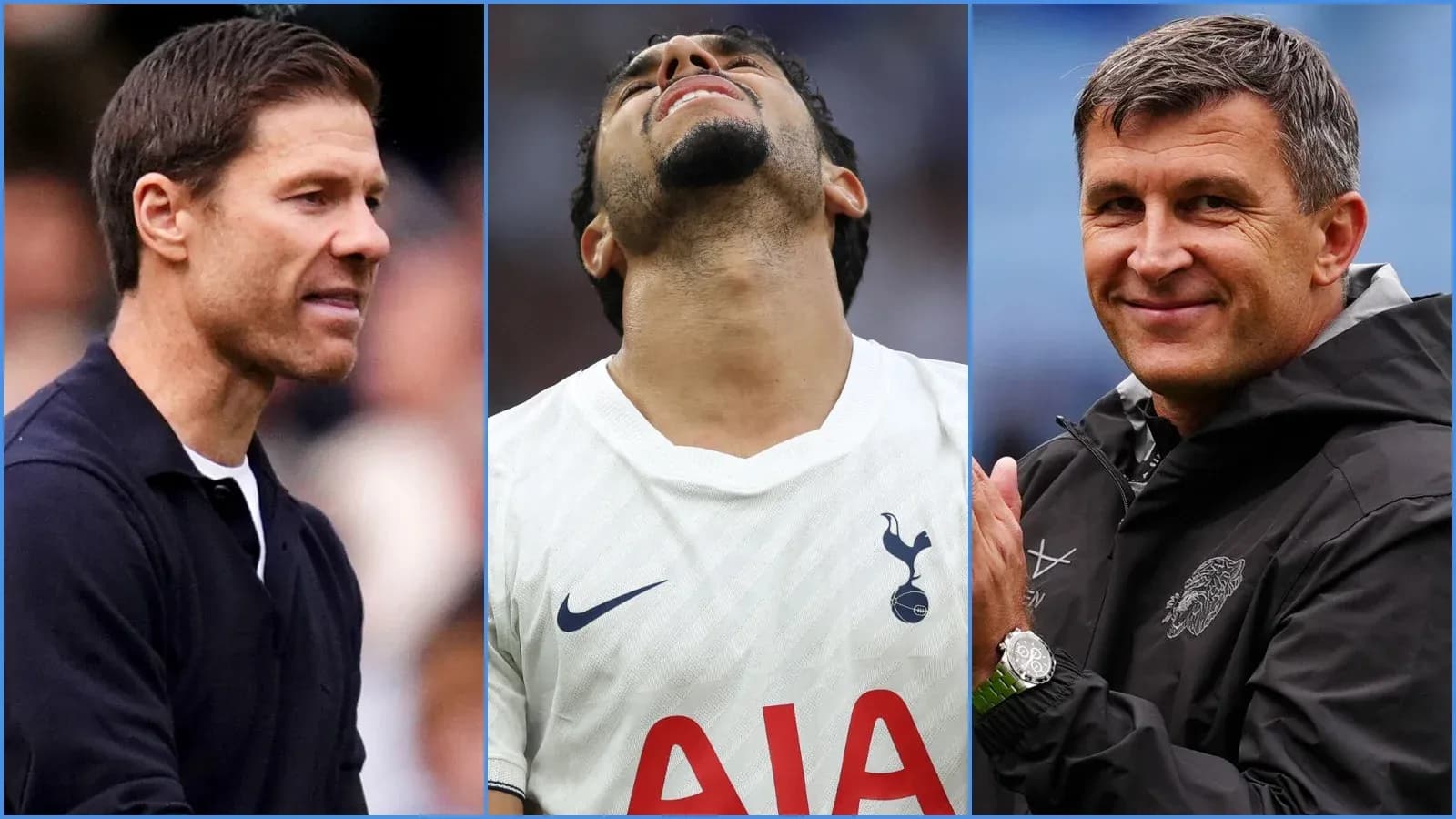
Xabi Alonso has landed at Chelsea and turned the volume right up. Not too Xabi at all.
This isn’t the measured, suffocating control people lazily expected from a disciple of Rafael Benitez and Jose Mourinho. This is far closer to Kevin Keegan’s “we’ll score one more than you” than anything he absorbed under those two.
Last season, Chelsea only won one Premier League game in which they conceded at least twice. This season they’ve already done it twice – 3-2 and 4-3 – flirting with collapse in both, then just about remembering how to manage a game in time.
The attack is the show. Fluid, interchangeable, unpredictable. It will score, often and from everywhere. The question is whether the rest of the team can keep up without constantly dragging them into basketball scorelines.
There are reasons to think they might. Emi Martinez still needs time to sync with his new defence. Romeo Lavia is learning how to be part of a pivot without carrying the whole thing himself. Those are problems you can reasonably expect to soften as the season beds in.
Right now, Chelsea feel – very tentatively – like Arsenal four years ago: thrilling, raw, and a little too combustible to trust. The trip to the Emirates next week is the first real measuring stick. That fixture has a recent history of sending Chelsea hype through the roof, only for the club to implode the moment anyone whispers “title challenge”.
What we still haven’t seen is Chelsea chasing a game from behind. Against Fulham and Brighton they always had a cushion. When that disappears, we’ll find out what this team really is.
The Brighton lesson everyone keeps ignoring
Malick Yalcouye is just the latest reminder that if Brighton sign an obscure midfielder you’ve never heard of, everyone else probably should have tried to hijack the deal.
At this point, failing to at least ask the question is negligence.
Rashford and United’s endless redemption loop
Harry Maguire knows the drill better than almost anyone at Manchester United. He’s lived the full cycle: scapegoat, symbol of decline, then quietly useful again.
“Marcus has been part of a rough ride for Manchester United, and when that happens and the team doesn’t deliver, players get dug out and he was one of them at that stage,” Maguire said. “I’ve been through it. Everyone’s been through it at this club.”
Luke Shaw has worn it. Kobbie Mainoo has already felt some of it. Even Bruno Fernandes, the one constant source of output, has been dragged into the storm at times.
Rashford’s situation felt more broken than most. Under Ruben Amorim, the bond between boyhood star and boyhood club looked close to severed. It felt like the kind of rift you don’t fix.
Then he tracks back, makes a tackle, shows a bit of hunger, and the crowd starts to thaw. At Old Trafford, redemption is never more than a few big moments away, no matter how far gone it all looks.
Cherki, chaos and City’s need for risk
Here’s a list: Savio, Yoane Wissa, Jamie Gittens, Anthony Elanga, Brennan Johnson, Kevin, Emile Smith Rowe, Dan Ndoye, Dilane Bakwa.
Two shared traits. All joined Premier League clubs in the past year. All cost more than Manchester City paid for Rayan Cherki.
Cherki has already produced more combined goals and assists in 109 minutes this season than any of them managed in the whole of 2025/26.
He’s “chaotic”. He doesn’t yet care about Enzo Maresca’s carefully mapped safe zones. That’s exactly why City need him. A machine that precise occasionally needs someone willing to press the wrong buttons.
McAtee, Glasner and a different kind of replacement
James McAtee arrived at Nottingham Forest as part of the solution to losing Anthony Elanga and, before his golden handshake, Morgan Gibbs-White. Now he looks suspiciously like the club’s internal answer to a £116m midfielder leaving 12 months later.
Oliver Glasner, ever the contrarian, decided not to make “replace Elliot” his transfer obsession. “Decided it’s not target No. 1 to replace Elliot because maybe we can do it from our own squad and spend the money on other positions,” he reasoned.
McAtee, signed from Manchester City in 2025, suddenly had a lane. Anderson headed the other way in 2026, the path cleared, and Glasner handed him trust that none of his predecessors came close to matching.
Two games into his second season at the City Ground, McAtee has already logged 164 Premier League minutes under Glasner – more than under Nuno Espirito Santo, Ange Postecoglou and Sean Dyche combined.
The tweak is simple but sharp. Drop an Etihad academy graduate a little deeper, give him more of the ball, let him dictate instead of just decorate. At Anfield, if you squinted and added an imaginary backflip, he looked a lot like an Adam Wharton type.
Forest might have spent big money to replace stars in the past. This time, the most elegant solution might already be in the building.
Everton back to their natural state of civil war
Everton briefly flirted with something almost alien last season: alignment. Agreement. A shared direction.
That’s gone now.
The £40m move for Harrison Armstrong has reopened all the old wounds. Stakeholders are back to despising each other, and the club feels primed for late-window chaos.
The attack could plausibly swing from Dewsbury Hall, Ndiaye, Barry and George to Richarlison and Balogun with Jack Grealish drifting somewhere behind in the space of a fortnight. It’s wild, but it’s also exactly the kind of volatility Everton specialise in.
And yet, even as everything threatens to collapse in on itself, a David Moyes team still finds a way to grind. Everton sitting in the European places early in a season is one of the Premier League’s most enduring habits. There’s a reason it keeps happening.
Brentford, Leeds and the quiet operators
Brentford? Just a bloody good team under a bloody good manager. No fuss. No drama. Just a club that knows exactly what it is.
Leeds have taken a more pragmatic route. One defeat in 11 games, and that came on the final day against already-relegated West Ham in a match that barely counted. If you can’t win, don’t lose. They’ve taken that to heart.
Regis Le Bris, meanwhile, has already etched his name into a niche trivia question: the first manager this season to bring on substitutes who combine for a goal – one assist, one finish. You’ll never sing that, but it’s the kind of detail players notice.
Losers
Spurs: the mentality money can’t buy
Roberto De Zerbi didn’t sugar-coat it.
“You can’t find the right mentality in the transfer market,” he said. For a club about to flirt with the all-time record for money spent in a single window, that’s not a throwaway line. That’s a warning.
“It’s the biggest problem, it’s the biggest challenge and the biggest target is to find the right mentality,” he added. After conceding, he saw his team lose confidence. “The reaction was not good enough, not the reaction I want to see on the pitch… the solution is not to put down the head, but to react, because we had 20 minutes again to score one, two or maybe three goals.”
Harsh? Maybe. De Zerbi has been in the job four months. If mentality was the glaring issue then, it’s fair to ask why it still looks so fragile now.
But then look at the spending. Spurs have thrown vast sums at this squad. Against Newcastle, five new signings started. Two are Premier League champions. One is a Serie A winner. That’s not a group that should look undercooked, especially at home, especially against a club they plucked a £92.5m midfielder from, whose own manager only arrived weeks ago.
Yet Spurs looked the least prepared side of the lot.
The money has landed. The mentality hasn’t. That’s the gap that will define De Zerbi’s entire experiment in north London.
Palace running out of legs – and time
Pierre Sage came out of Crystal Palace’s game against Everton “frustrated”. His players “gave up a little” and couldn’t “do it for the duration of the game”.
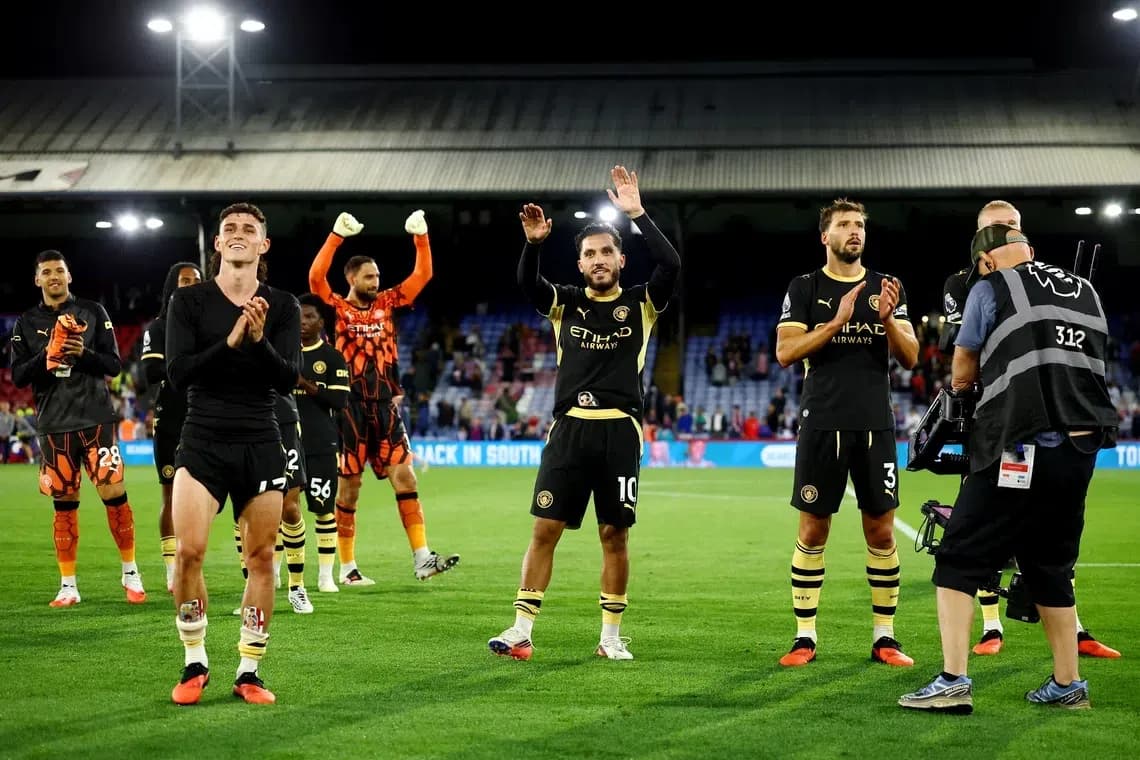
In his first match, Palace “played well during the first half and it’s not normal that we played as we did in the second half”. Against Manchester City, they lasted about an hour before the lights dimmed. On that logic, Fulham are in for a 75-minute test next week before the drop-off arrives.
Palace have been hit harder than most by an ugly summer. A squad heavily involved at the World Cup. The complications of UEFA SCR. A cycle ending with key players and the manager walking out the door. It’s a lot to absorb in one go.
Oliver Glasner joked that he’ll “have a pint of beer and celebrate the transfer window being closed” this week. His successor might need something stronger. So might half the managers in the league.
Liverpool’s problems aren’t on the wing
Liverpool have been here before. January 2016. A 5-4 thriller at Norwich. Goals everywhere, chaos at both ends, the sense of a team that could blow anyone away and concede to almost anyone.
Back then the question was: how do you fix this with Alex Teixeira? The answer was simple. You don’t. Liverpool walked away from that deal, leaned into coaching and evolution instead, and built something far more durable in the summer.
Bradley Barcola is better than Teixeira ever was and a much more compelling market opportunity. Especially if Cody Gakpo is edging towards the exit. But the parallel still stands.
Liverpool’s issues are not about one attacker. Watching them concede from a long keeper punt and then give away a penalty from a quick throw-in told the story. Both goals were cheap. Both were avoidable. Both were answered by slick, well-worked equalisers that showcased the talent in attack.
What it also did was make £123m of late-window business feel necessary – just not in the front line, and not all on a single player. Andoni Iraola needs more tools, but he needs them in the spine, not the spotlight.
Bournemouth’s cruel start
Bournemouth have drawn two of the worst early-season cards you can pull: “Struggle To Defend Set Pieces” and “Lose Points From Winning Positions”.
Two games. Two leads in the 83rd and 90th minutes. One point.
All three goals conceded have come from defenders. Both equalisers from corners. It’s the kind of pattern that gets inside players’ heads quickly. Iraola will know he has to break it before it becomes the story of their season.
O’Neil, Lampard and a stat nobody wants
Gary O’Neil’s Ipswich side took a heavy hit at Old Trafford. That can happen.
The more brutal detail is this: O’Neil is still the only manager to lose a Premier League game to Frank Lampard since October 2022. Nineteen matches. One defeat. His.
Some records you frame. Some you hope everyone forgets.
Coventry’s rude awakening
Coventry waited a long time to get back to the top flight. The off-pitch preparation hasn’t matched the occasion, and on the pitch they look undercooked too.
The schedule hasn’t helped. Start away at the champions – the hardest game of the season – then follow it up with the theoretically softest: at home to the Championship play-off winners. No other team has had to pivot so sharply in approach in the opening fortnight.
It doesn’t get kinder. Manchester City are next. It may get uglier before it gets better.
Frank Lampard insists he’s moved from “The Basics” to “the details”. The problem is his players still look unsure about either. In the Premier League, that gap is merciless.
The table is already stretching, the stories already hardening. Hull and Chelsea have something to build on. McAtee has a role that could change Forest’s trajectory. Spurs and Liverpool know now that the market won’t fix what’s really wrong.
With the window about to slam shut, who gambles on structure – and who just keeps chasing the next name?
Related News
Liverpool's Transfer Activity Heats Up with Double Deal

Arijon Ibrahimovic Loaned to FC Augsburg: Bayern's Transfer Decision
Premier League Insights: Hull's Blueprint and Chelsea's Chaos
Manchester City Sign Allan Elias for €40 Million

Everton Pursue Folarin Balogun as Transfer Deadline Approaches
Liverpool's Ambitious Attack Overhaul Before Transfer Deadline