
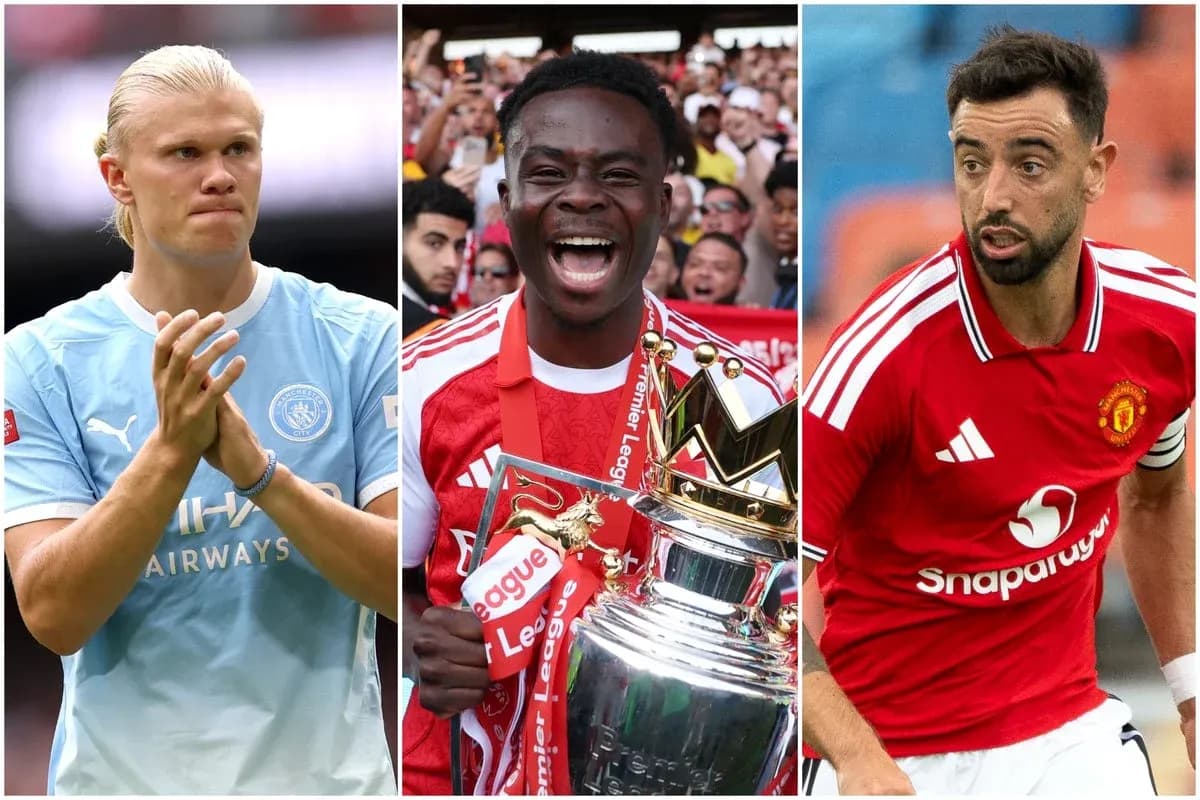
Premier League 2023-24 Preview: Arsenal Defend Title Amidst Managerial Changes
A new Premier League season starts on Friday, and it feels different. Arsenal walk out as defending champions for the first time in 22 years. Pep Guardiola is gone from Manchester City after a decade that bent the league to his will. Mikel Arteta, suddenly the longest-serving manager in the division, stands as the symbol of stability in a league that has spent the summer tearing itself up and starting again.
Nine clubs have changed managers. Michael Carrick and Roberto De Zerbi begin their first full campaigns at Manchester United and Tottenham. Andoni Iraola has landed at Liverpool, Xabi Alonso at Chelsea. Coventry City, Ipswich Town and Hull City come up from the Championship, taking the places of relegated West Ham, Burnley and Wolves. Sunderland showed last season that a newly promoted side can reach Europe. The bar – and the chaos – has never been higher.
Here is how this season could fall.
20. Hull City
Last season: Promoted via play-offs
Hull are back. The welcome is warm; the forecast is brutal.
Sergej Jakirovic’s side produced one of the strangest promotion stories the Championship has seen. Opta’s expected points model had them 23rd in the division. They should have been fighting to stay in the league, not climbing out of it. Yet they dodged the drop to League One, surged into the play-offs and then beat Middlesbrough at Wembley after Southampton’s expulsion opened the door.
That kind of season leaves a hangover. The numbers screamed trouble; the results roared defiance. Now the Premier League will test which was closer to the truth.
Hull have been busy in the market, with players shuttling in and out, but bookmakers still make them relegation favourites. For all the romance of their rise, this could be a long, attritional campaign.
19. Ipswich Town
Last season: Championship runners-up
Ipswich are back at the first time of asking after a largely forgettable relegation in 2024–25. The response has been to rip up the old playbook.
Gone is the narrow focus on raiding the Championship. In its place: a broader, bolder recruitment plan, headlined by club-record signing Emersonn from Toulouse and the arrival of Daizen Maeda from Celtic. It is a clear attempt to add pace, goals and a higher ceiling.
Gary O’Neil, who did admirable work at Bournemouth and Wolves, inherits the project from Kieran McKenna. McKenna walked away after three promotions and a relegation in four breathless seasons, saying he needed a break – and perhaps recognising just how steep this next climb would be.
O’Neil knows survival battles. He also knows this is a squad still finding out if it truly belongs back at this level.
18. Coventry City
Last season: Championship winners
Of the promoted trio, Coventry feel the most alive.
They have ended a 25-year exile from the Premier League, dragged there by the emotion and momentum of an unexpected title charge under Frank Lampard. For a club that has known more than its share of dark days, this is a rare shaft of light.
Now comes the hard part. Bridging the gap has rarely been tougher. Sunderland’s aggressive spending on their return last season provided a template, and Coventry have taken note. They have twice broken their transfer record, most notably with the £26m signing of 20-year-old midfielder Caleb Yirenkyi.
The most important piece of business, though, was keeping Lampard. After bruising exits at Chelsea and Everton, he gets another crack at the Premier League with a fanbase firmly behind him. Emotion can carry you only so far, but Coventry will hope it buys them just enough time to adapt.
17. Fulham
Last season: 11th
There is a nervous edge around Craven Cottage.
Marco Silva’s five-year spell transformed Fulham’s outlook, and his departure has ripped away a layer of certainty. In his place comes Alvaro Arbeloa, the former Liverpool defender, whose spiky caretaker stint at Real Madrid made headlines and enemies in equal measure.
He has dipped back into his old club, bringing striker Gonzalo Garcia and midfielder Cesar Palacios, two young talents with big upside but little Premier League experience. Fulham need them to grow up fast, because proven quality has walked out of the door. Player of the season Harry Wilson has gone. So has Raul Jimenez. The spine of last year’s attack has been stripped.
The fixture list shows little mercy. Chelsea, Liverpool and Manchester United all arrive in the first five games. Arbeloa has to land running. If he stumbles, the mood could sour quickly.
16. Newcastle United
Last season: 12th
Eighteen months ago, Newcastle were lifting the Carabao Cup and plotting a Champions League future. Now? The exodus has begun.
Alexander Isak, Anthony Gordon, Bruno Guimaraes and Sandro Tonali have all gone. Eddie Howe, the architect of their revival, has followed. The dream of a title challenge by 2030 under Saudi ownership feels distant as alarm bells ring around St James’ Park.
Into the wreckage steps Matthias Jaissle, fresh from Red Bull Salzburg and Asian champions Al-Ahli. He arrives with a reputation for youth development and high-energy football, and Newcastle’s summer business reflects that: established stars out, prospects in.
It is a gamble. The club are looking ahead, but the present may bite. With so much experience stripped away, Newcastle could spend this season looking nervously over their shoulders rather than up the table.
15. Brighton & Hove Albion
Last season: 8th
Brighton tasted Europe for the first time in 2023–24 and slipped back into mid-table. This year, the pattern could repeat.
Fabian Hürzeler leads them into the Conference League, and bookmakers have installed the Seagulls as clear favourites to follow Crystal Palace in lifting the trophy. For a club still chasing their first major honour, that opportunity matters.
But Europe takes a toll. The squad has to stretch across Thursday nights and Sunday afternoons, and there are questions at both ends of the pitch. Record signing Luka Vuskovic has been brought in to stiffen the defence. Up front, the departure of Danny Welbeck to Chelsea strips away experience and aerial presence.
That piles pressure on Kaoru Mitoma and Yankuba Minteh to deliver goals and chaos from wide areas. Neither is fit to start the season. For all the glamour of Europe, Brighton’s domestic form may be the price.
14. Everton
Last season: 13th
Everton have what many others do not: continuity.
David Moyes returned and steadied the club, and the sense of crisis that once clung to Goodison has eased. Relegation should not be on the agenda. The problem is what comes next.
Last season, Everton flirted with the European places before fading badly. The defence remains rugged and organised, but the old issue persists. Goals. Beto and Thierno Barry have yet to convince that they can carry the burden.
Keeping Iliman Ndiaye would be a significant boost. His ability to find space and unlock defences offers a rare dash of creativity in the final third. Still, without a more reliable cutting edge, Everton risk treading water in the same patch of the table.
13. Crystal Palace
Last season: 15th
Crystal Palace are European champions. That sentence still sounds strange.
The Conference League triumph under Oliver Glasner crowned an unlikely story and ended his reign on a high. The club now turns to Pierre Sage, who took Lens to second place in Ligue 1 and a French Cup win last season.
Sage’s style should mesh well with what Glasner built, but Palace are again dealing with churn. Star departures are nothing new in south London, and the defence has been hit hardest. Marc Guehi and Maxence Lacroix have both left in the past year. Daniel Munoz may follow.
The question is whether Sage can refresh the structure quickly enough to keep Palace away from danger while maintaining the front-foot football that brought them a European trophy.
12. Sunderland
Last season: 7th
Sunderland’s first season back in the Premier League was supposed to be about survival. Instead, they crashed the European party.
Regis Le Bris guided them into continental competition on the final day, a remarkable achievement for a club that not long ago were dragging themselves out of League One. Now they must balance those European nights with the grind of the league, Thursday to Sunday, week after week.
So far, the transfer window has been modest. Veteran right-back Thomas Meunier has arrived on a free. Left-back Dayann Methalie has joined for £25.6m. That is the extent of the business.
The squad will be stretched. Yet Sunderland thrived on doubt last season, and they have already won a crucial battle this summer: captain Granit Xhaka turned down Chelsea to stay. His decision anchors the dressing room and keeps belief high on Wearside.
11. Nottingham Forest
Last season: 16th
Nottingham Forest burned through four managers last season. Now they have one of the most coveted coaches in Europe.
Oliver Glasner, fresh from winning two major trophies with Crystal Palace and once linked with Manchester United, has taken what is arguably the hottest seat in the Premier League. His appointment was a surprise; it is also a statement.
Forest have lost Elliot Anderson, but Morgan Gibbs-White remains the heartbeat of the team, the player who dragged them clear of relegation trouble late last season. With no European distractions, Glasner has time on the training ground to imprint his 3-4-3 system and sharpen Forest’s transitions.
The potential is obvious. So is the volatility. Under owner Evangelos Marinakis, drama is never far away. If the relationship holds, Forest could climb fast.
10. Brentford
Last season: 9th
Brentford no longer enter a season with relegation talk swirling around them. Keith Andrews saw to that.
In his first campaign in charge, Brentford punched above their weight yet again, missing out on Europe by a whisker. Crucially, they know exactly who they are. The identity is clear, the processes refined.
Igor Thiago’s 22 goals were central to that surge, but the club have moved to evolve the midfield with record signing Mamadou Sangare from Lens. His arrival helps soften the blow of Jordan Henderson’s move to Chelsea and adds another layer of energy and control.
Set-pieces will remain a weapon. Efficiency will remain the obsession. Brentford are no longer just survivors; they are a problem for anyone aiming at the top half.
9. Leeds United
Last season: 14th
Leeds changed their season, and perhaps their trajectory, after December.
From 1 December 2025 onward, Daniel Farke’s side collected enough points to finish 7th over that stretch. The table does not care for hypotheticals, but the trend gives Leeds something they have lacked for years: genuine optimism.
The summer has targeted obvious weaknesses. James Trafford arrives as a reliable first-choice goalkeeper. Harry Wilson comes in on a free from Fulham to inject creativity in midfield. Towering centre-back Tarik Muharemovic adds presence to an already solid spine.
The final piece is up front. Dominic Calvert-Lewin’s 14-goal comeback last season reminded everyone what he can be when fit and confident. If he stays on the pitch, Leeds can realistically eye the top half.
8. Tottenham Hotspur
Last season: 17th
Tottenham stared into the abyss on the final day and just about clung on. That had to change something. It did.
The board have thrown their weight behind Roberto De Zerbi. Only Chelsea have spent more this summer. Spurs have ripped out and rebuilt their midfield to the tune of £180m, bringing in Sandro Tonali and Mateus Fernandes. At the back, Marcos Senesi, Jan Paul van Hecke and Andy Robertson look like smart, targeted additions.
There is more to come, especially in attack, where reinforcements remain a priority. De Zerbi has been handed full control after dragging the club away from the drop zone. Now he gets a full season, without European commitments, to stamp his football on a remodelled squad.
It should be better than last year. It has to be. But injuries have stalked Spurs for seasons, and no amount of spending can erase all their structural issues in one window.
7. Bournemouth
Last season: 6th
Bournemouth’s first taste of Europe is the reward for a club that refused to blink.
Last season’s 6th-place finish and Europa League qualification were built on continuity and clarity under Andoni Iraola. His departure is a blow, but the Cherries have limited the damage by keeping the core of their squad intact. Only Marcos Senesi has left among the key starters, joining Tottenham at the end of his contract.
Alex Scott, Rayan and Junior Kroupi – who will miss the start of the season after a freak training-ground foot injury – all remain. That is a victory in itself.
Marco Rose steps in, a Jurgen Klopp disciple whose high-pressing, high-intensity approach should feel like evolution rather than revolution. His experience will be vital as Bournemouth navigate the Thursday-night demands of the Europa League for the first time.
6. Aston Villa
Last season: 4th
Aston Villa are changing in front of our eyes, but one constant keeps them on course: Unai Emery.
The Europa League triumph last season underlined his status as the club’s true star. This summer has threatened to peel away parts of his core. Morgan Rogers, Youri Tielemans and Lucas Digne have gone. Emi Martinez could yet follow. Losing four senior figures from a European-winning squad would concern any manager.
Emery’s response has been to reshape. Switzerland’s World Cup standout Johan Manzambi has arrived for a club-record £59.5m. Japan international goalkeeper Zion Suzuki has been added. Alejandro Garnacho joins on loan, bringing pace and unpredictability.
Villa return to the Champions League for the second time in three seasons. The new signings must hit the ground running, but with Emery on the touchline, Villa will back themselves against almost anyone.
5. Liverpool
Last season: 5th
Liverpool stand on a knife-edge between renewal and repetition.
Andoni Iraola brings a clear identity: high-intensity, aggressive football that should fit Anfield’s demands. Up front, there is the tantalising prospect of Alexander Isak and Florian Wirtz finally finding their rhythm after difficult debut campaigns.
Yet the old problems still lurk. Squad depth remains thin, particularly in attack and at full-back. The midfield, so often exposed last season under Arne Slot, still feels one body short.
Jeremy Jacquet, the 21-year-old centre-back signed for £55m in January, impressed in a friendly against Como. With Ronald Araujo in on loan, there is fresh quality at the back, but Liverpool are still heavily reliant on 35-year-old captain Virgil van Dijk staying fit.
The club’s expensive pursuit of Bradley Barcola looks set to drag on until deadline day. Hugo Ekitike is sidelined for months. Iraola starts life at Liverpool with more questions than answers. Early goals from Isak and Wirtz would buy him precious breathing space.
4. Manchester United
Last season: 3rd
Manchester United found a spark under Michael Carrick. Now they have to prove it was more than a surge of adrenaline.
Carrick won 12 of his 18 Premier League games after replacing Ruben Amorim in January. No team in the division collected more points in that period. The reward is a permanent two-year deal and a return to the Champions League.
This season brings a new test: volume. United played just 40 matches last term. This time, the total could push towards 60. Opponents will have had time to study Carrick’s patterns. Training ground hours will be squeezed.
Bruno Fernandes remains the talisman, the player who can drag United through tight games. But the squad behind him is thin. Casemiro has gone, and while Andrey Santos and Youri Tielemans have been added to bulk out midfield, there is a sense that one more injection of top-level quality is needed if United are to jump from top-four contenders to genuine title challengers.
3. Chelsea
Last season: 10th
Chelsea reached a kind of rock bottom last season. Liam Rosenior lasted three months. The club slumped into their worst league run since 1912. It was chaos without direction.
Now the pieces have fallen in their favour. Xabi Alonso, fresh from leading Bayer Leverkusen to the Bundesliga title and still regarded as one of Europe’s sharpest minds despite a failed Real Madrid stint, is in the dugout. For once, Chelsea have a coach whose stock is rising rather than recovering.
On the pitch, Morgan Rogers is an expensive but high-quality addition. Fit-again Cole Palmer, stung by missing the World Cup, will be desperate to prove a point. Together, they could form one of the league’s most dangerous creative pairings.
Chelsea have no European football. Alonso will have time – real time – to drill his ideas, an advantage over their immediate rivals. The club have also shifted tack in the market, adding seasoned Premier League campaigners Jordan Henderson, 36, and Danny Welbeck, 35. It is a sharp turn away from the scattergun youth project of recent years and a sign that some lessons have finally been learned.
Alonso will be given more authority than his predecessors. What he does with it could reshape Chelsea’s future.
2. Manchester City
Last season: 2nd
The Guardiola era is over. The shadow remains.
No club faces a bigger adjustment than Manchester City. For 10 years, everything – from academy drills to transfer policy – bent around one man’s vision. Now Enzo Maresca must build something new on ground still marked by Guardiola’s footprints.
The midfield has been ripped up. Rodri and Bernardo Silva, pillars of the most dominant side English football has seen in decades, have departed. Elliot Anderson arrives for £116m after an outstanding World Cup with England. Ayyoub Bouaddi, 18 and a breakout star at the same tournament, is another option, but if he is the only other replacement for a Ballon d’Or winner like Rodri, City will feel light.
They may yet return to Chelsea for Enzo Fernandez at £120m. The rebuild is not finished.
And yet. Erling Haaland still leads the line. Antoine Semenyo and Marc Guehi, signed last season, have already strengthened the core. City will not vanish from the title race. But the stylistic shift away from Guardiola’s clockwork contrasts sharply with the calm continuity at Arsenal.
1. Arsenal
Last season: 1st
Arsenal stand where they have not stood for more than two decades: at the top, with everyone else looking up.
Arteta’s side finally converted promise into a title last season. Now they defend it in a league where their greatest tormentor has left and their biggest rivals are wrestling with upheaval. Arteta is the longest-serving manager in the division. His squad is settled, his methods embedded.
While others scramble to adjust to new ideas and new hierarchies, Arsenal carry on. The question is no longer whether they can win the Premier League. It is whether they can build an era of their own in the vacuum Guardiola leaves behind.
Related News
Transfer Rumors: Haaland’s Two Options; Real Madrid Targets $100 Million Premier League Star
Manchester United Targets Premier League Forward to Strengthen Attack
Liverpool Eyes 17-Year-Old Mexican Midfielder Gilberto Mora for Summer Transfer
Summer 2026 Transfer Window: Manchester United and Tottenham Struggle with New Signings
Liverpool Maintain Interest in Real Madrid Midfielder Amid Transfer Challenges
Transfer Insider Warns Tottenham About Costly Sale of Will Lankshear